

“Computations are everywhere, once you begin to look at things in a certain way”
Rudy Rucker
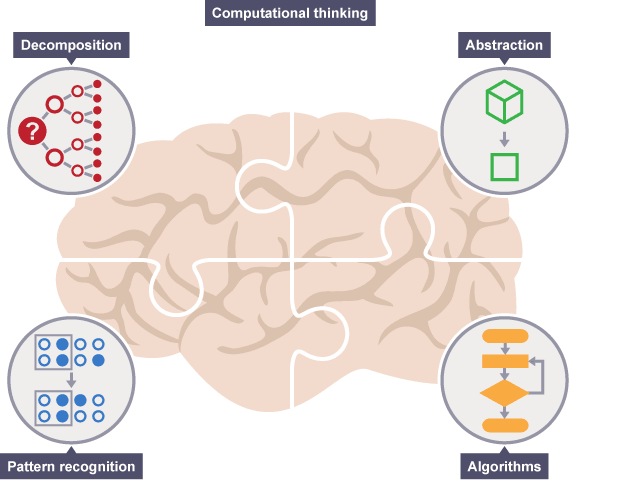
Computational thinking is a foundational problem-solving process that involves breaking down complex challenges, identifying patterns, ignoring irrelevant details, and developing step-by-step algorithms. Computers work this way but, far from just programming, computational thinking is a universally applicable way to deal with everyday life problems like adapting a recipe for a large group of people to assembling a piece of furniture.
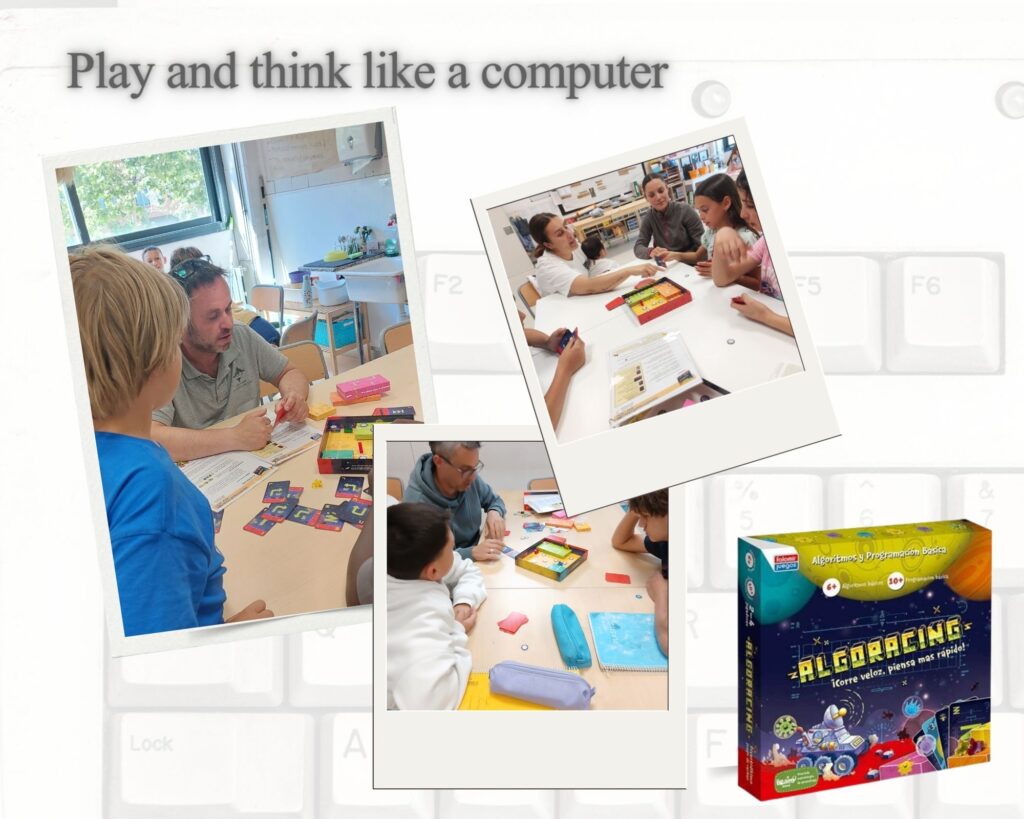
In our last session of Martamàtiques with the families, we had fun together while playing some games specially designed to put into practise these thinking strategies.
Algoracing is a board game for 4 players in which we have to program rovers to move along the board. It took a while to read all the instructions because there were a lot of things to consider: the setup, the cards to program the algorithms, the objective, the “obstacles” in our way… When we got to play we discovered that it was quite simple to play and design the algorithms but it was a bit more complicated to try to make the most of our cards and be efficient. This efficiency implied a lot of strategy and decomposition that quite often led all of us to mistakes that helped us learn!
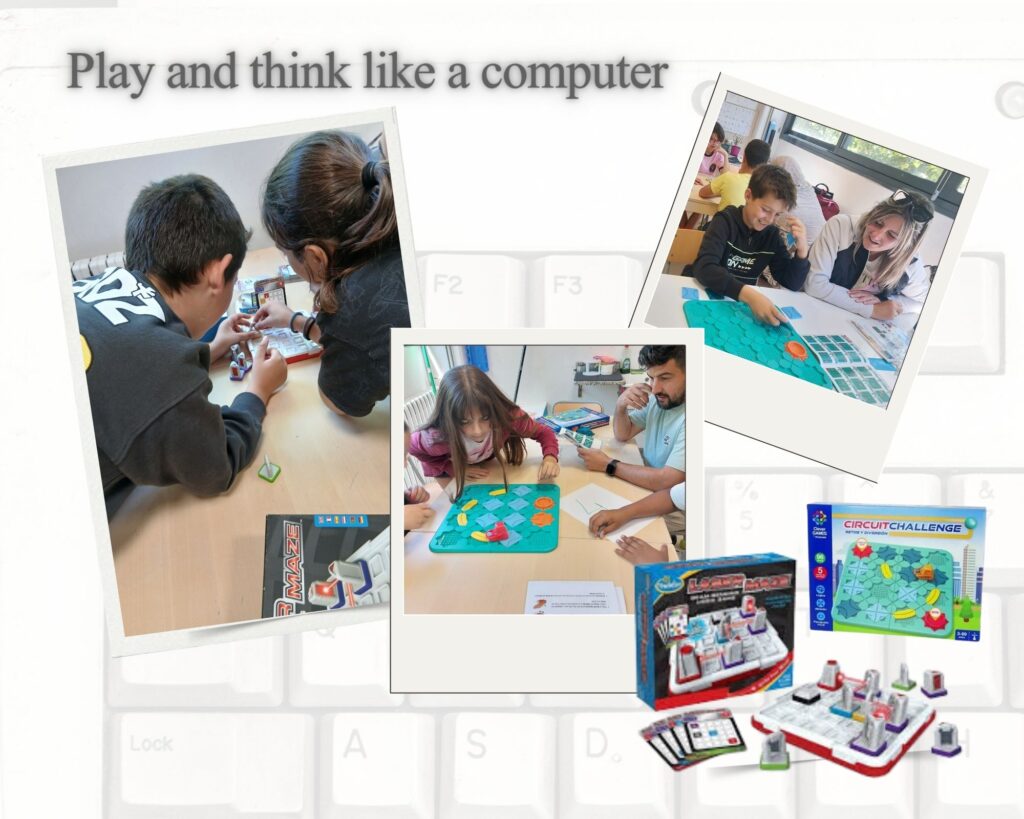
Circuit challenge is a very fun logic game in which you have to create a path to lead the ball to find its destination. Following the instructions to put the pieces and thinking how to place them properly involved a lot of spatial knowledge that enhanced. It seemed very simple because we started by trying our solutions piece by piece. When we were encouraged not to test our solution until the end, we realised that it was quite simple to make mistakes!
This also happened in Laser Maze, a game in which you have to play with mirrors to make the laser reach the target piece.
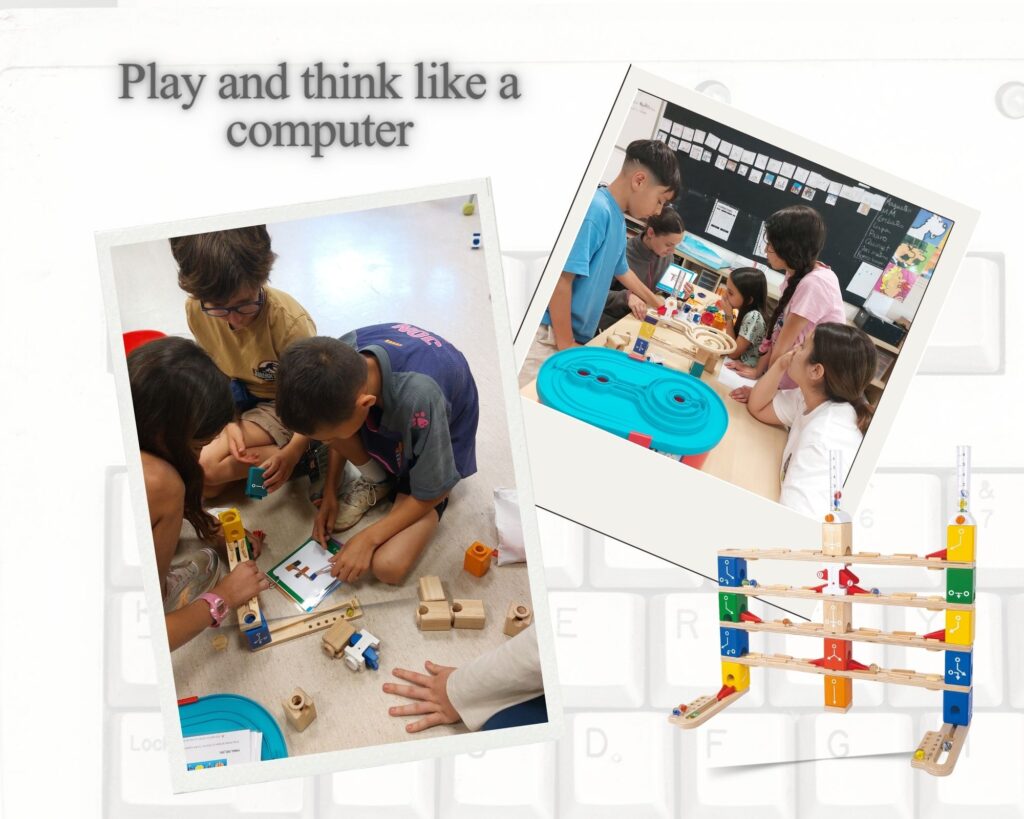
The biggest surprise for us all was Quadrilla. Apparently we thought it was “simply” a marble circuit and we tended to play with it. After reading carefully the instructions and interpreting the pictures, we realized that it was much more complex: we had to build the maze in such a way that the marbles fell in a specific sequence!
In order to do so, it was necessary to plan ahead all the movements taking into account variables like speed and position. The simplest game turned out to be the most similar to a computer.
We will definitely need to play and practise more to master the games but we really understood that computational thinking is structured human thinking.