Welcome to Institut de Gurb!
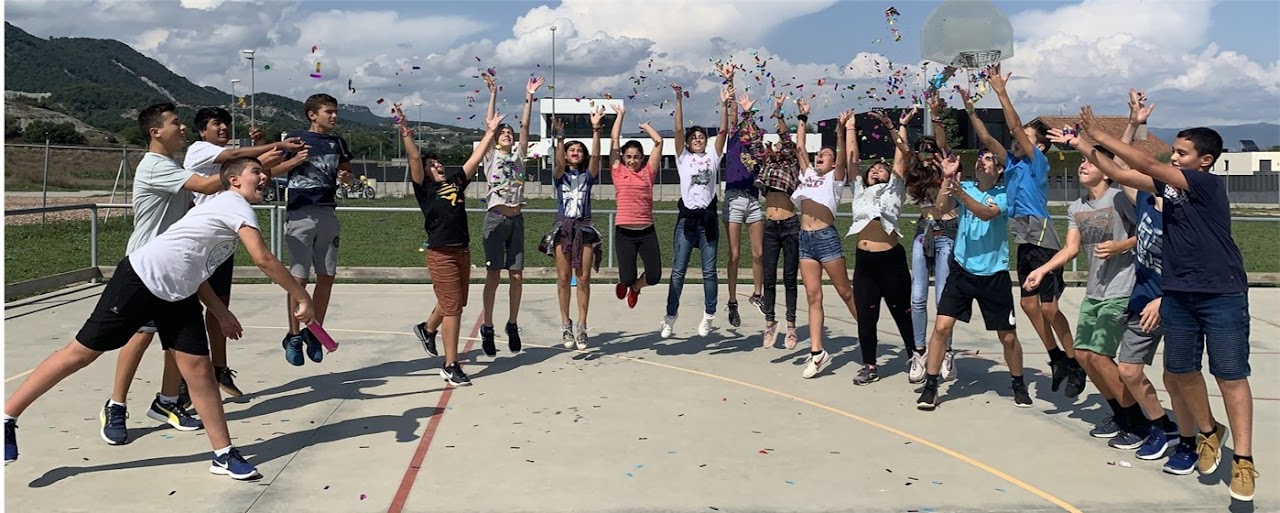
Institut de Gurb is a secondary school located in Gurb (Osona), a village of about 2,500 inhabitants in the area of Central Catalonia.
Its students come mainly from four different villages: Sant Bartomeu del Grau, Santa Eulàlia de Riuprimer, Muntanyola and Gurb, although there are also some students coming from other places, like the nearby town of Vic. Institut de Gurb is the only high school in Gurb, although there are many other secondary schools in the nearby villages.
The economy of the area is based on a balance in the different sectors. Cattle exploitations and industries in the primary sector coexist with a rather diversified industrial framework as well as with the service and commercial sector. The four villages are rural villages which have embraced different enterprises and businesses which have significantly increased their economic activity.
Gurb is located right next to Vic, so Vic has always been the town of reference for its inhabitants. Vic is a university town, which has extraordinarily reinforced its cultural life; besides the University, the town also holds a Theatre School, a Music Conservatory, an Official School of Languages (EOI) and many other entities and institutions devoted to cultural formation and promotion.
Institut de Gurb holds approximately 350 students and 35 teachers of all fields. Only ESO (compulsory secondary education) studies are carried out in the school, so the students are between 12 and 16 years old. There are 4 groups in 1st, 2nd and 3rd years of ESO and 3 groups in 4th year of ESO.
Main features
The characteristics of the school, specified in the School Educational Project, are based on the following items: it is an entirely state-funded and non-confessional school. It is also autonomous, Catalan, without any kinds of discrimination among students, democratic, intercultural, non-racist and non-sexist. It is also an Environmentally Friendly School.
The school’s aim is to improve the academic results and the social cohesion in an equity context. The school has four main pillars: research (application of the scientific paradigm and its methods as a bridge between the school and its natural, social and technological environment), innovation (advanced integration of ICT), sport practise (promotion of collaboration and cooperation and acquisition of sustainable and healthy habits) and communication (ability to express yourself and relate to others in different languages and understand them).
The school follows the following pedagogic criteria: heterogeneous grouping, cooperative work (in the classroom, the students are distributed in groups of 4 or 5 students and the methodology used is basically cooperative), project-based learning (the different subjects carry out different projects) and flexible timetable (the distribution of the three hours of each subject is always two hours in a row and a separate hour and the subjects which have only two hours always have the two hours in a row).
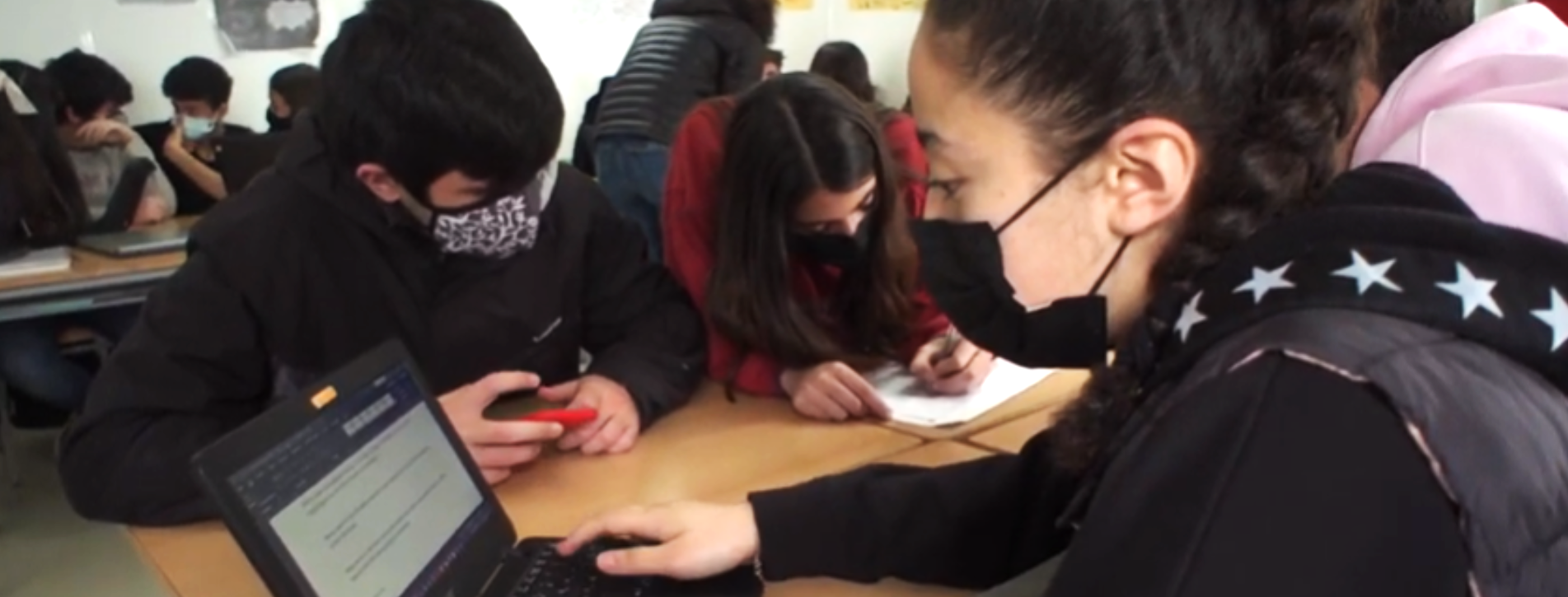
The education principles of the school are the active learning, based on problems; competence learning; acquisition of abilities of superior thinking; autonomous and personalized learning; ICT; working with and for the environment, and language as a means of communication and knowledge. The school displays all these characteristics in its educational practice, that is, in its aims, methods and contents.
The school also gives a lot of importance to participation, and it works with other centres such as the town councils, the primary schools, the seniors’ centre and some local NGOs, among others, with the aim to enable students to become good citizens. This framework, together with teachers’ teamwork and the basic educational axis based on interculturality and mediation are also defined in the School Educational Project.
School projects
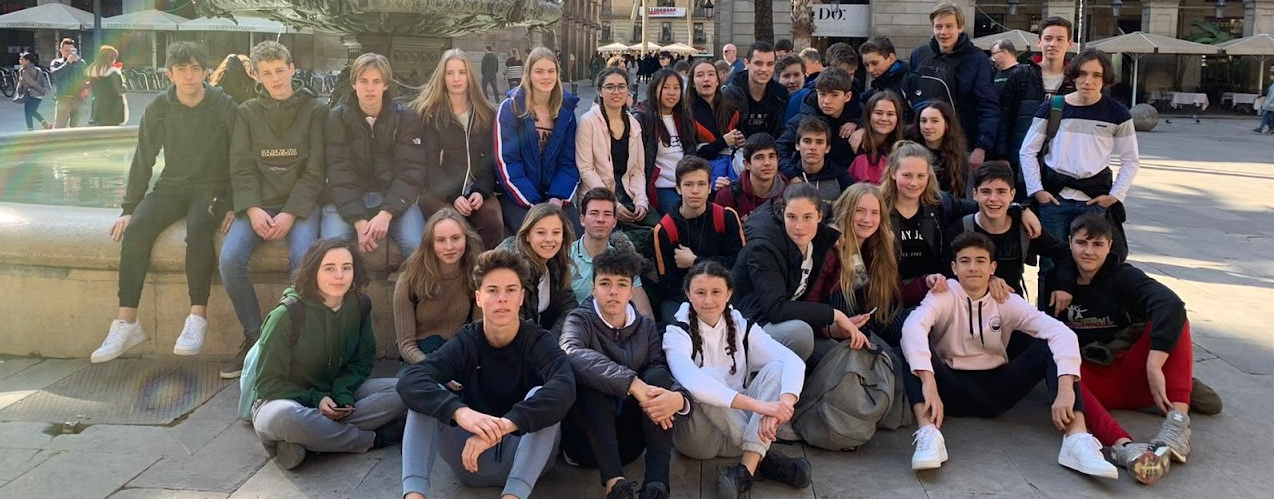
Linguistic project
The main objective of our linguistic project is to make citizens able to get on well in a changing world, full of cultural and linguistic challenges.
Students learn our two official languages, which are Catalan and Spanish, and we have created a new subject in which students learn the common structures of these two languages.
The foreign languages taught in the school nowadays are English, French and German. The school organizes different cultural exchanges every year. There is a regular exchange program in 3rd of ESO with two high schools in The Netherlands, Groningen and Zwolle.
We are also involved in the preparation of B1 and B2 official exams to certificate the students’ level in the EOI (official languages school), and we have a linguistic program which intends to give the students more opportunities to be in contact with the English language. This program includes CLIL methodology and the presence of a native speaking assistant.
The school has participated in many European projects, such as Alliance 3 (about fighting early school leaving), EIPSI (evidence informed practice) and some eTwinning projects.
STEAM project
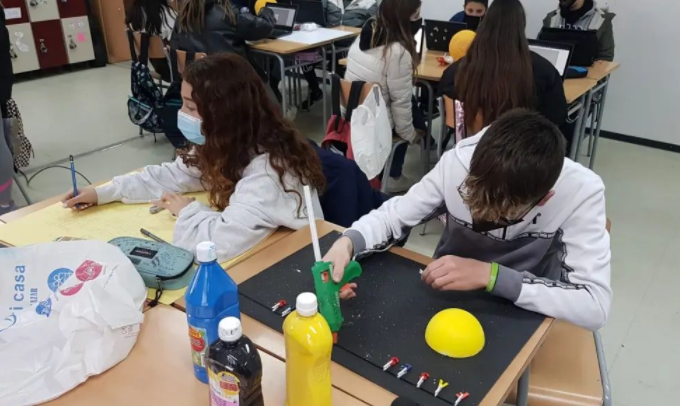
Institut de Gurb has a STEAM (Science, Technology, Engineering, Arts and Mathematics) program designed for the four years of secondary education. This program is based on the implementation of different STEAM projects with a dedication of 4 hours every week, from September to June. These projects are designed by interdisciplinary teams of teachers and the students also work with heterogeneous groups.
The STEAM projects give students the opportunity to identify real problems developing the scientific, technological and mathematical competences. Students work in cooperative groups, so they also learn how to work in teams, which we find essential for their future working life.
Participation project
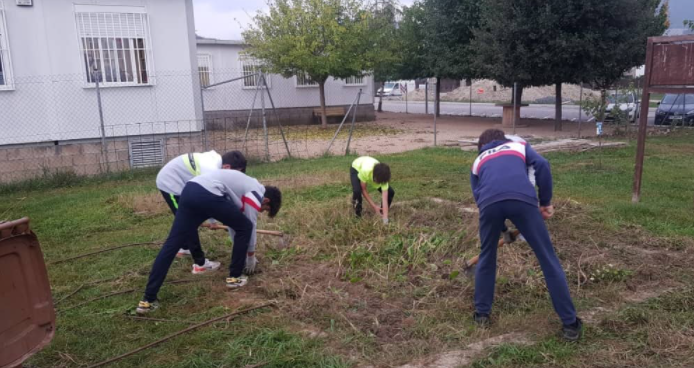
The participation project of the school comprehends different scenarios. The students participate in the classroom, specifically with the tutorial project, the participation in the assessment process and the cooperative work and peer learning. The students also participate in the school, with the internal community service (the students are divided into groups according to their interests and they do some work for the school: they decorate the building, they repair bikes, they publish news in the social media, etc.), and in the surroundings, with the external community service. Finally, we also deal with global citizenship with the international community service and the projects “Empatitza” and “De font en font”.
Artistic project
The artistic project is a multidisciplinary project which culminates with a school musical entirely produced by the students. The students come up with the idea, compose the songs, design the choreographies, write the script, prepare the scenery, choose the clothes, design the projections, rehearse the dramatisation and record a CD with the songs. The final result is spectacular, and it shows a great combination of different artistic disciplines.
Sports project
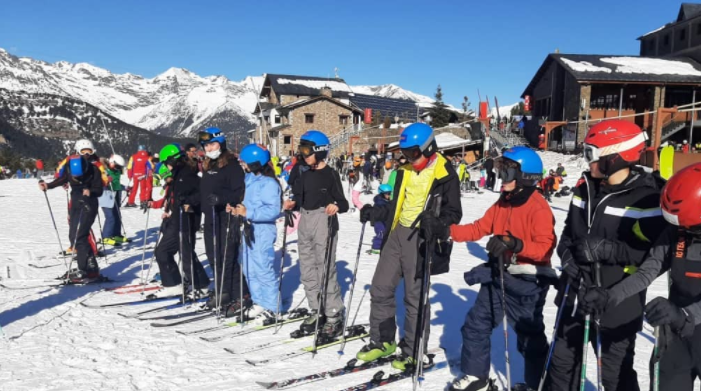
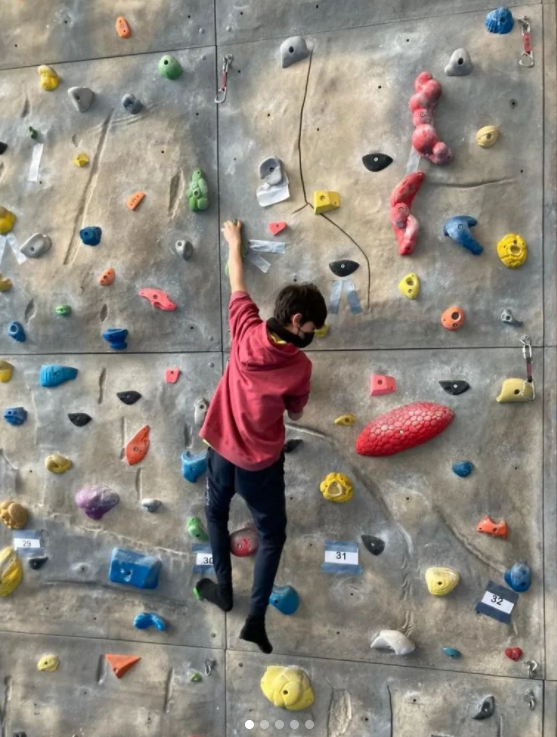
Institut de Gurb gives the students the opportunity to try lots of different sports, so that they find a sport (or more than one!) which they like. This way, they may have a more active and healthier lifestyle. They swim, they climb, they ski, they dance and they play lots of different sports such as tennis, paddle and korfball. The school also organises different sports competitions (football, basketball, volleyball, table tennis, etc.) and a charity race to raise money for an NGO which works in Rwanda.
Contact us
Institut de Gurb
Olivera street, no number
08503 Gurb (Barcelona)
a8068380@xtec.cat
You can also find us on social media:


Segueix-nos!