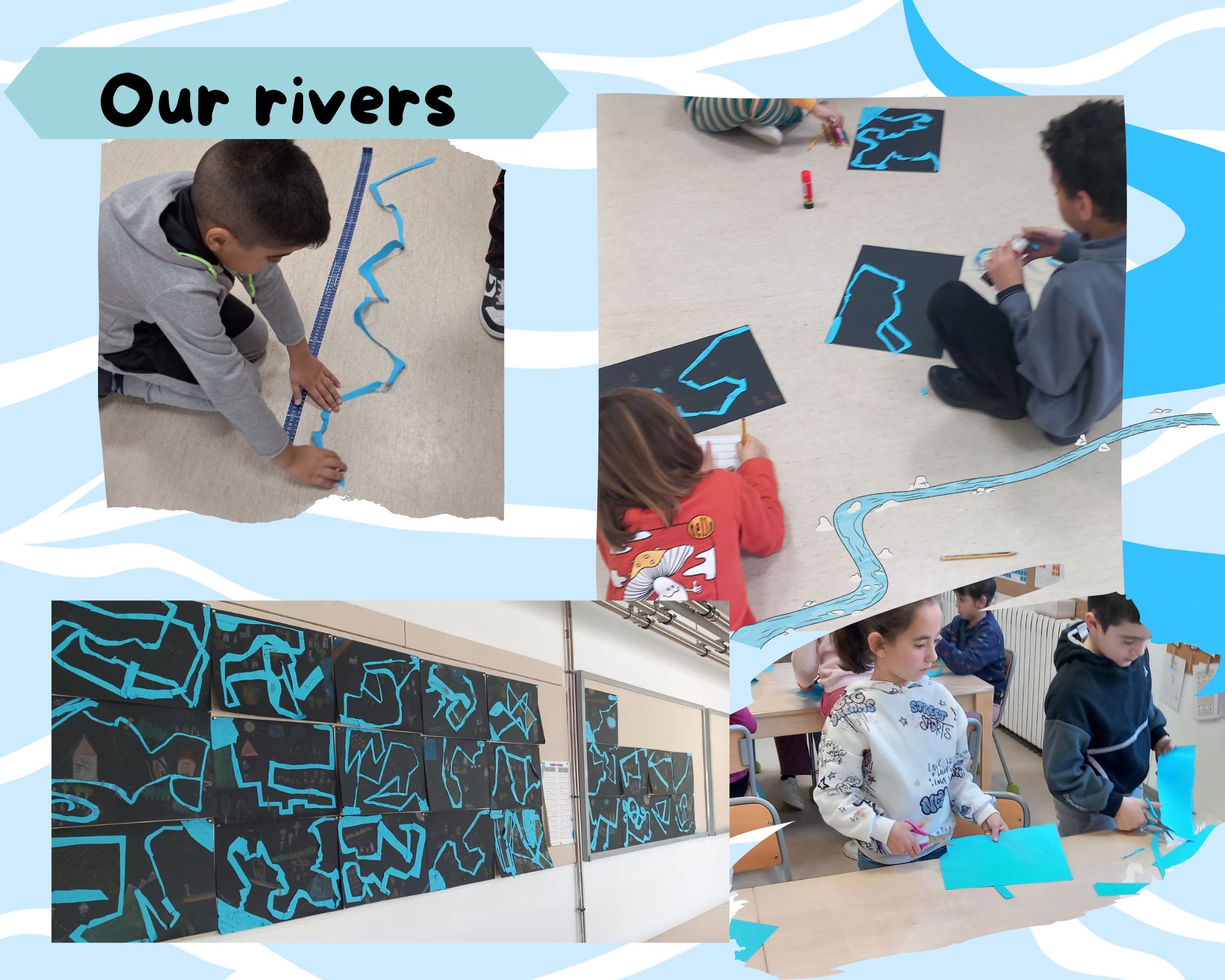
We are learning a lot about RIVER ANOIA and we decided to use all we have discovered so far to invent our own river. We had a lot of fun creating our river because we did not just draw.. We used blue paper and scissors to make our river with one continuous string. We had to be very careful when we used the scissors because we wanted to make it as long as possible without breaking the paper…
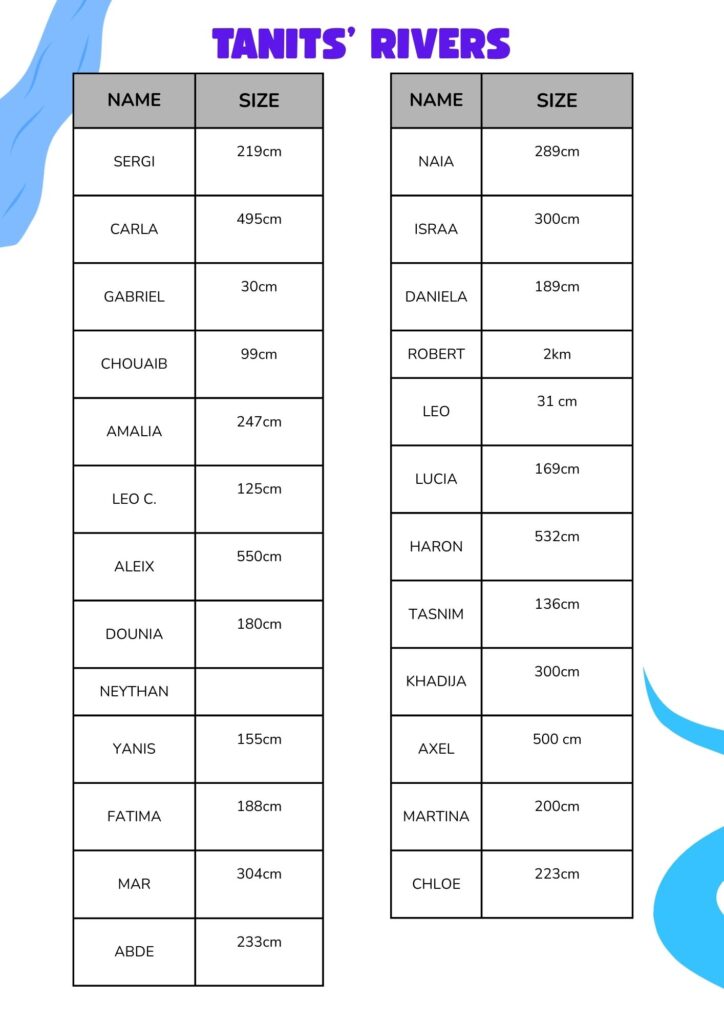
It was very difficult to cut thin paper and it required a lot of care. What a great way to practice cutting skills! When everybody got their rivers, it was time to measure them. Some rivers were so long that we had to help each other use the measuring tape. You can see how long our rivers are in this picture.
This activity offered us the opportunity to introduce big numbers and practice saying them. It was very fun and much easier than we thought! After spending some sessions playing games to practice saying, reading and writing numbers in English we were ready to write the info about our rivers… We had to complete a table with the basic information of our rivers (including the length in KM!) which later served us as the prompt to start writing our text describing the river. Writing in English is not as difficult when we have the right support!
Studying about how to make the school menu accesible, we discovered that lunches in the school are not the same in all the countries.
In the USA, for example, EVERYBODY has lunch in the school. Children DO NOT have lunch at home! In the USA you decide if you BRING your own food or take the food from the cafeteria. Watch this video to see the lunch in the USA.
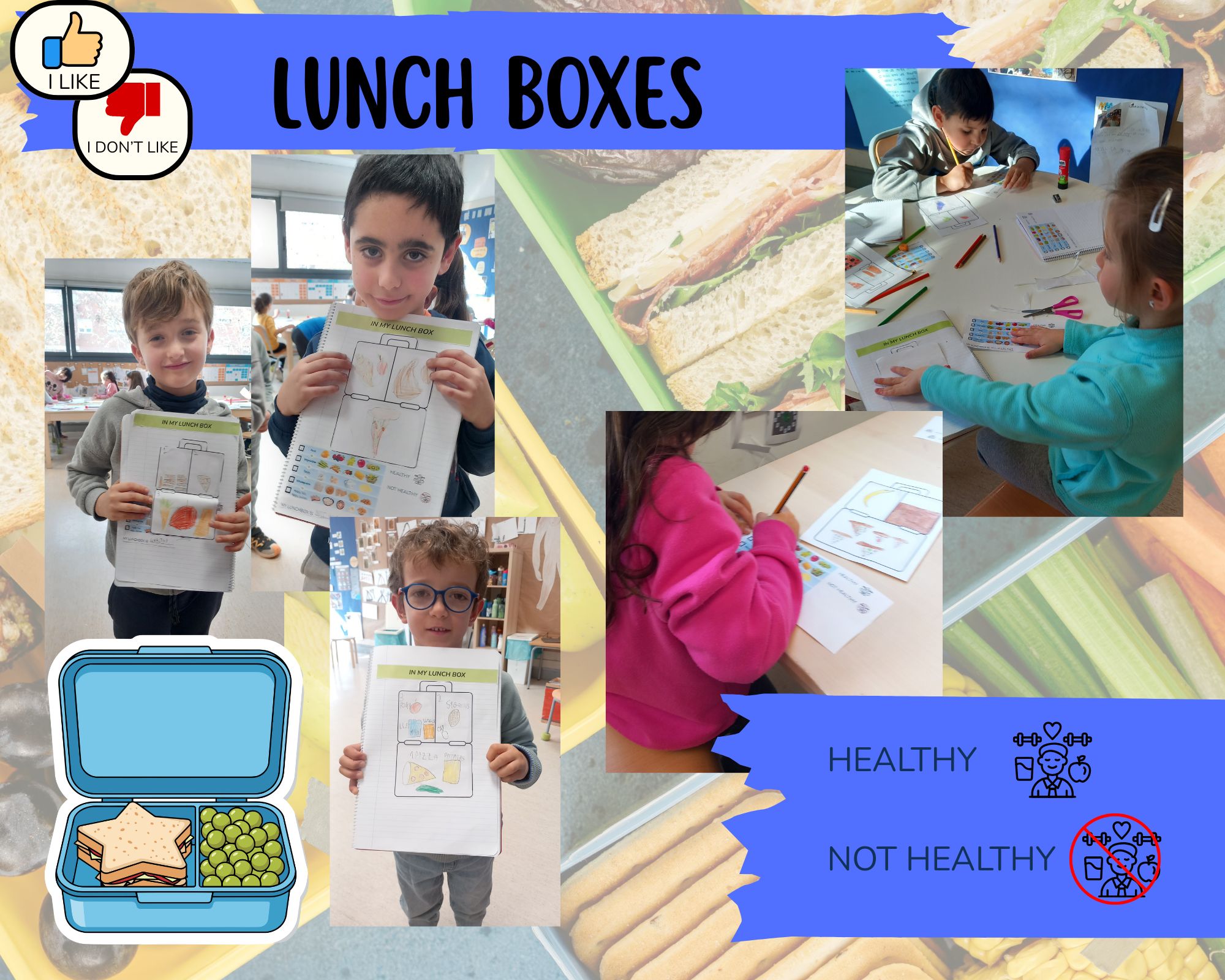
The food we see is very different but we discussed about it (using “I like” “I don’t like”) and… we generally love the food! We imagined what would be our perfect lunch box and we drew it. What is your perfect lunch box? In ours there are pizzas, pasta, chocolate and fruit!
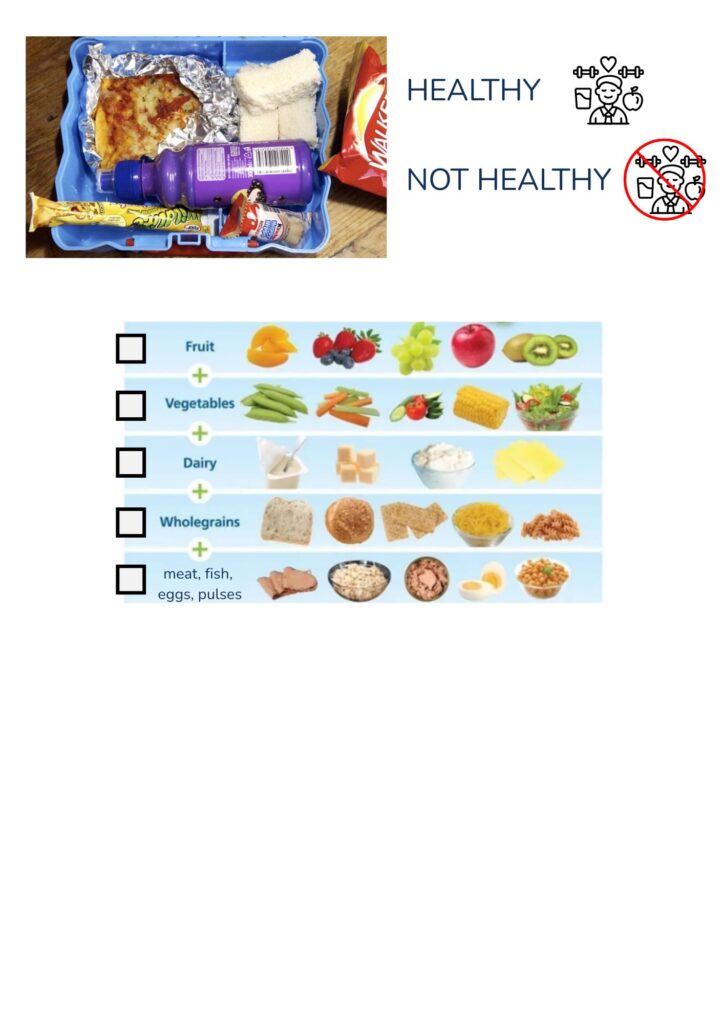
Looking at some real photos of real lunch boxes we discovered that, in general, lunch boxes are NOT HEALTHY and we started to check the contents using a checklist. It was a great way to practise English vocabulary!
Now that we knew that a lunch box needs DAIRY, FRUIT, VEGETABLES, WHOLEGRAINS and MEAT, FISH, EGGS or PULSES, it was time to analyse OUR lunch boxes...
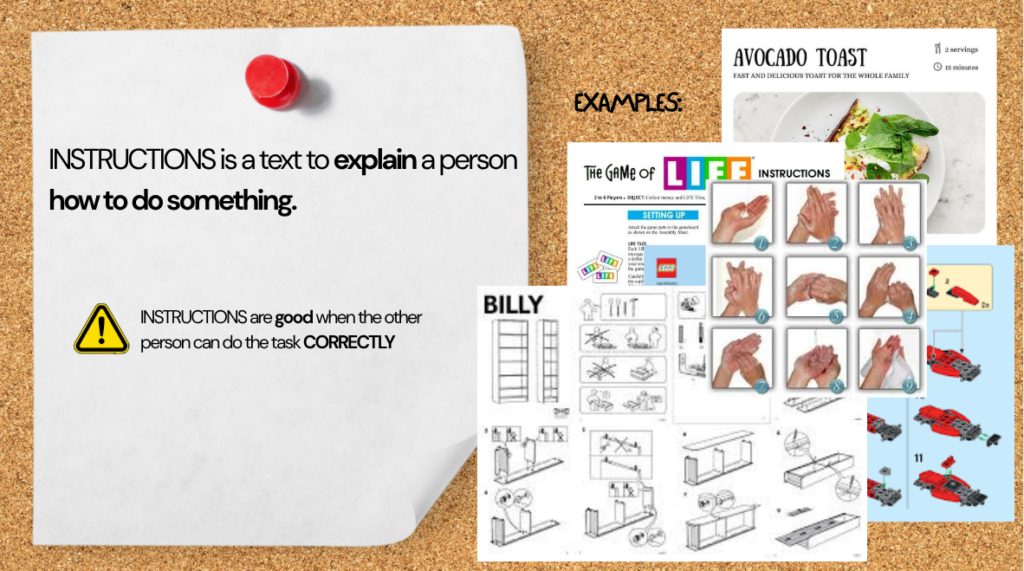
As part of our project “We make our board games” we are reflecting a lot about a text that is very present in our lives: instructive texts.
All the board games that we played had one characteristic in common: they all had a set of instructions. It is true that not everybody reads the instructions and this is a real problem. Not reading the instructions can make the game boring or even impossible to play!
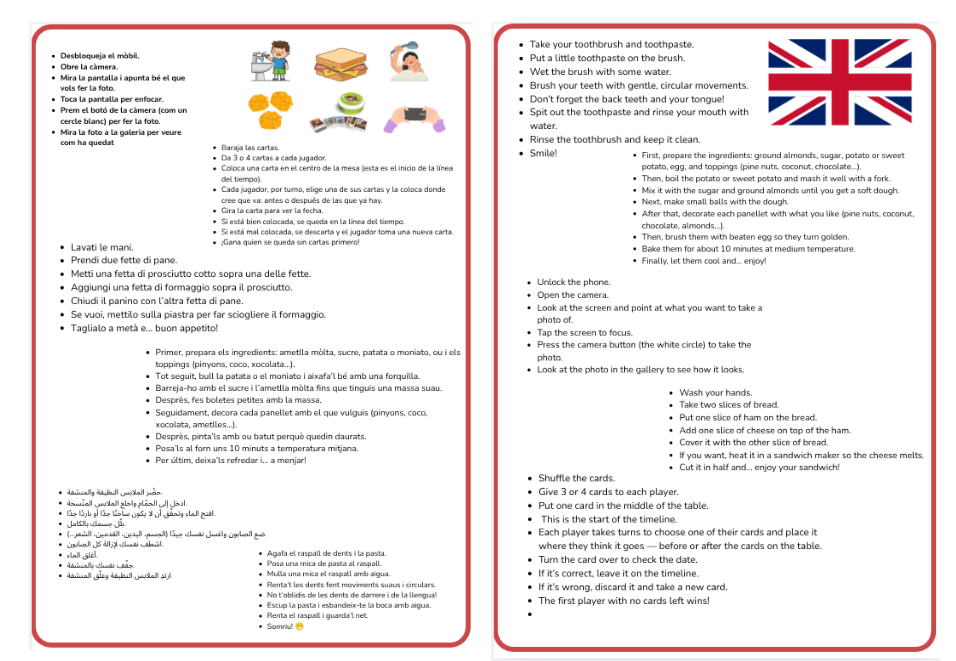
Now that we realized about the importance of instructions, it was time to read different sets and focus on their characteristics. We read a set of instructions in the different languages present in the school and we realized that they all had the same characteristics: they were short, direct, simple and sequenced. It was very interesting to do the activity in different languages because it also offered the opportunity to observe the similarites and differences between languages.
It was easy to understand the general idea of all the texts because of some key words very similar to Catalan and Spanish. And we could guess the meaning of difficult words in English just by using this strategy! Of course this was not possible with Arabic, which we learnt is a language that has a different origin and a different alphabet! Can you understand the texts? Can you match them with the set of English instructions?
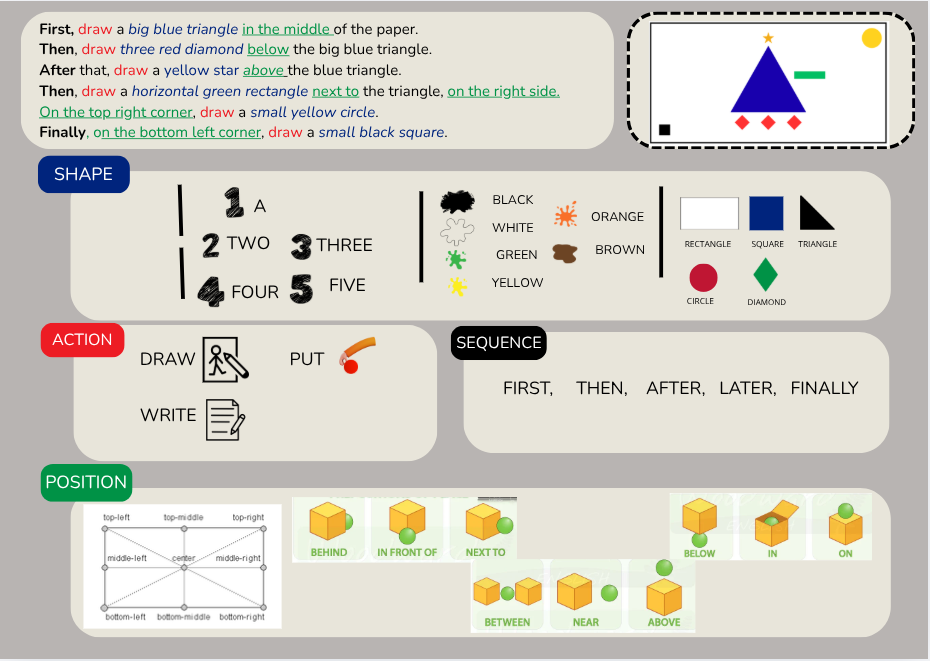
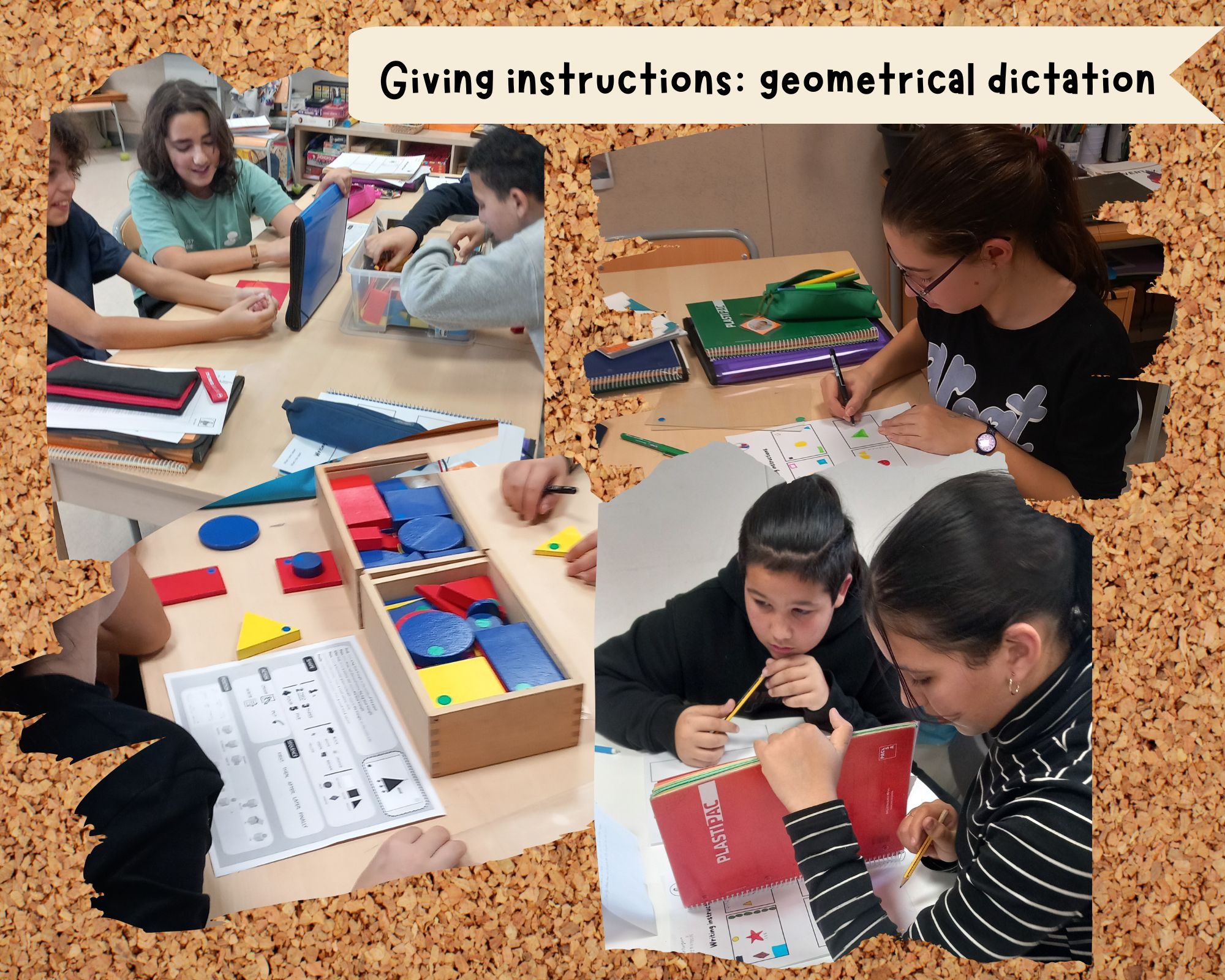
With all this ideas, we were ready to create our instructions. We started with a simple exercise: a geometrical dictation. We created pictures using different shapes and we had to write or tell the texts so that our classmates could replicate them. Simple? Not really! We discovered that we had to be very precise in doing the instructions and specify very clearly not only the position, but also the size and the colour.
While reflecting about all we have learned about instructions, one Matilda suddenly realized that clear instructions are the basis of COMPUTERS… We will have to test instructions on some of the robots we have at school!
“Comics are words and pictures. You can do anything with words and pictures”
Harvey Pekar.
A l’aula hem anat un pas més enllà de les descripcions físiques dels personatges. A partir dels còmics, hem descobert que les imatges també expliquen històries i que, sovint, ens transmeten molta més informació del que sembla a primera vista.
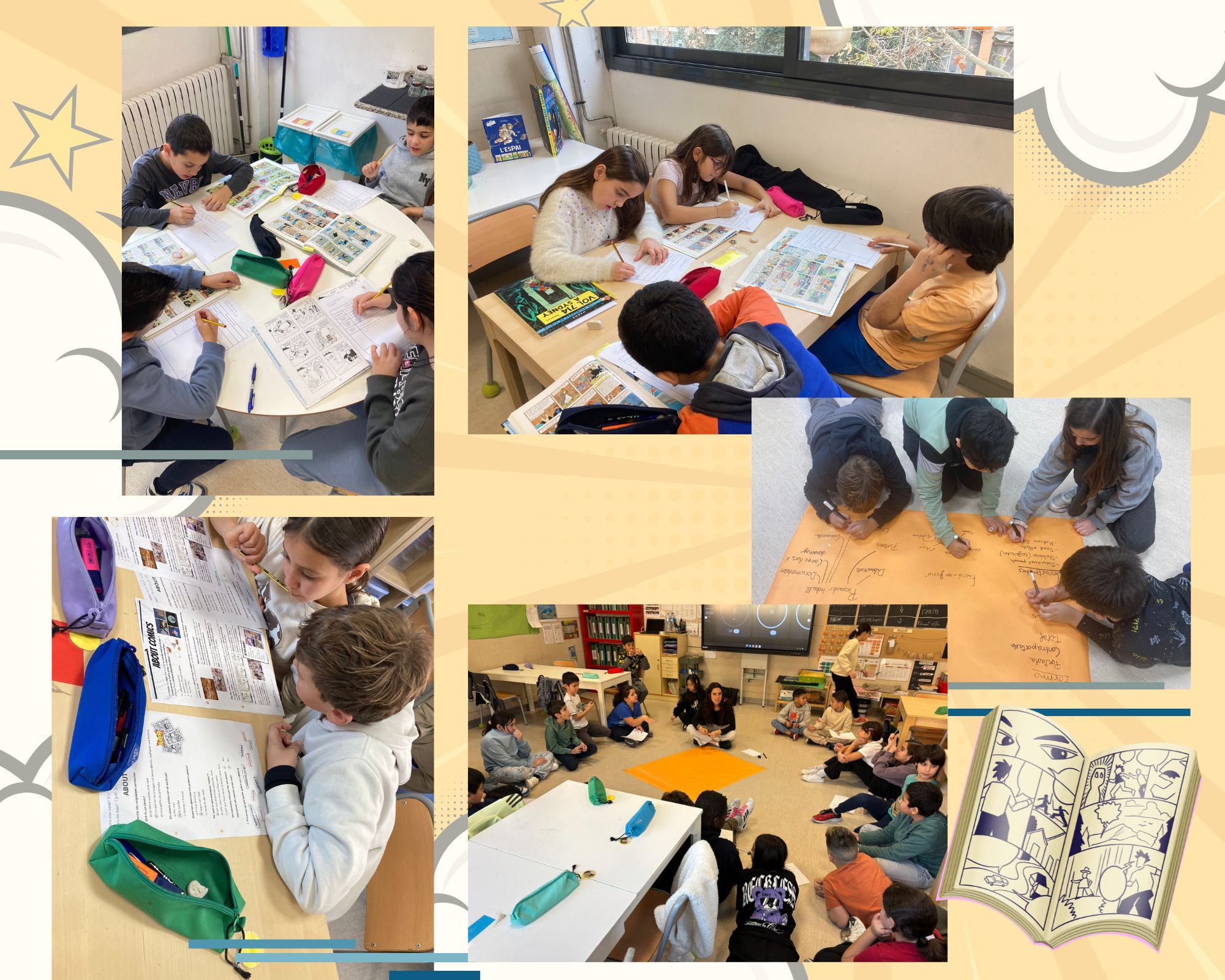
Per aquest motiu, hem analitzat els personatges del nostre còmic fixant-nos en l’emoció que transmeten en un moment concret i en la seva postura corporal. Gestos, mirades, moviments del cos o la manera de situar-se dins la vinyeta ens han ajudat a justificar què sent el personatge i quins motius ens porten a aquesta conclusió. Al mateix temps, hem observat el seu caràcter al llarg de la història, per entendre com és realment cada personatge i si canvia o evoluciona amb el temps.
Paral·lelament,també hem volgut conèixer la trajectòria històrica del còmic. A través d’un text en llengua anglesa hem descobert els seus orígens i les característiques principals d’aquest gènere. Aquesta activitat ens ha sorprès molt, ja que no érem conscients de l’antiguitat dels còmics ni de la seva importància al llarg de la història com a mitjà d’expressió i comunicació.
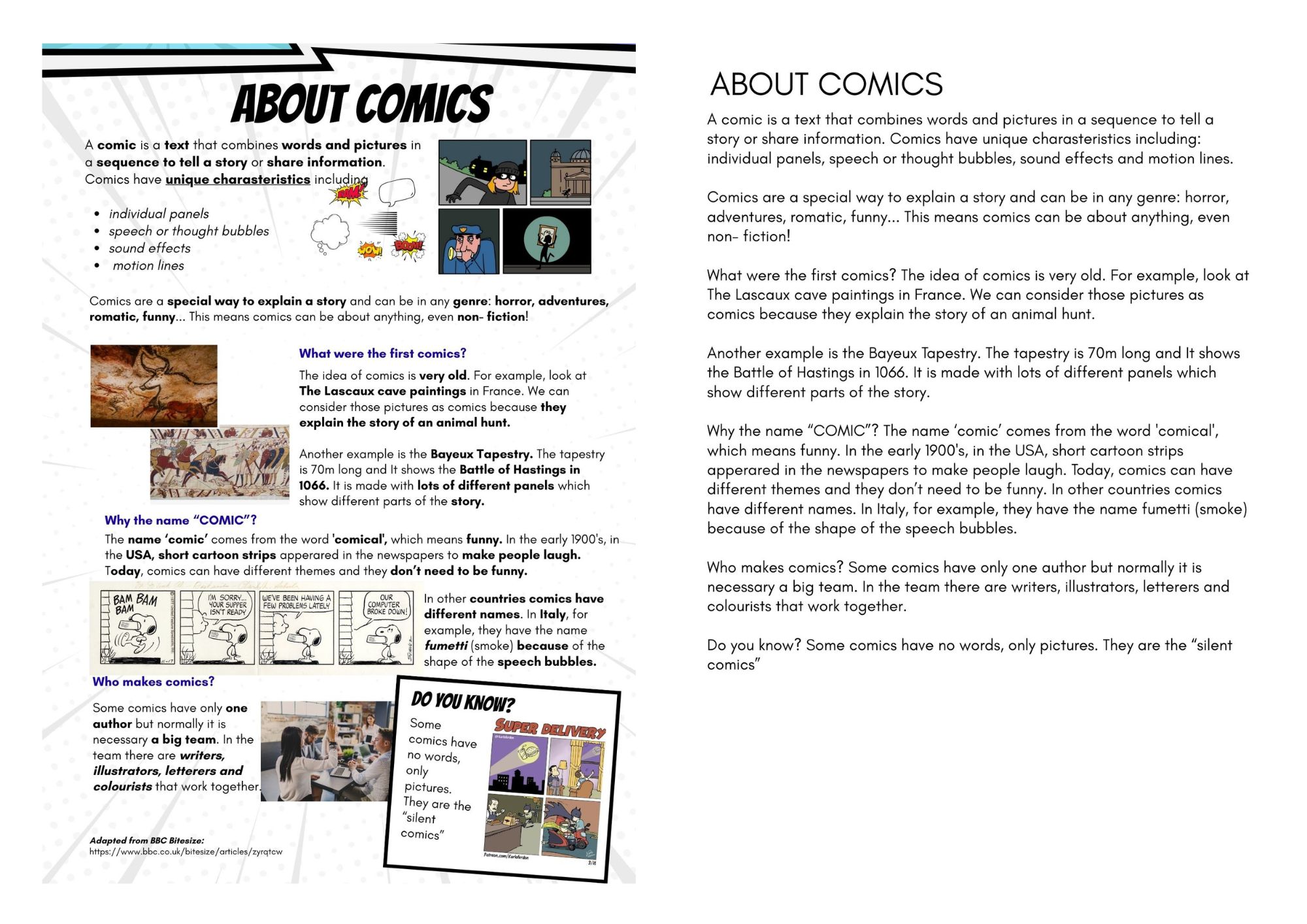
And we discovered all that reading in English! To discover things about the comics we had two texts and we had to choose one. Which one would you prefer? The one with images?
This is the text that we decided to read because the images help us understand the text. We also noticed the words in bold and we discovered that these help too because they are the important words. These are not the only strategies that we learned: we realized that we can guess a lot of words because they are very similar to Catalan.
If you need to read a text in English, just relax and use the strategies we use:
-Think about all your previous ideas about the theme
-Look at the images–they give a lot of information!
-Look for the important words and try to guess the meaning
Per recollir tot el que hem anat aprenent, en petits grups hem posat en comú les nostres idees i coneixements, contrastant opinions i arribant a acords. Finalment, hem plasmat tota aquesta informació en un mural col·lectiu, que ens serveix com a base i referència per continuar avançant en el projecte.
Arribats a aquest punt, hem pres una decisió molt especial: acabar el còmic L’Art Alfa, una obra que Hergé no va arribar a finalitzar. Ho farem com a part de la celebració del 20è aniversari de l’escola, donant sentit al nostre treball i connectant-lo amb el projecte de comunitat Abracem el món.
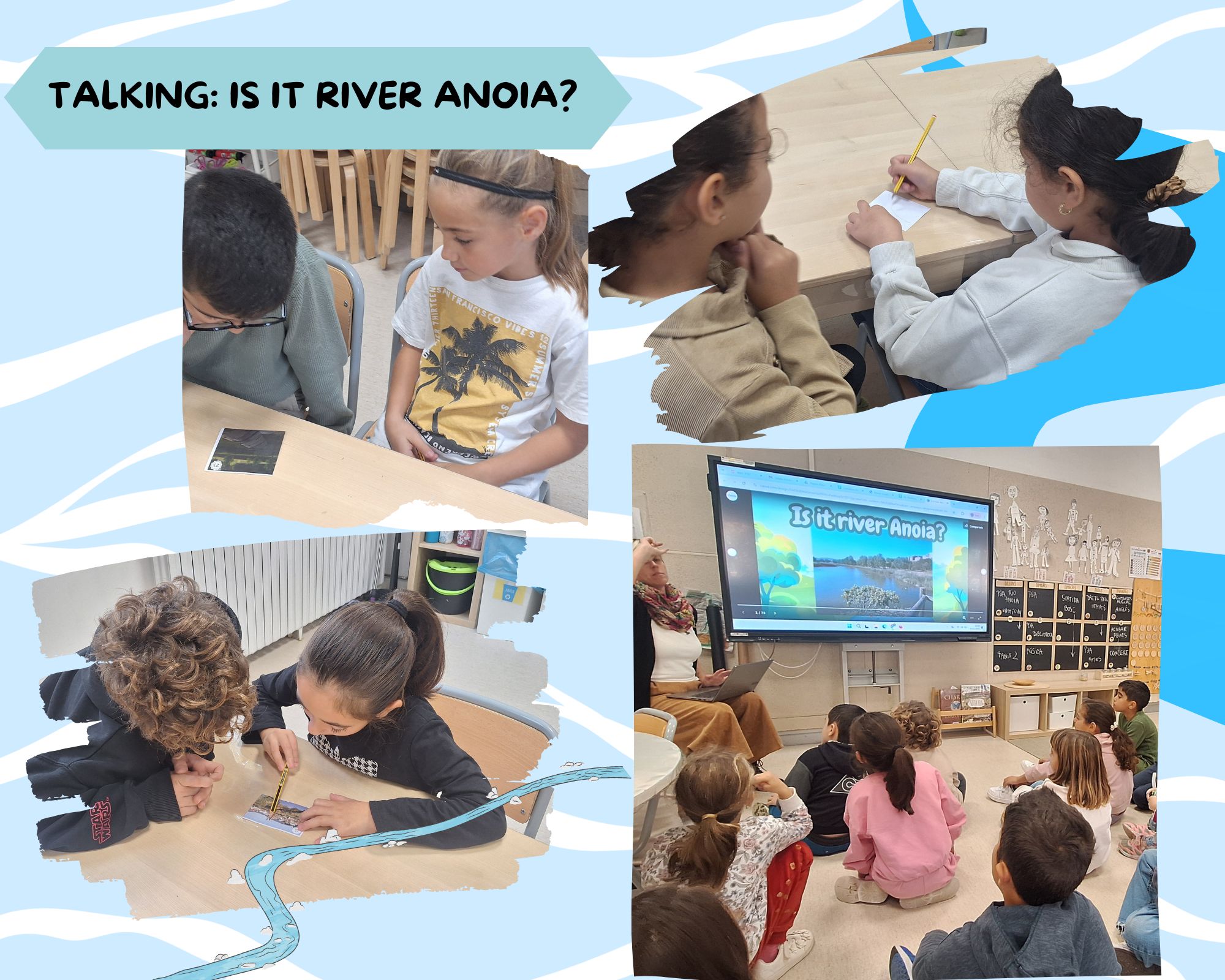
As you know, we are studying how can we help our river, the river Anoia. We go to Parc Fluvial a lot and we are quite familiar with the image of the river in Vilanova but we know that the river is different in all its parts. We know the river starts near Calaf and that it ends in river Llobregat but… can we recognise the river?
We had different images and, in pairs, we had to decide if the images were river Anoia or not. We used a lot of strategies to get the correct answer: look at the animals, look at the plants around, look at the cities and towns around but it is not that easy! The best part is that it offered a great opportunity to talk in English and use structures like “I think it’s river Anoia” or “I think it is not river Anoia” to express our opinions. Do you want to try? Click here, look at the presentation and try to guess.
How many answers did you get correct? Did you recognise any other river?
“Adopt the pace of nature: her secret is patience”
Ralph Waldo Emerson
After learning about the art of Bonsai, the other day we discovered another plant that is a national treasure of Japan: marimos.
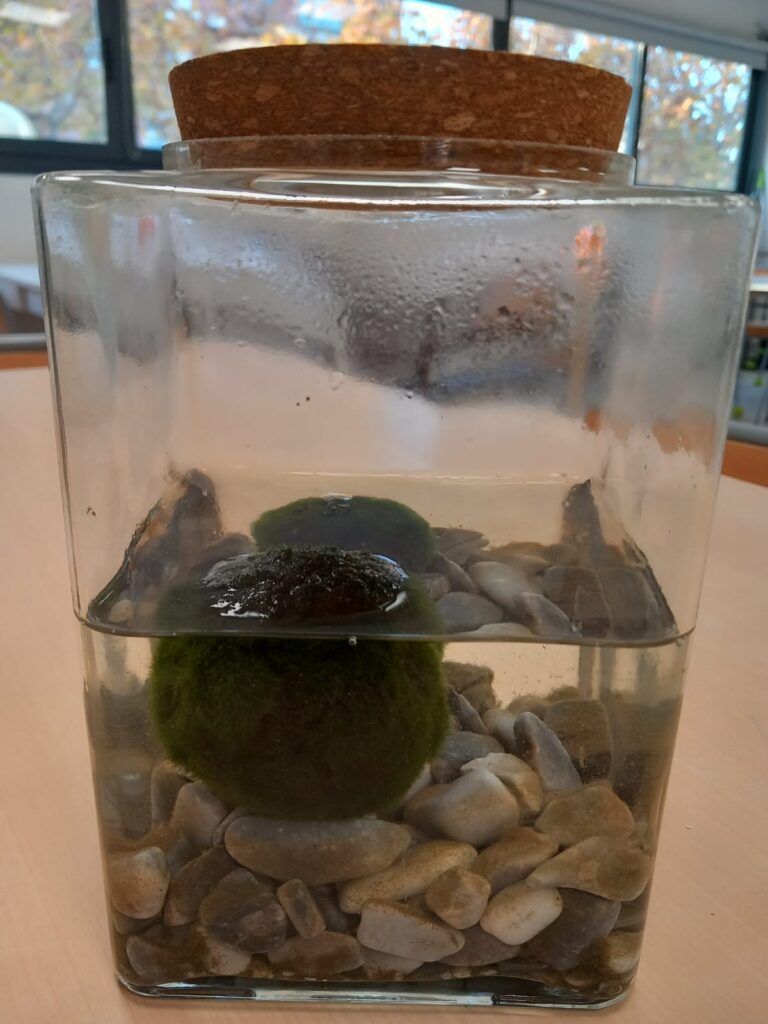
When we arrived at the class we found a glass jar full of water and two little green balls floating in water. Suddenly, a lot of questions came to our mind: is it alive? is it a plant? Is it an animal?
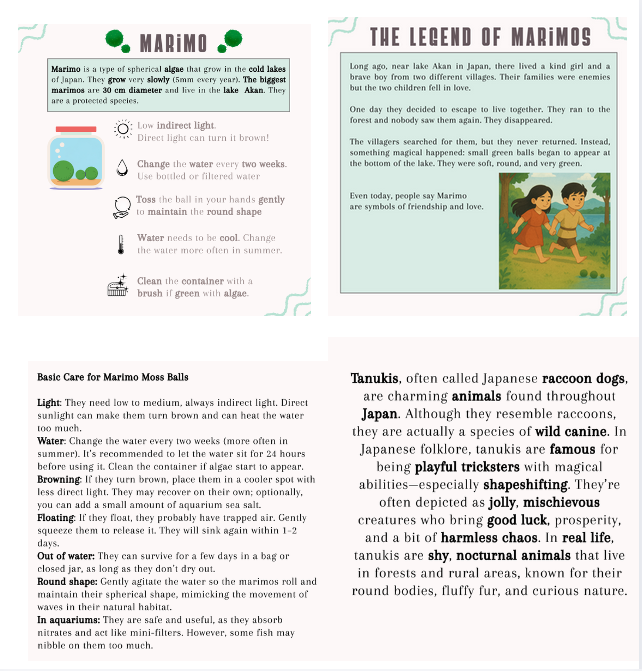
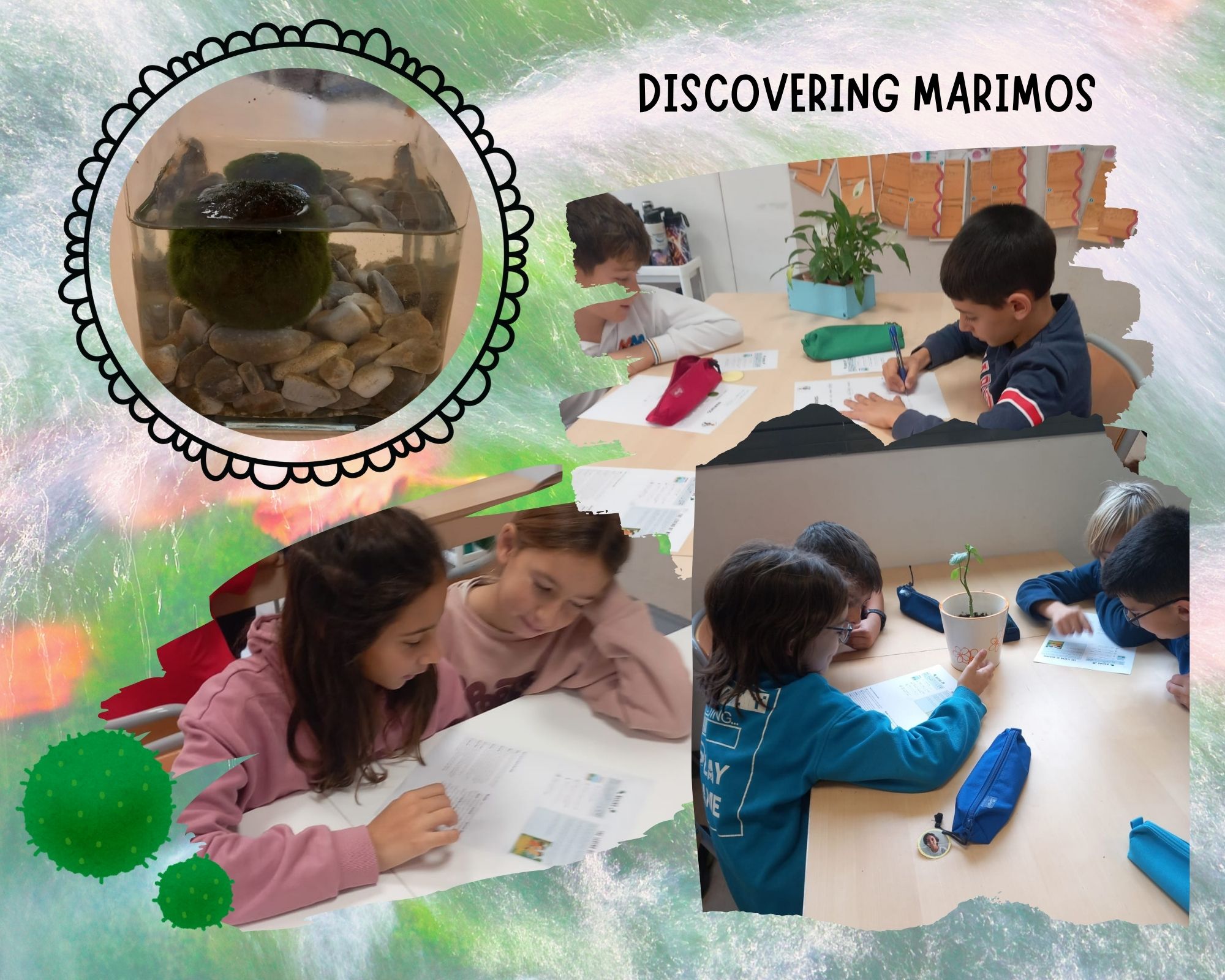
We would soon answer all our questions just by reading. We were presented with four texts that contained all the answers to the questions and we had only 5 minutes to read through them. This time limit forced us to put into practice comprehension strategies like skimming and making predictions that are key when we want to move from recognising words to fully comprehend a text.
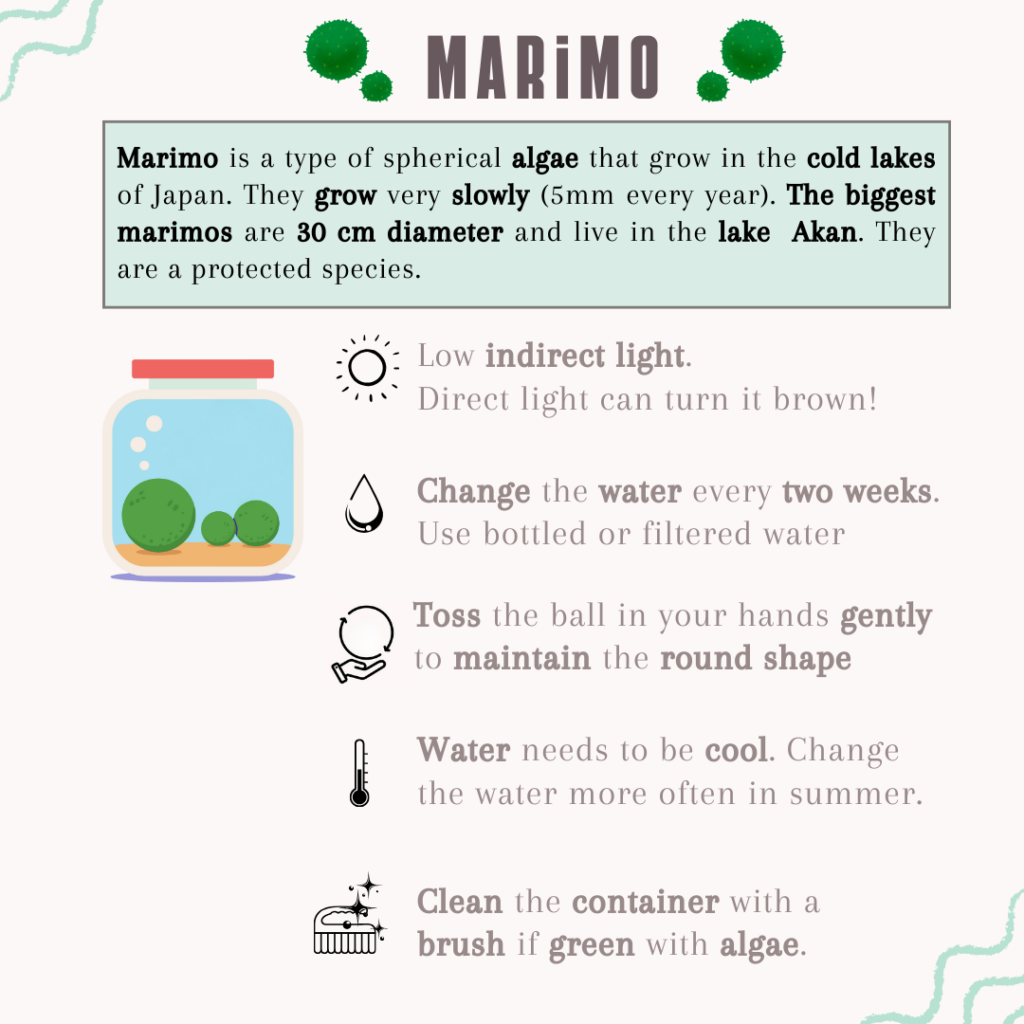
In pairs, we read the texts and we agreed that only two of them had the information that we needed. Then, in order to discover the marimos, we had to choose one text to read more carefully and we decided that the first text, with images and shorter text, was the best for our purpose. What text would you have chosen?
As you can see, it is a plant that requires indirect light and cool water that must be changed every fifteen days. To keep the round shape, it is important to roll it carefully on your hands every now and then.
We were very surprised to see that marimos grow very slowly… only 5 mm per year just to reach the 30 cm that measure the biggest ones. This raised a lot of new questions… How old is our marimo? How does it measure?
Seeing a marimo grow, just like reading, is a beautiful slow process that it can not be rushed.
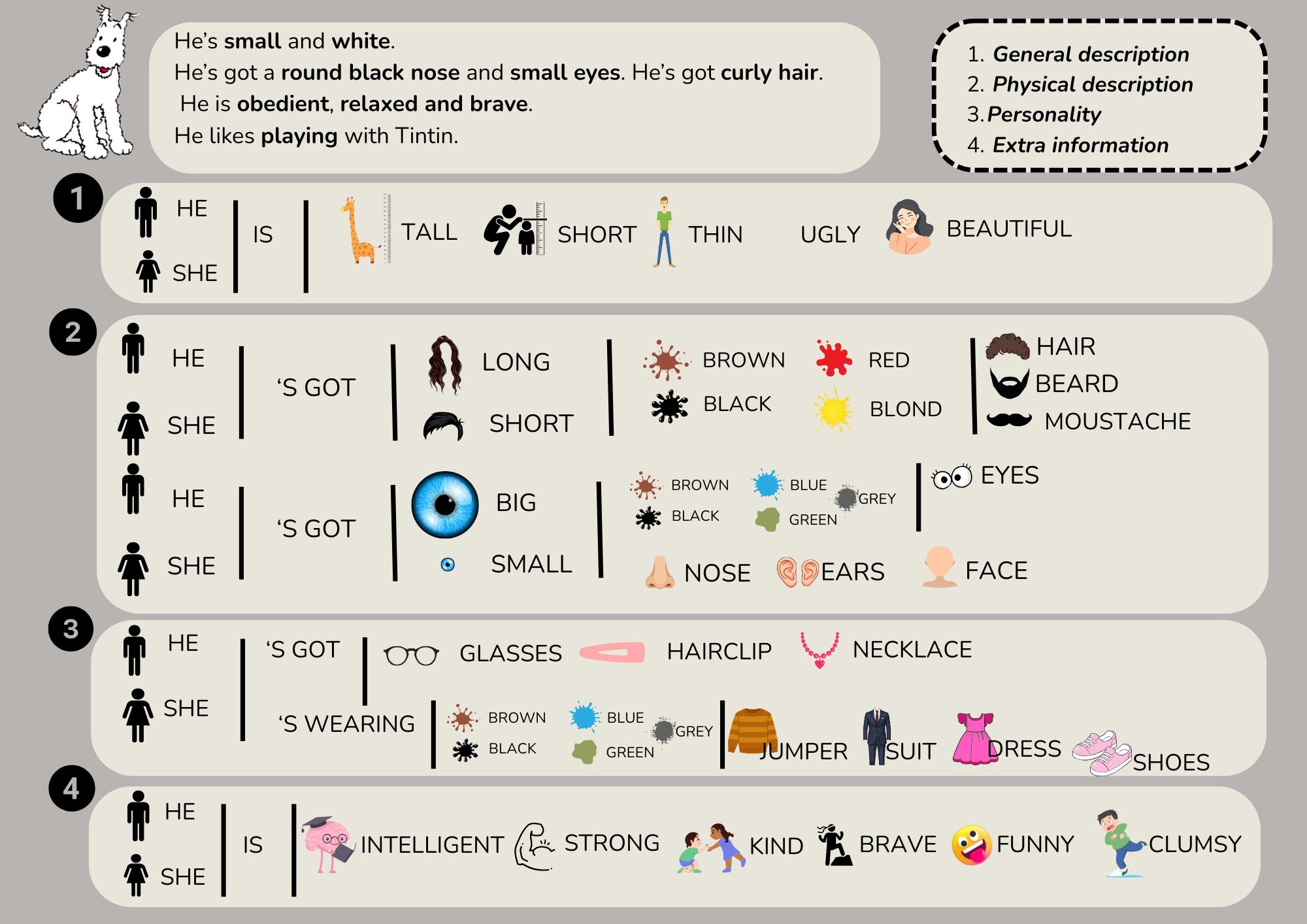
During these months we have been discovering TINTIN, the character that gives name to our class. We read comics and watched the film
“Castafiore’s jewels” and we discovered quite a lot about the characters. We have identified the main characters in the series and we have discussed their physical and psychological characteristics. We remembered the structure of descriptions and we wrote the descriptions in Catalan.
When we found the same texts translated into English we realized that we were able to recognise some useful words just by comparing the Catalan and the English texts. Some words are very similar!
With our vocabulary a bit bigger we faced a challenge… Could we write a description in English? Could the classmates recognise the characters?
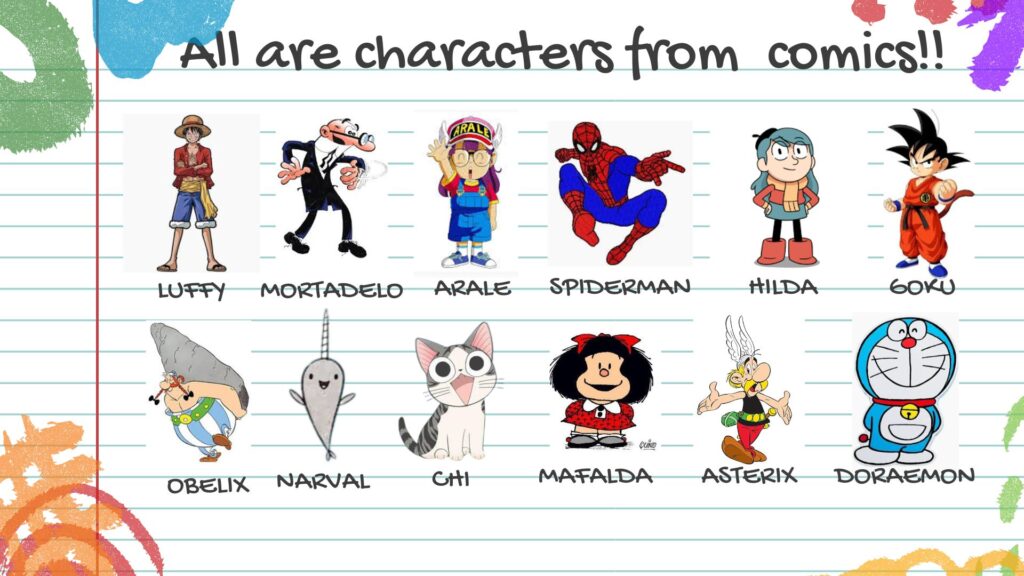
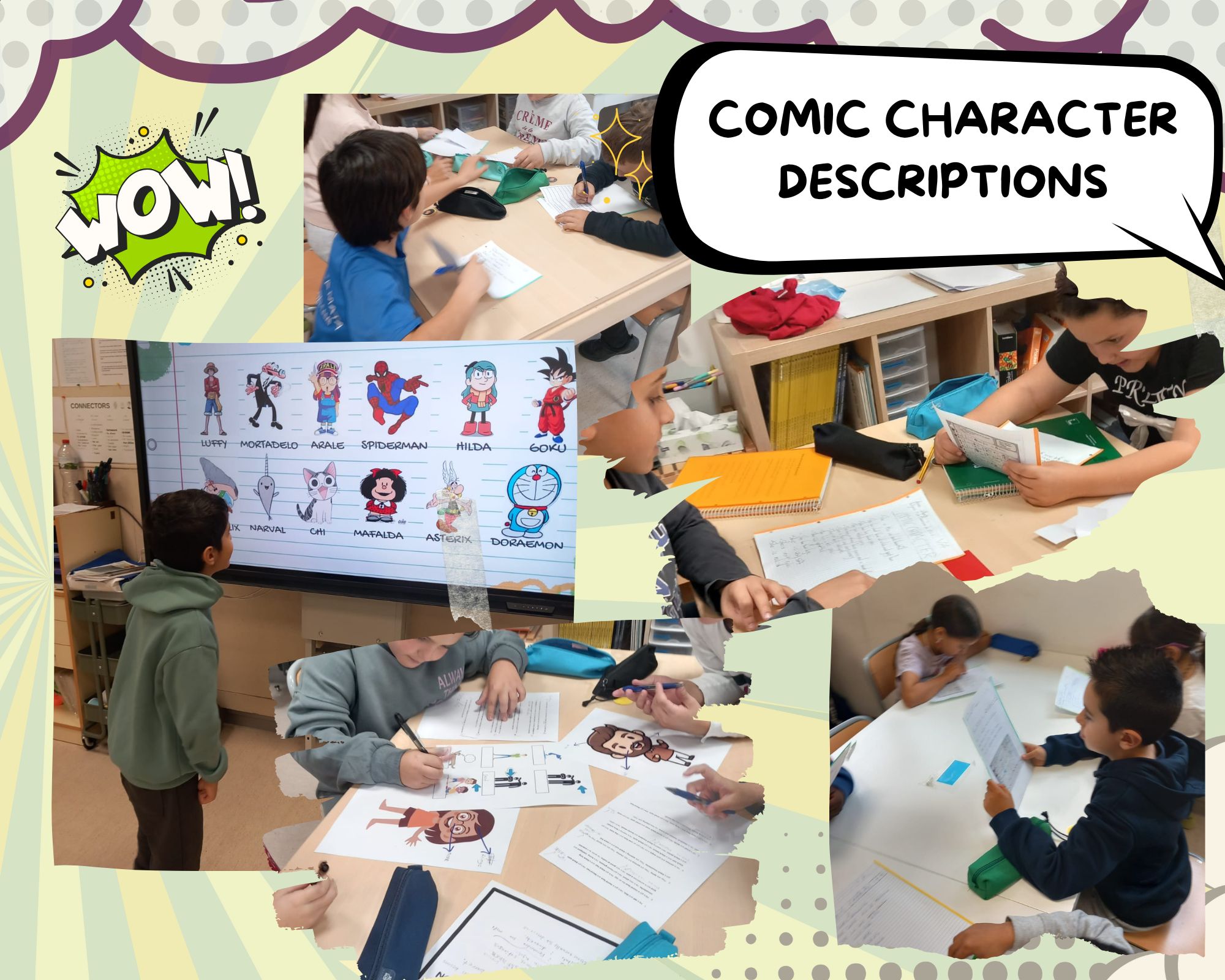
We thought about all the comic characters that we knew and, following a template, we wrote our texts… In English!
Our favourite part was when we read our classmates’ texts! Some texts were very easy but others were very difficult to read!
We realized that when we write it is important to take into account not only the content but also the presentation, especially if another person has to read it.
Do you want to try? Look at the image, read the texts and try to guess the character!
“The moth prefers the moon and detests the sun, while the butterfly loves the sun and hides from the moon. Every living creature responds to light.”
Suzy Kassem
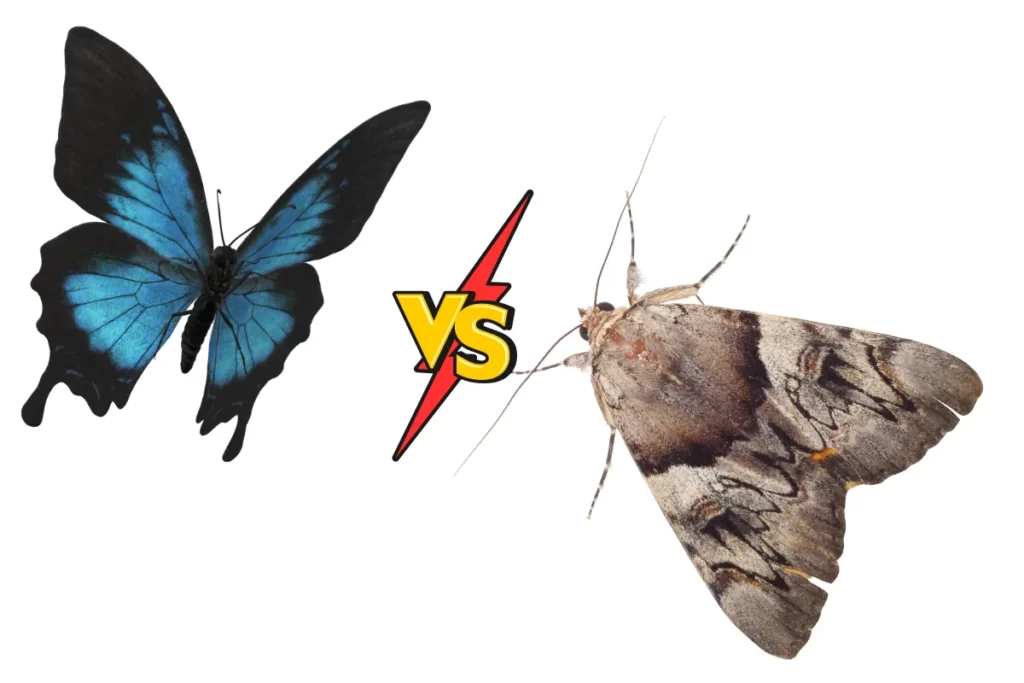
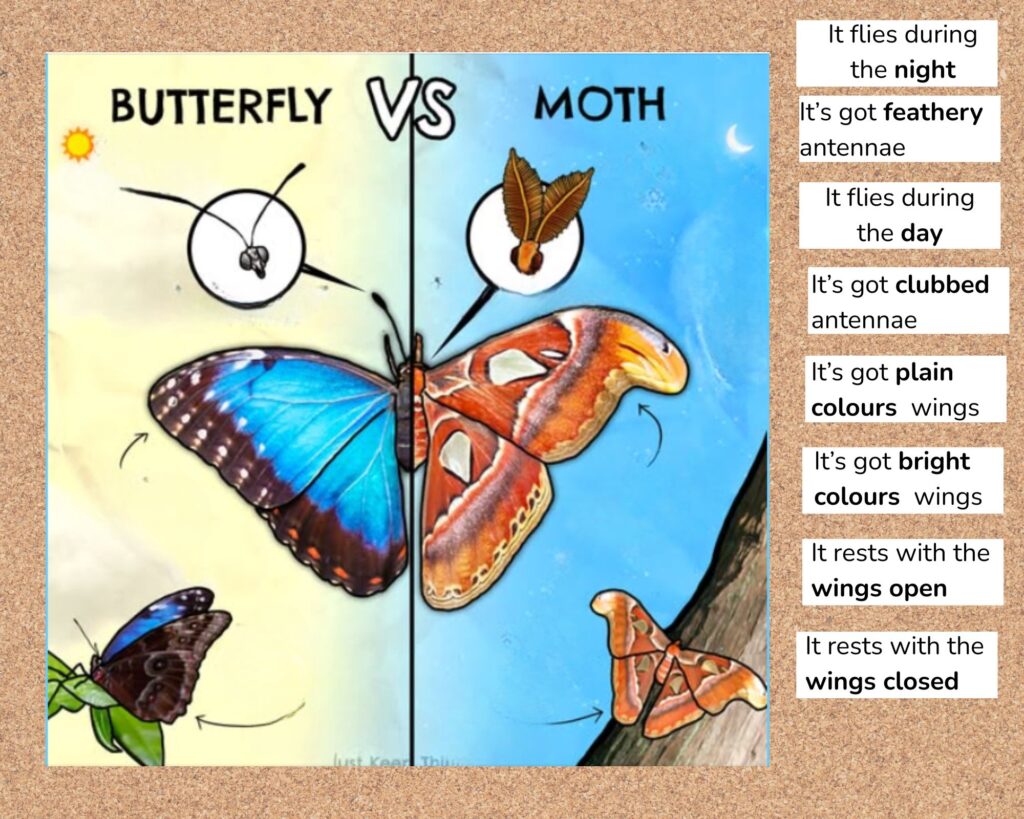
While we wait for our chrysalis to open and see the butterfly, we want to learn a little bit more about them. Just the other day we discovered an insect that is very similar to a butterfly… the moth.
After doing some activities to remember vocabulary we watched a video about the difference between butterflies and moths. The video in English was not as difficult as we thought: we were familiar with the topic of the video and the images helped us understand the general idea.
To reinforce the ideas and practice a bit of reading strategies, we did some activities together on the digital screen and individually on paper. Again, reading is easy if you know the topic and the important words are marked.
Do you want to try? Click on the image and try to put the sentences in the correct space. If you do it correctly you will have a digital infographic (just like our paper version) with all the differences between butterflies and moths!
“Recognizing that food is more than sustenance—it is an expression of culture, heritage, and creativity.”
Chef Vikas Khanna
We really liked cooking panellets in the school; we shared moments with other children and we got to meet new friends but our favourite part was eating them. There were 5 different panellets
CHOCOLATE PANELLETS
COCONUT PANELLETS
ALMOND PANELLETS
CHOPPED ALMOND PANELLETS
CHERRY PANELLETS
Talking about these flavours, we realised that all of us had different tastes. The question arose just then… What is our favourite panellet?
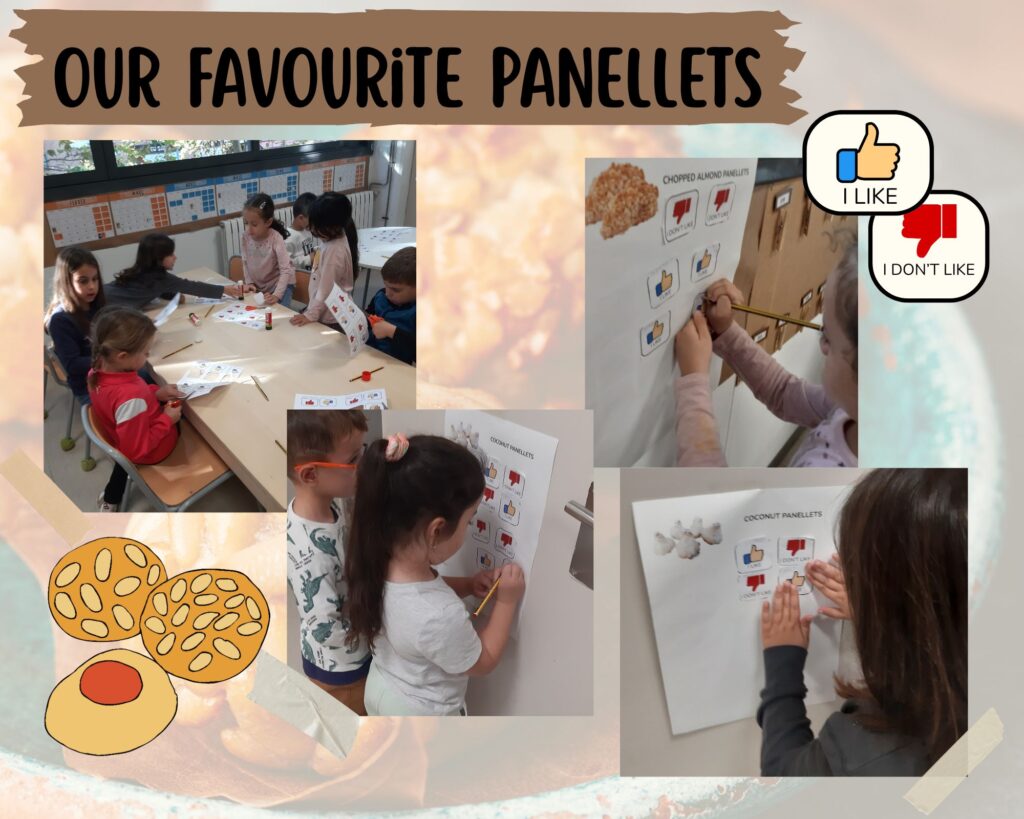
First, we needed to organize the information about our likes and dislikes. We had a poster of each of the panellets types in the classroom and a set of symbols expressing I LIKE or I DONT LIKE. We had to walk around the class sticking our opinion under the poster. It was fun and very interesting because we used the very same expressions when talking to our friends!
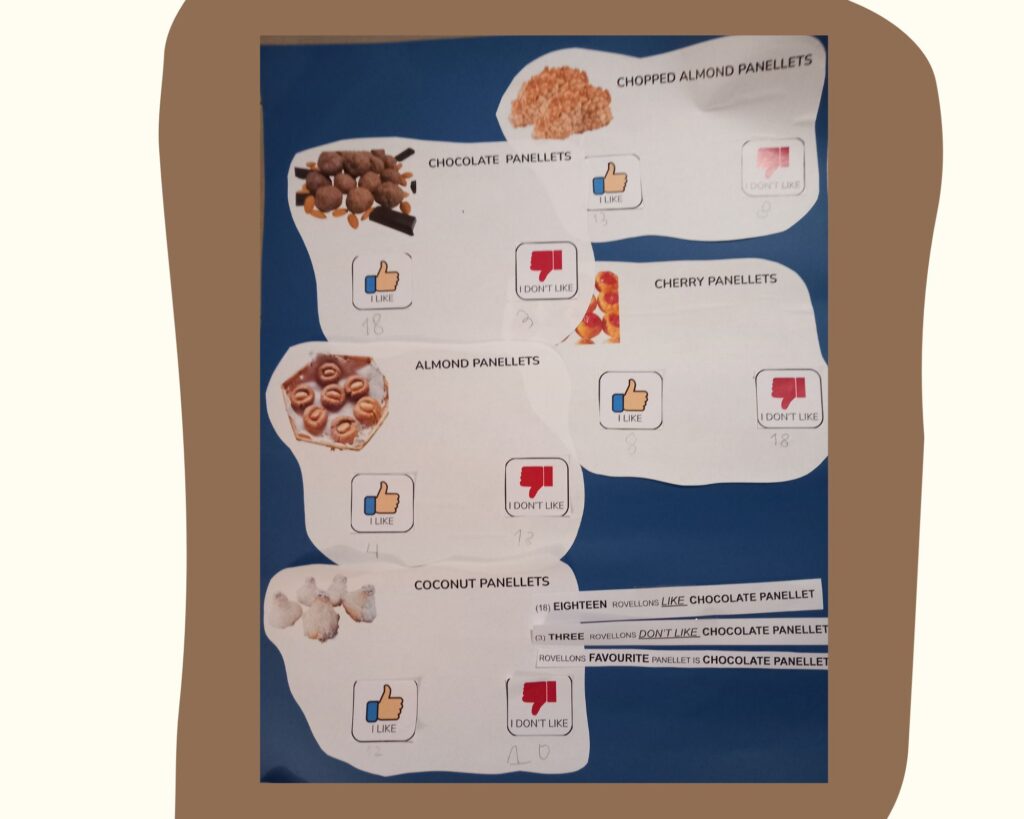
With the posters ready, it was time to count to see what panellet had the most LIKES. Again, we found another opportunity to practise counting in English.
Here you can see the results. Are you surprised? It was very fun to do this poster… Do you know that we selected what sentences went with it? We were offered a set of sentences and we had to found that ones that matched the real information. We thought it was difficult, but understating the key words is what makes it possible.
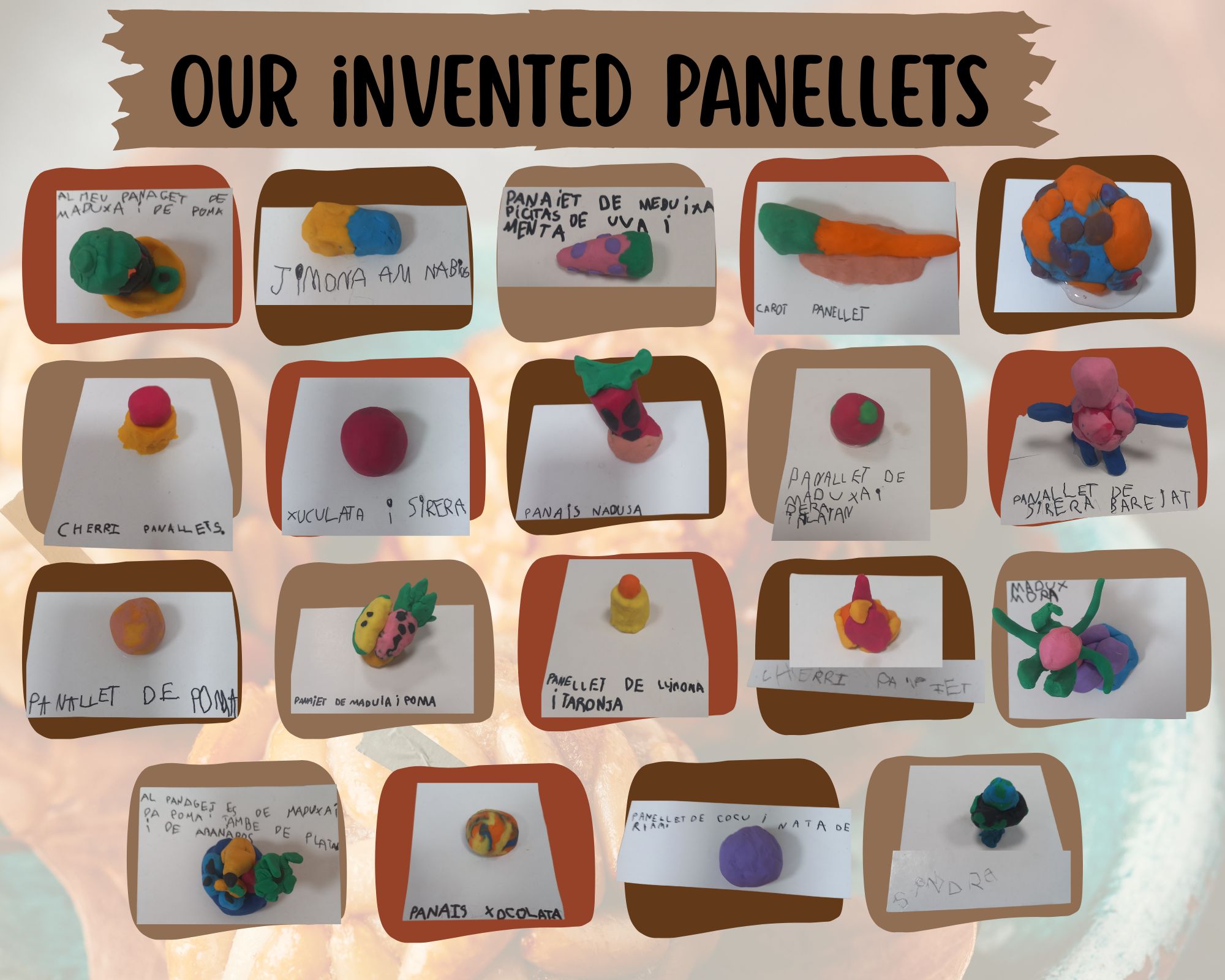
We also learned a song about how to talk about food that you like or… not. Click here to see it? Anyway, the song inspired us to create and invent our panellets. We had to ask the teachers for colored plasticine…a great opportunity to practise demands and gratitude expressions like THANK YOU.
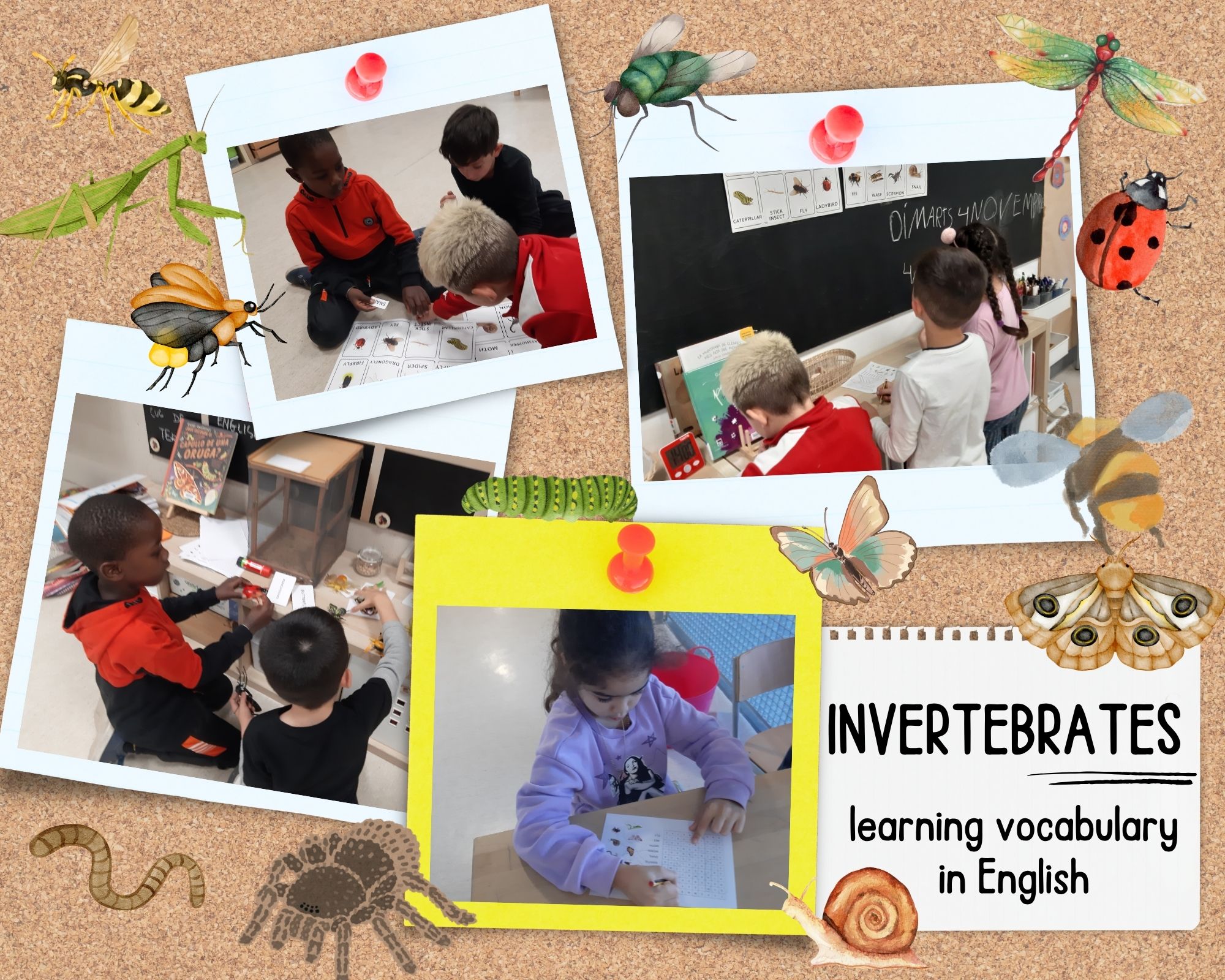
In Alicies we are fascinated by invertebrates. Now that we know what a “bitxo” is and that we are much more precise in naming them, it was time to learn the names in English for our little zoo.
We already knew some of the names thanks to the cartoons and comics (spider and ladybug, for example) but we were very surprised when we realized a lot of insects had the word FLY with them like BUTTERFLY; DRAGONFLY, FIREFLY or simply FLY. Did you know that?
We did several activities to recognise the written form of all the words that have appeared in our conversations these days. Online games, word searches and matching games are ideal to get familiarized with the words. We know now that the written words are pronounced very differently than in Spanish or Catalan and the best way is, sometimes, to “memorize” it. Do you want to try? Click here and try the different games!