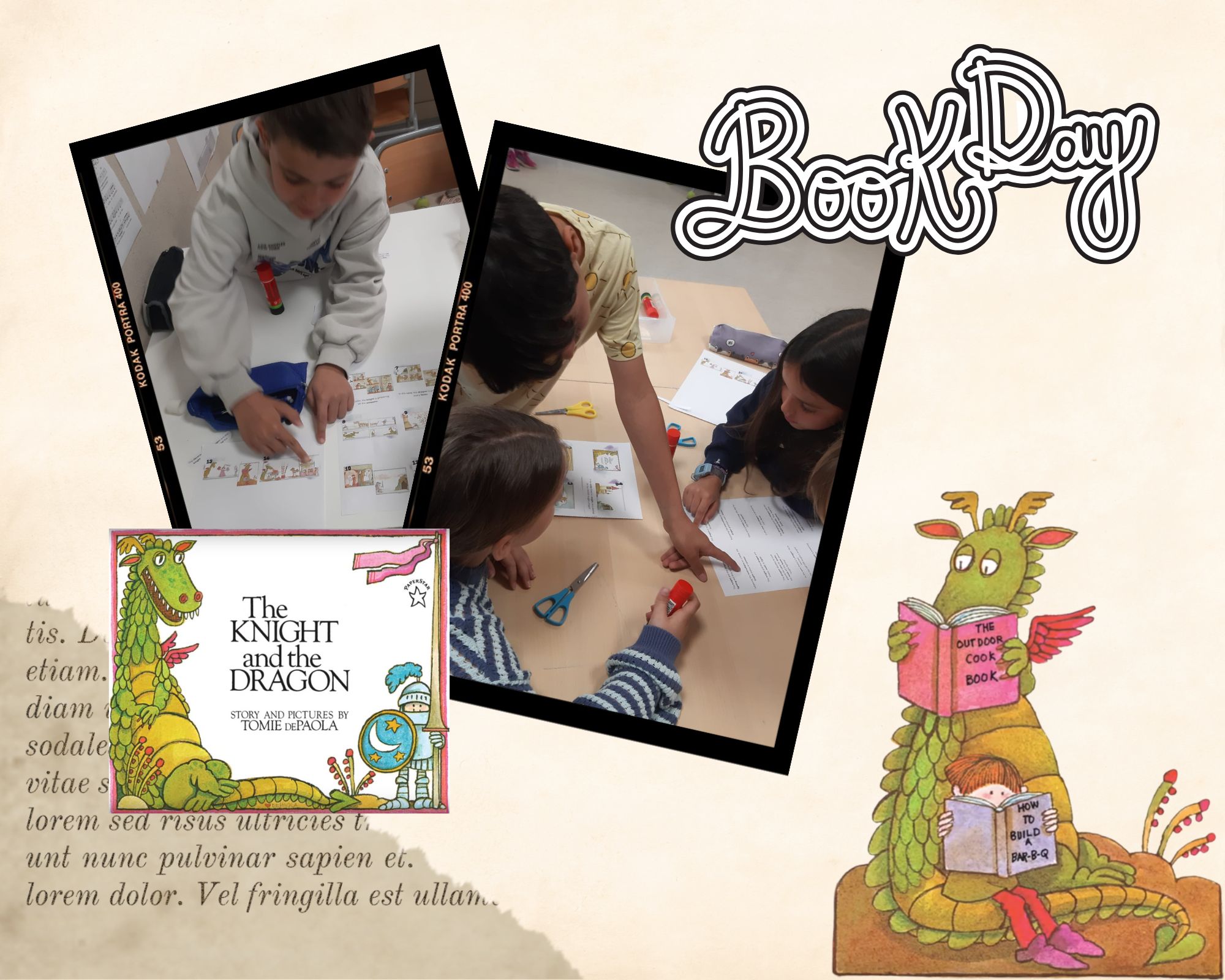
The 23rd of April is a very important day in Catalonia because of St. George celebration. But, did you know that it is celebrated worldwide as the International Book Day?
It all started in 1995 when the UNESCO decided to dedicate a day a year to promote reading, a lifelong skill key in learning that also adds richness to our lives.
To celebrate this day, we read a story about a dragon and a knight... that needed to learn fighting! We had to work very hard to read because the images and the text were separated. The task was easy once we realised that we could use some reading strategies:
-It is not necessary to understand all the words, just the important ones!
-A lot of words are very similar to Catalan or Spanish
–Images give a lot of information
We then watched the video to correct. It was very fun!
Last week was the first after the experiment of living without screens during seven days. It was a time to analyse the pros and cons of such an activity and we shared all our discoveries. It was very difficult for some, but the general opinion was that it had a lot of advantages and everybody claimed to have changed their routines in some way.
We discovered that these experiment was not new and that it has been held in USA since 1994. This fact made us realize that screen usage is a worldwide problem.
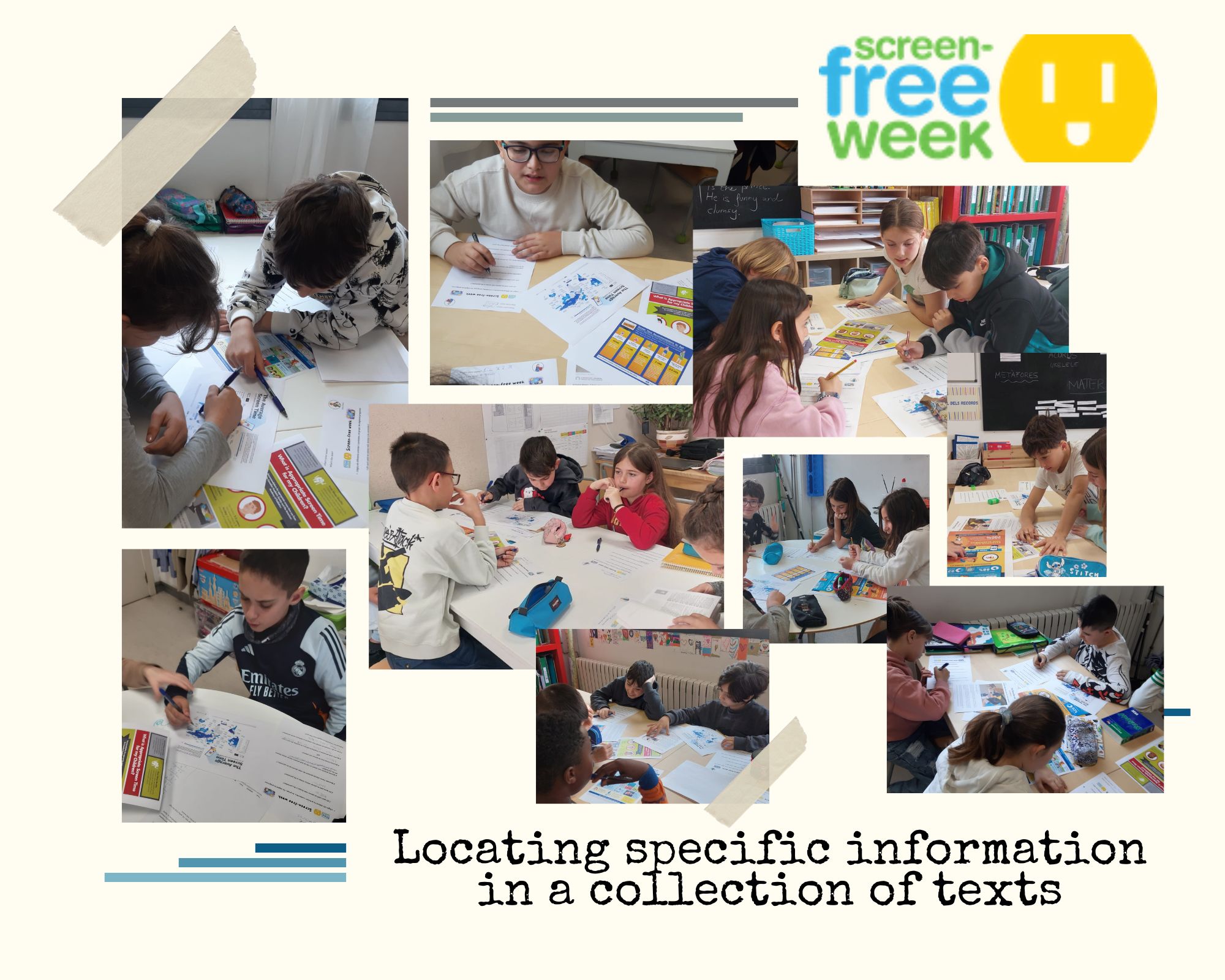
We found a lot of texts about the perils of screens and, of course, they were all in English. This is what generally happens when you make a search on the Internet, that the vast majority of texts are in English. Nowadays, with the use of Google translator, there are no major problems to understand the gist of any kind of text but it is not a good idea to rely exclusively on the answers provided by AI tools. It is much more benefitial to develop strategies that enable you to understand any kind of text. In this occasion, the texts about screens provided the perfect opportunity to practise how to locate specific information.
The main goal of this activity was not to read and understand a whole text but to be able to find the answer of some questions. The questions were in Catalan and, in groups we had to critically analyze all the aspects of the text to select the correct text from a collection and then locate the answer on it.
Titles and images were useful to discard texts that were not related to the topic, for instance, and they also paid notice to words in bold, that offered hints about where in the text the information would be.
The fact of being able to understand texts that were not adapted was very encouraging too! English is not as difficult as it may seem!
As you know, we read in English during 30 minutes every Thursday. We have a portable library with all kinds of books: comics, cook books, art books, picture books, short abridged novels and a lot of science books.
Browsing DK’s “Children’s Encyclopedia”, a Tintin found… Llegeix més»
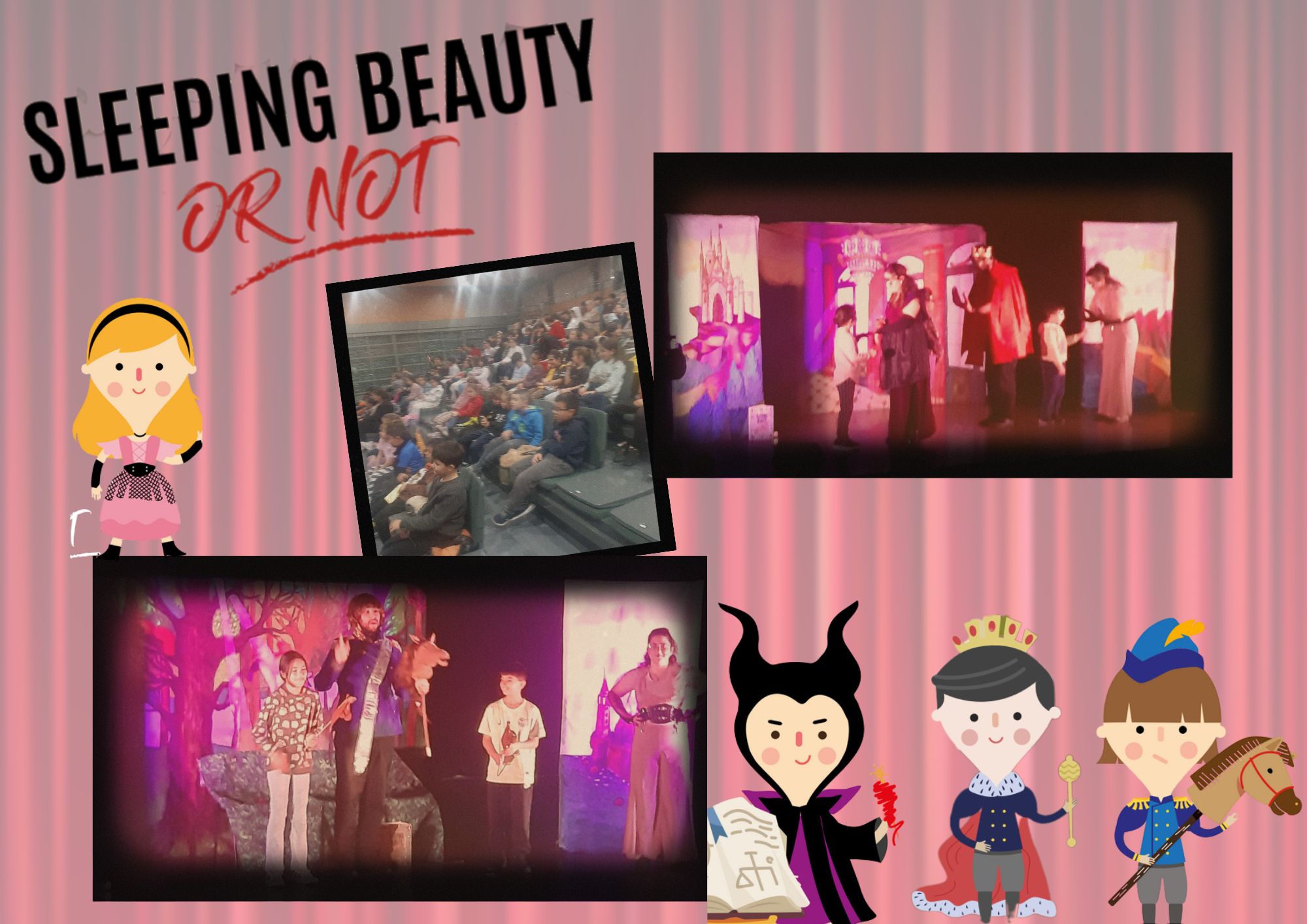
Yesterday we had a great opportunity to practise English while having a good time by watching a play: Sleeping Beauty (or not).
“Mitjans” and “Grans” had been preparing the theatre for weeks and they knew the story very well: it was a new version of the traditional fairy tale in which the princess, Aurora, changed the story to fit her true desires.
The students laughed and sang together with the characters and… some even became actors and danced or rode toy horses!
All in all, students discovered that, knowing the context and some basic language, it is possible to understand a complex story with lots of unknown words. Why don’t you give it a go and watch cartoons or films in English? You may be surprised!
Checking temperatures around the school we started wondering about the F written on the thermometers. What is that F? We discovered that it was the symbol used to refer to Fahrenheit: what a strange name!
It was funny, but we also recognised the word… Llegeix més»
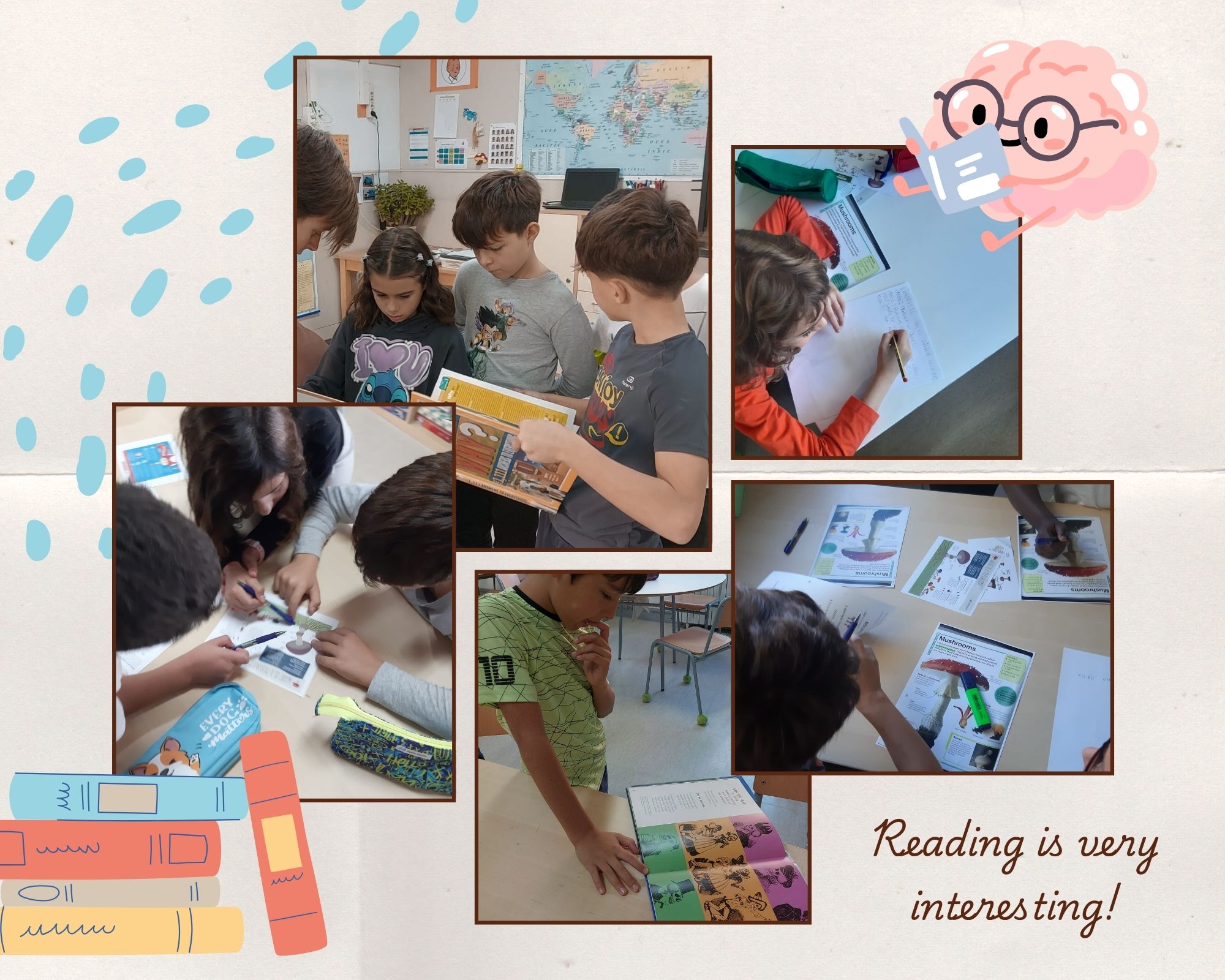
As you know, we read in English once a week. We have a portable library with all kinds of books; both fiction and non-fiction. In one of these sessions we found a scientific text about MUSHROOMS! It was very interesting because we are investigating a lot about these organisms.
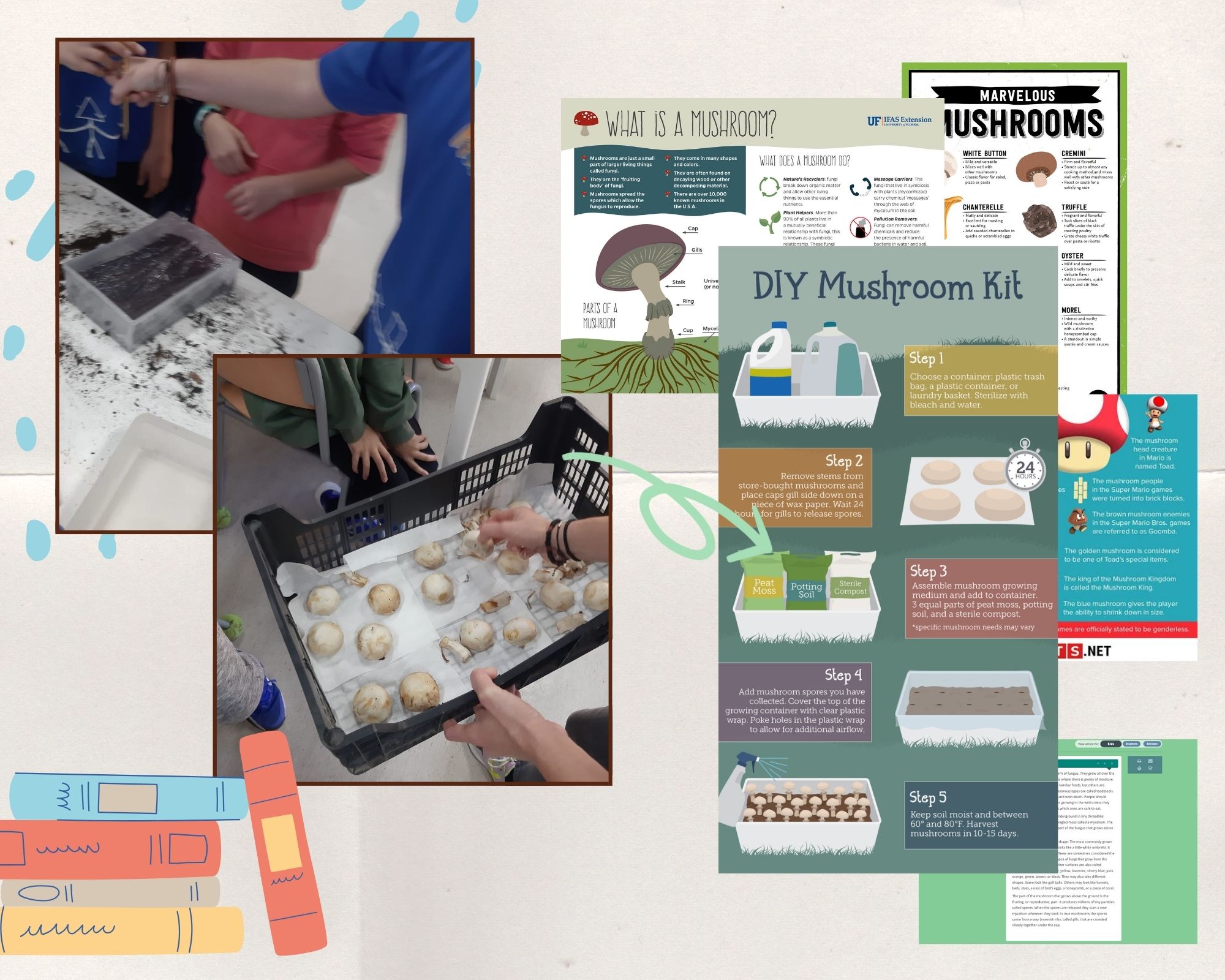
We decided to start investigating about musrooms finding the information in English texts. We had a lots of texts in English and we had to decide which texts were appropiate to learn things about mushrooms. We had to look at the texts closefully because not all of them had useful information: one text was a list of different mushrooms, another was too difficult to read and one was about the mushrooms in Mario Bros!
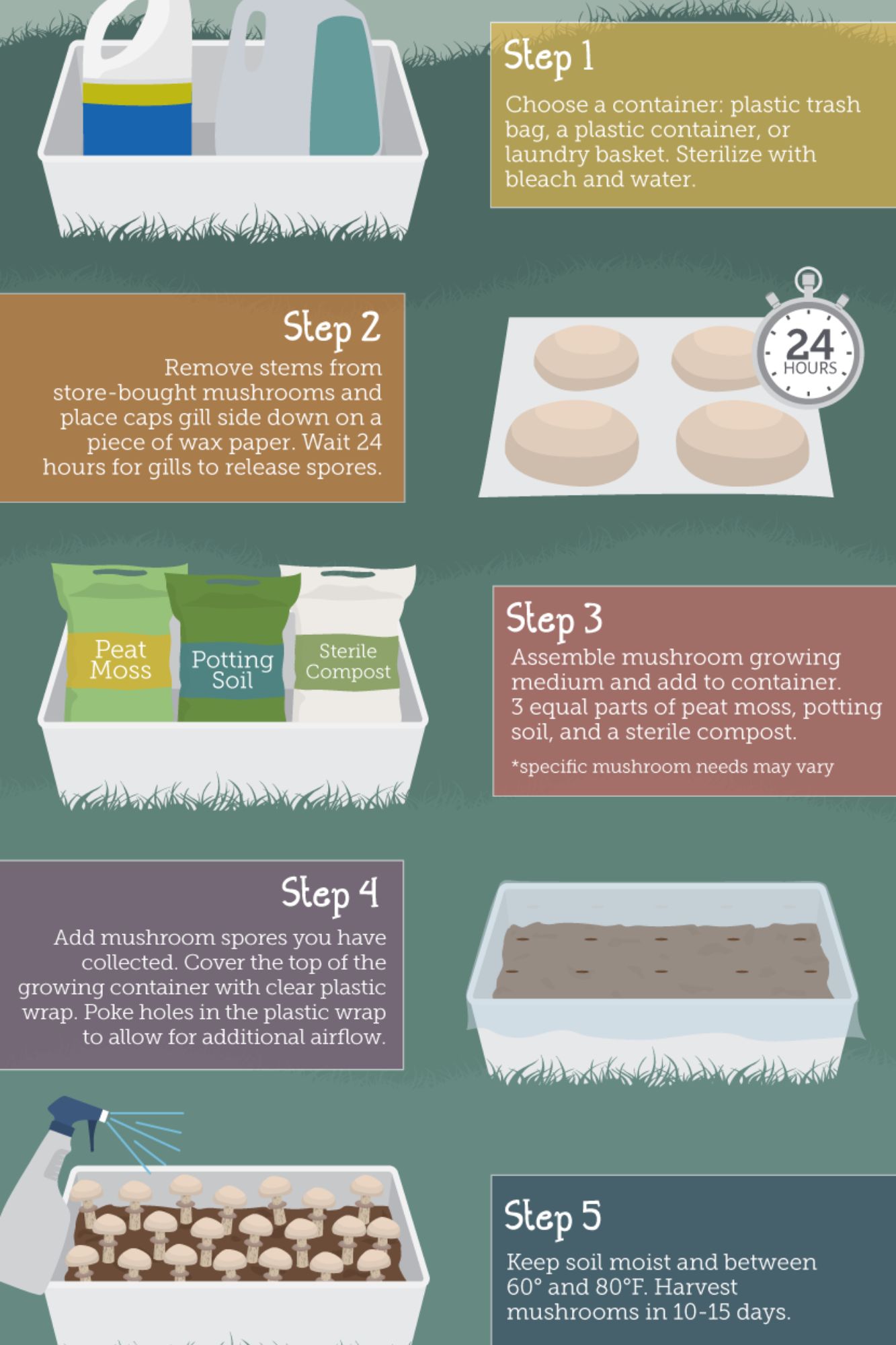
We realized that the texts with images were easier to read and that there are a lot of words that are very similar to Catalan. We were very intrigued about a text in particular that explained how to grow mushrooms at home… and we decided to do the experiment in the class!
Do you want to try it at home? Just follow the steps!
Once children are confident using the language orally, they must start reading in order to fully master English. Learning to read in English, though, is quite different.
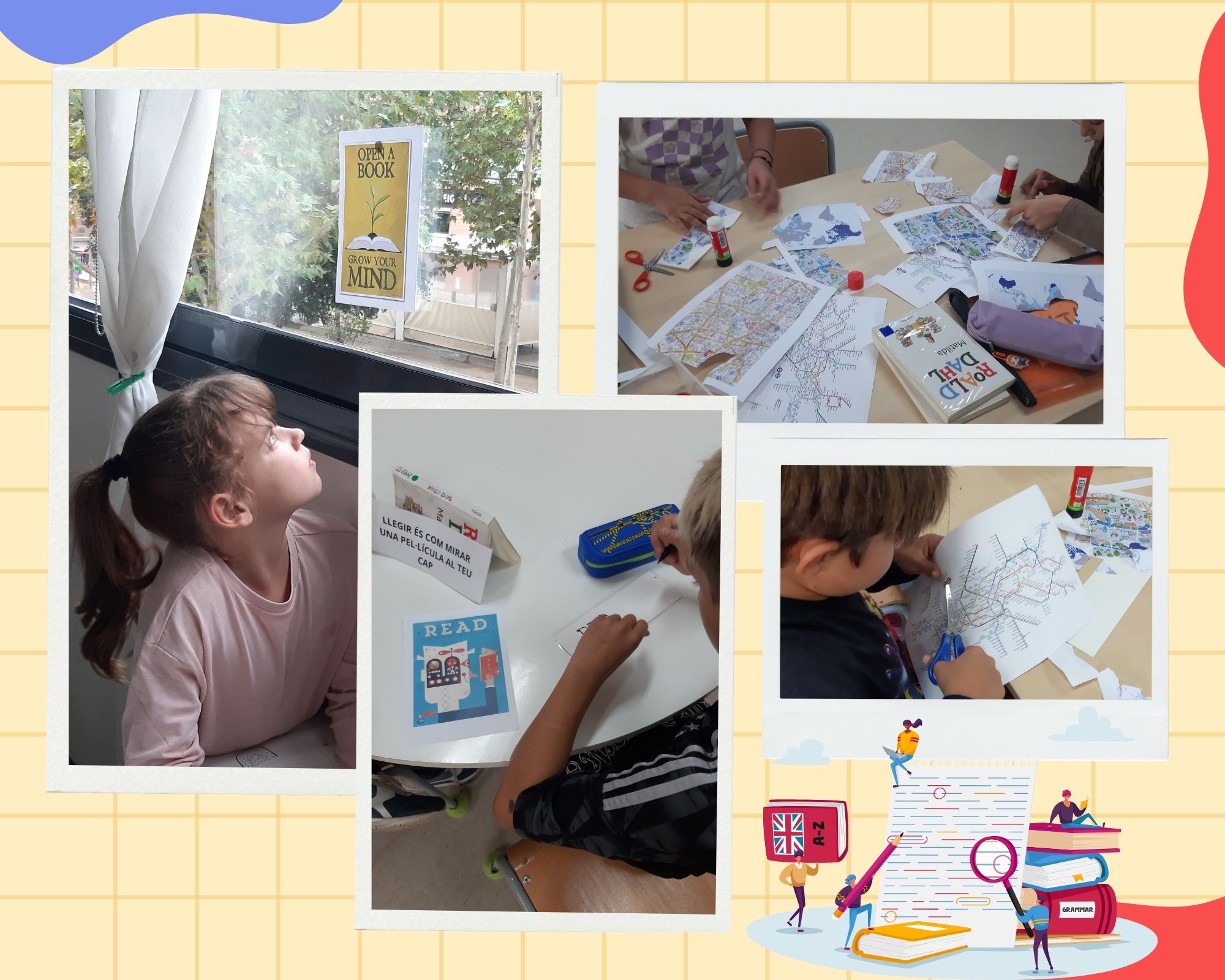
Since the children can already read in Catalan and Spanish, they can activate different strategies to be able to get the meaning of different messages. One of these strategies is being able to find similarities between words that help them infer the meaning.
To help them develop this strategy and stress the importance of reading, at school we have distributed posters around the classroom that encourage reading for pleasure. The children had the sentences in Catalan and, working in pairs, they had to match them to the correct poster. After finishing the activity, they explained the strategies they used to find the solution. They all agreed that it was easier than it seemed: “si hay palabras casi iguales”.
This sense of achievement creates a positive attitude towards reading in English for pleasure, an activity we do once a week with the “big ones”.