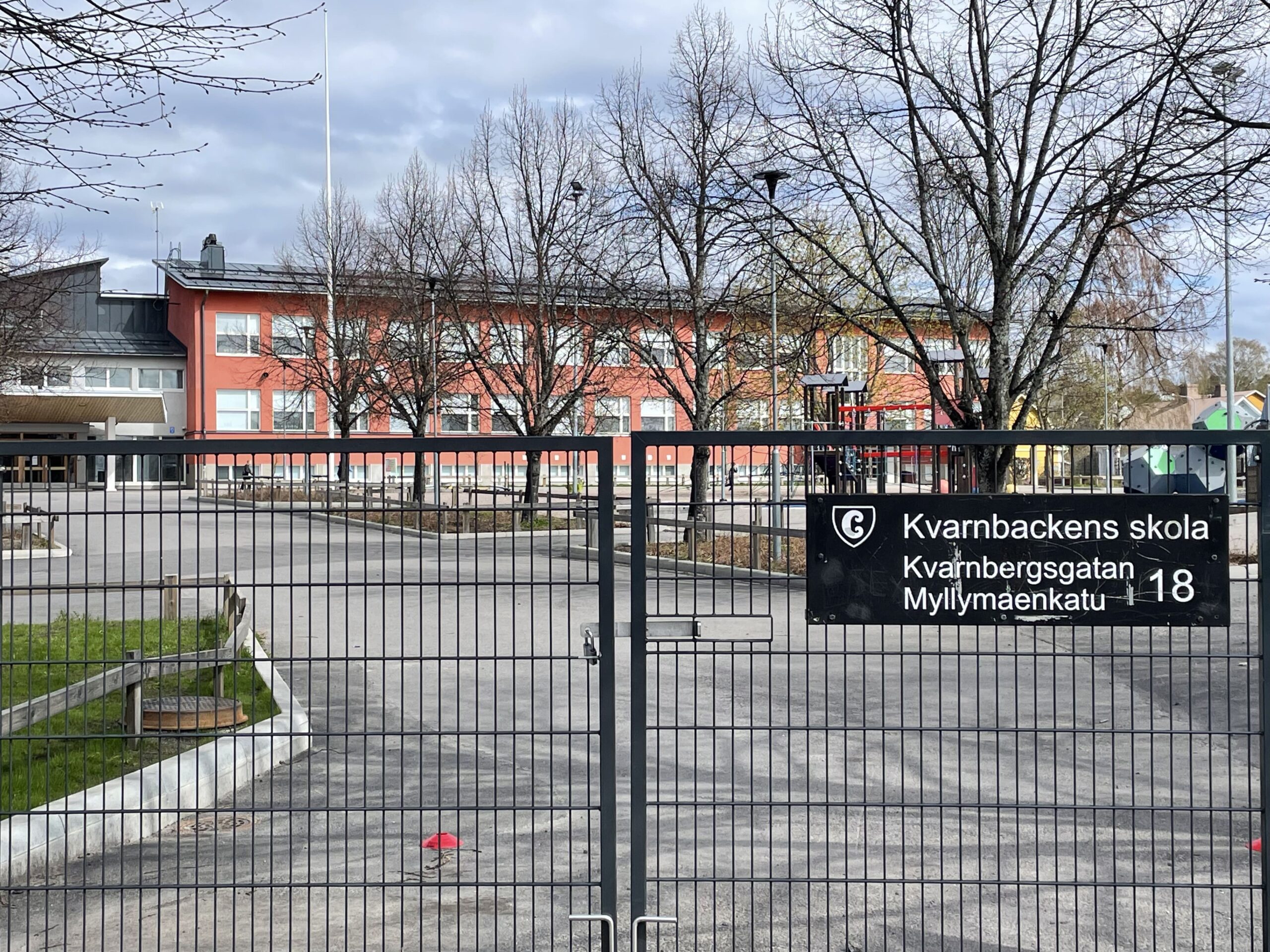
 Kvarnbackens skola és una escola sueca, situada al centre de Porvoo, amb més de 70 anys d’història. Té 351 estudiants, 26 docents, 16 “assistents”, secretaria i direcció. Hi estudien alumnes des de “preschool” (6-7 anys) fins al grade 6 (1r ESO). L’horari varia segons l’edat de l’alumnat però comencen a les 9 i acaben entre la 1 i les 3, fent classes de 45 minuts, amb descansos de 15 minuts al llarg del dia i amb un descans més llarg per dinar, ja que tot l’alumnat dina al menjador escolar. Els objectius de l’escola són la col·laboració entre alumnes, i també entre docents, i el treball i millora de les habilitats bàsiques: lectura, escriptura i matemàtiques.
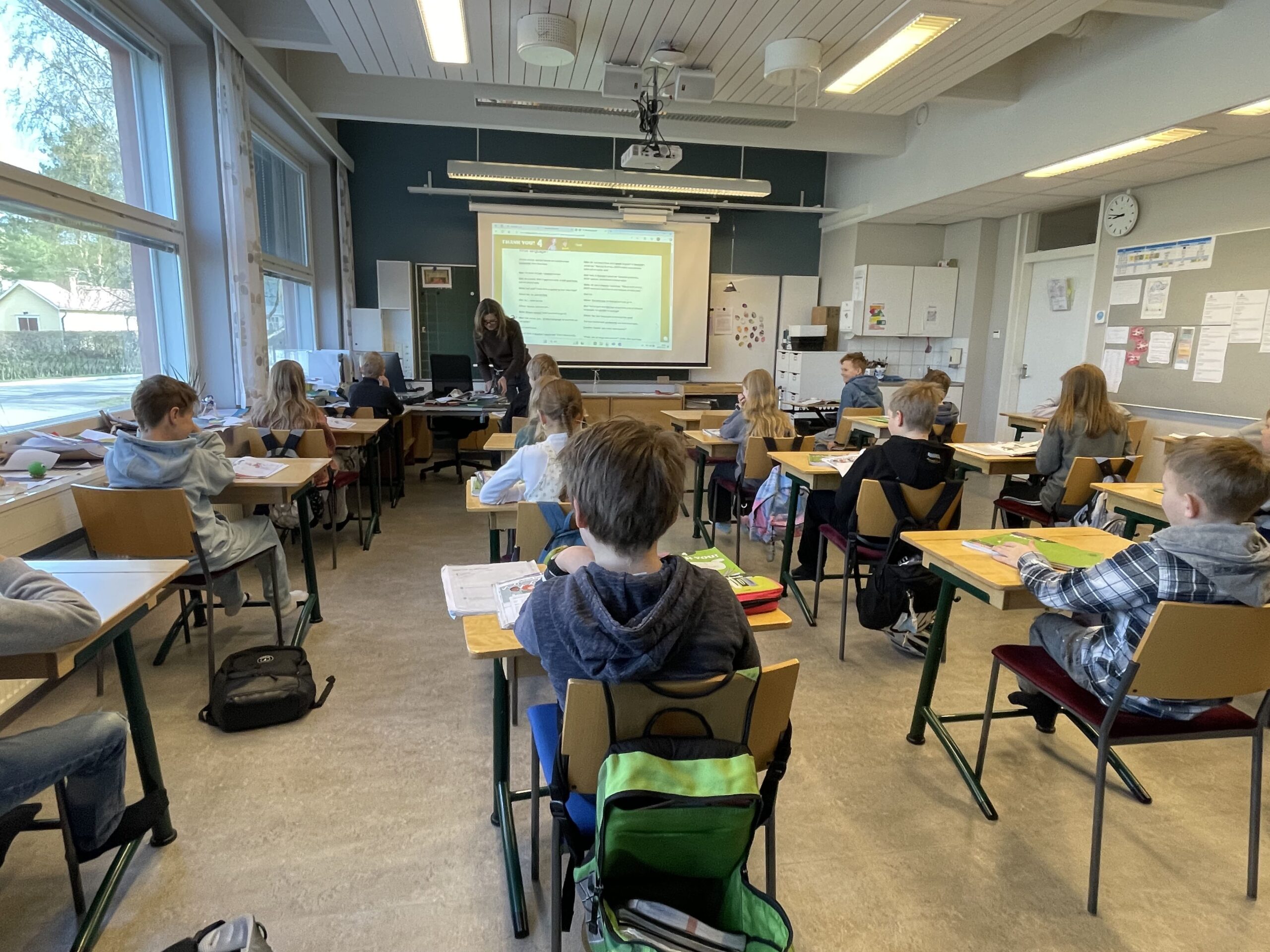
Ens ha cridat l’atenció que allà tot el personal i alumnat de l’escola va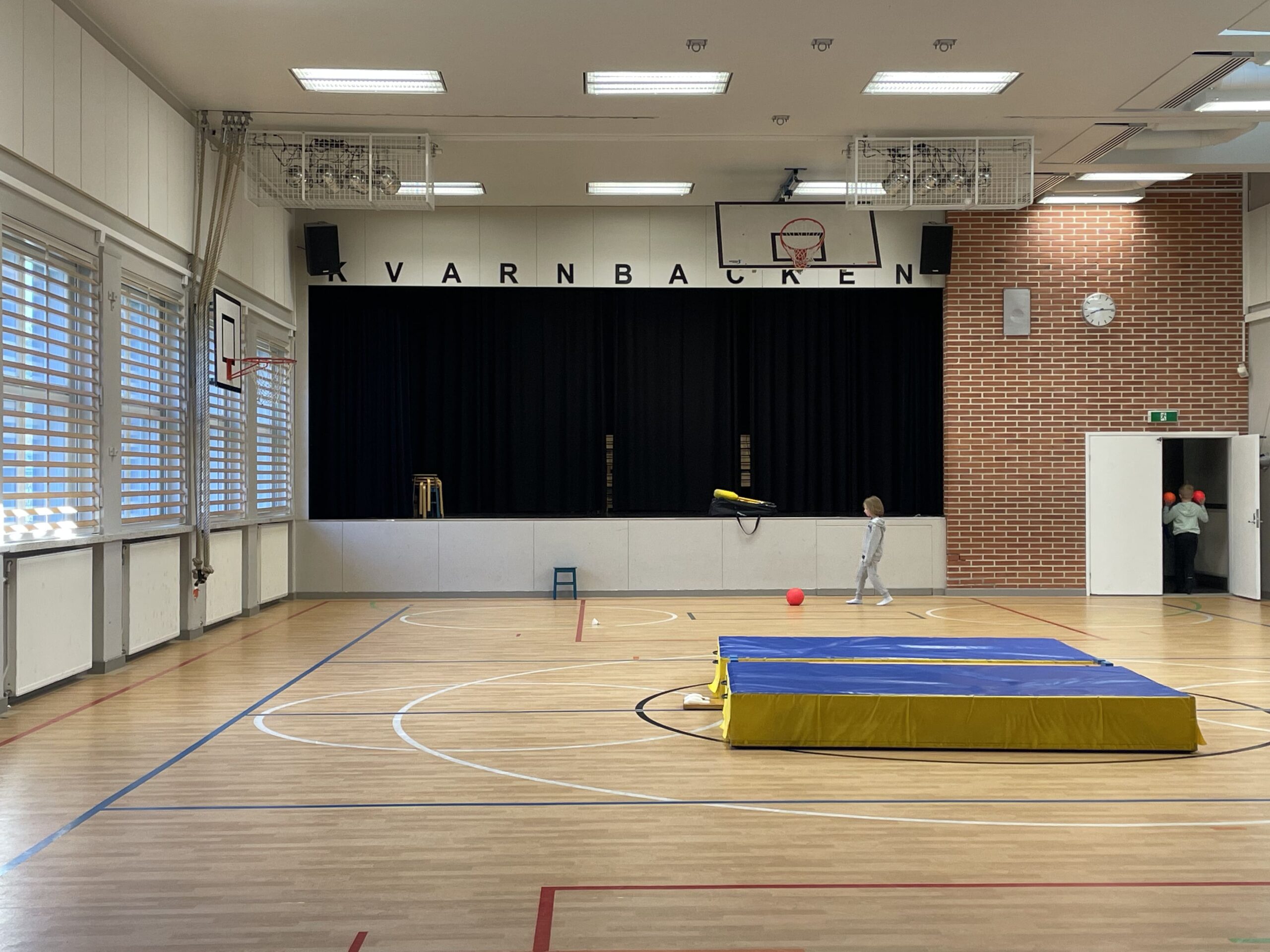 descalç o amb sabatilles. Les instal·lacions estan molt cuidades i el personal de neteja treballa durant la jornada escolar, vetllant perquè sempre estigui tot molt net. Durant l’estada a l’escola hem pogut observar que a cada aula hi ha un docent i un assistents. El clima de les aules és molt tranquil i silenciós, el to de veu a tot el centre és molt baix, dels docents i de l’alumnat. Els docents reforcen positivament qualsevol acció de l’alumnat, fent un feedback positiu en les respostes.
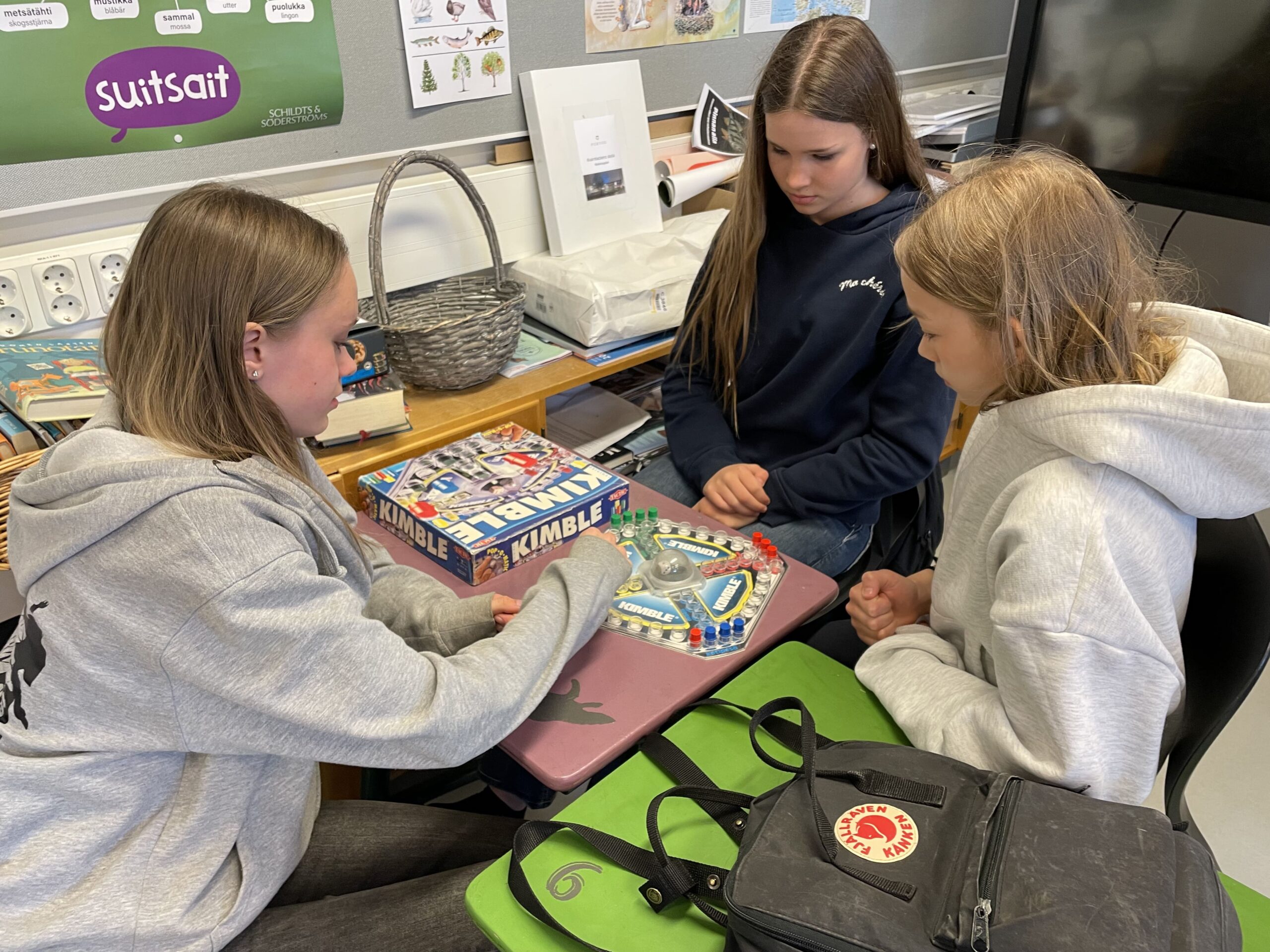 L’alumnat, des dels més petits fins als més grans ha demostrat molta autonomia, canviant d’espais dins l’escola per anar a les diferents aules d’especialitat, gestionant el seu propi temps en els descansos entre classes, a l’hora de dinar i sobretot, dins les aules en les activitats d’ensenyament-aprenentatge. Les classes de finès i suec estan organitzades per nivell segons la llengua materna de l’alumnat.
Hem pogut observar les aules de “preschool”, en què l’alumnat ha iniciat el dia amb unes cançons dirigides per la mestra, unes rutines curtes, i després han partit el grup per treballar numeració, a través d’una dinàmica en rotllana i posteriorment unes fitxes multinivell en què sumaven. S’oferia recursos manipulatius i més suport a l’alumnat que tenia més dificultats. La resta del grup estava al pati fent activitats lúdiques-esportives i després han intercanviat l’activitat. Un altre grup d’aquesta edat han fet, també en grup partit, activitats lúdiques al pati i els altres han fet una conversa en rotllana i després una activitat de dibuix a l’aula i a mesura que l’acabaven podien fer una altra activitat, com jugar en petit grup, repassar continguts a través de jocs, etc.
També hem assistit a classes de suec a “grade 2”, la mestra els ha llegit un conte mentre l’alumnat es feia massatges a l’esquena, en un ambient molt tranquil. Després han treballat ortografia a través de la consciència fonològica, amb un petit joc en què un alumne descrivia un dibuix i la resta endevinaven paraules i les classificaven i les han escrit conjuntament a la pissarra per observar la norma ortogràfica que han treballat. Més tard en petit grup de 3 infants, s’explicaven els deures que havien fet el dia anterior a casa, els corregien junts i llegien en petit grup en veu alta el text que ja havien llegit a casa i s’ajudaven entre ells. A la última activitat cadascú escollia un dibuix i anaven inventant i escrivint un conte sobre aquest dibuix, i qui ho havia fet i ho tenia acabat practicava cal·ligrafia.
Hem anat a veure una sessió de “handicrafts” a grade 3. L’alumnat d’una classe (20 alumnes aprox) estava dividit en dos grups. La primera meitat del curs un grup ha fet costura i l’altre fusteria, i a mig curs s’intercanvien, fent que tot l’alumnat faci els dos tallers complets.
El taller de costura es feia en un espai que disposava de màquines de cosir, vàries teles de diferents tipus i colors, fils, llana, elements per pintar, etc. Al llarg del mig curs han començat amb unes activitats amb papers per practicar la costura amb màquines de cosir i després tenien una llista d’activitats a fer en l’ordre que els indicava la mestra, però de manera autònoma, agafaven el material, les feien i quan n’acabaven una començaven amb la següent. Han fet bosses, coixins, peluixos, etc. Aquest taller el fa l’alumnat des del grade 3 fins al grade 6, augmentant la dificultat dels projectes.
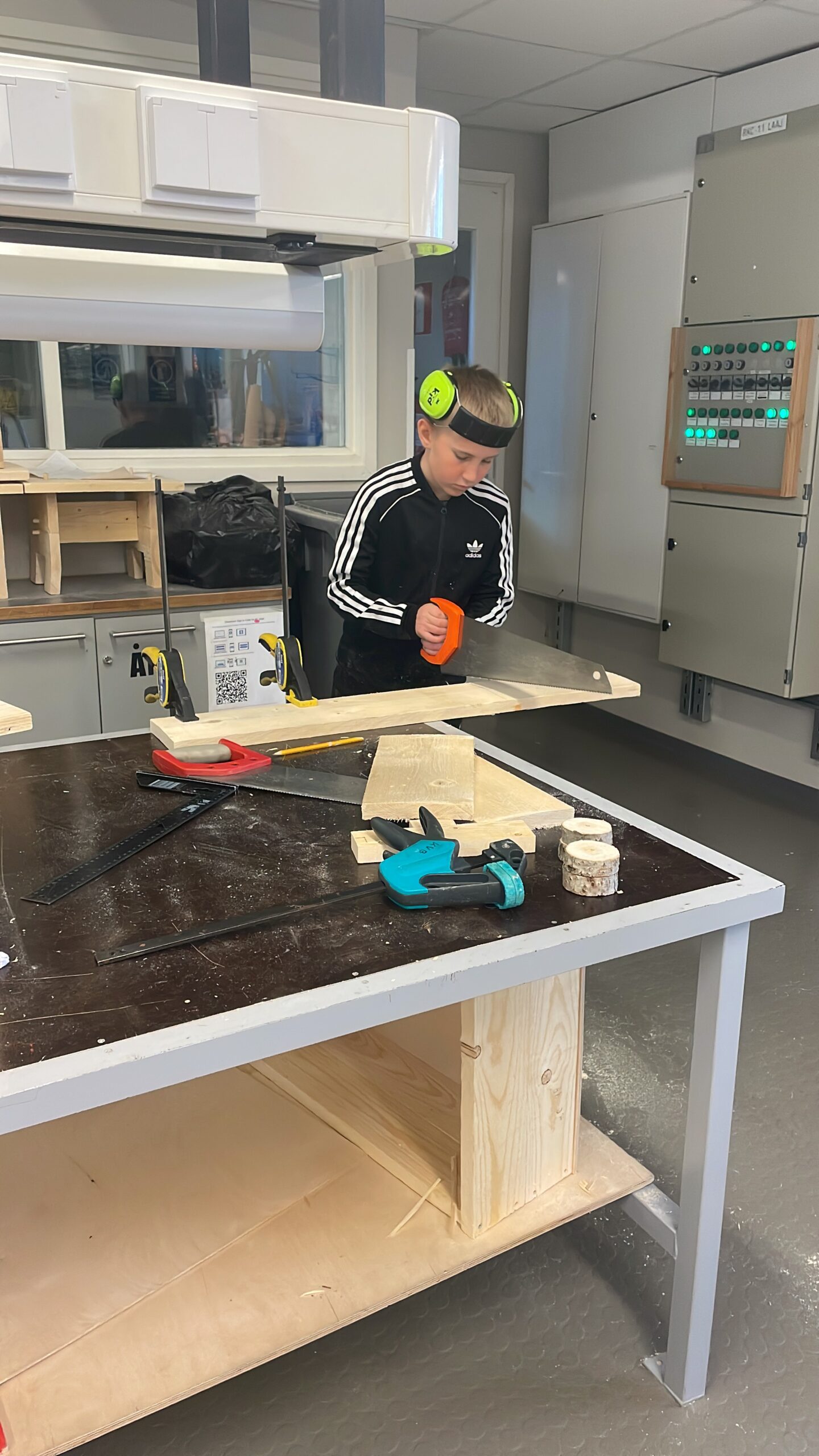
El taller de fusteria es feia en un espai en què hi havia moltes eines ordenades, fustes de diferents tamanys per escollir, teles i pintures per decorar les produccions, i algunes màquines que només feia servir el mestre. L’alumnat ha fet diferents activitats, però han començat fent una activitat tots igual però després a final del curs han dissenyat i fet el seu propi projecte de fusteria. També han treballat de manera autònoma, utilitzant les eines, pintant, recollint, enganxant fusta, llimant, etc. Aquest taller el fa l’alumnat des del grade 3 fins al grade 6, augmentant la dificultat dels projectes.
***
 Kvarnbackens skola is a Swedish-speaking school located in the center of Porvoo, with more than 70 years of history. It has 351 students, 26 teachers, 16 “assistants,” administrative staff, and school management. The school serves students from preschool (ages 6–7) up to grade 6 (equivalent to the first year of secondary education). The schedule varies depending on the students’ age, but classes start at 9 a.m. and end between 1 and 3 p.m. Lessons last 45 minutes, with 15-minute breaks throughout the day and a longer break for lunch, as all students eat in the school canteen. The school’s objectives focus on collaboration among students and teachers, and on developing and improving core skills: reading, writing, and mathematics.
One aspect that stood out to us is that all school staff and students go barefoot or wear indoor slippers. The facilities are very well maintained, and the cleaning staff work during school hours to ensure everything remains clean. During our visit, we observed that every classroom had both a teacher and an assistant. The atmosphere in the classrooms is calm and quiet, with a low speaking volume from both students and teachers. Teachers give positive reinforcement for students’ actions, providing constructive and encouraging feedback.
Students, from the youngest to the oldest, demonstrated a high level of autonomy: moving between classrooms for specialized lessons, managing their own time during breaks and lunch, and especially within the classroom during learning activities. Finnish and Swedish classes are organized by language proficiency according to students’ mother tongue.
 We observed the preschool classrooms, where students began the day with songs led by the teacher, followed by short routines. Then the group was split to work on numeracy, first with a circle activity and then with multi-level worksheets involving addition. Manipulatives and extra support were provided for students who needed more help. Meanwhile, the rest of the group played outdoor games, then they swapped activities. Another group of the same age also split: one half played outdoors, while the other half had a circle time discussion followed by a drawing activity. As students finished, they could choose another activity, such as small group games or review games to reinforce content.
We also attended Swedish lessons in grade 2. The teacher read a story to the students while they gave each other back massages, creating a calm and relaxed atmosphere. They then worked on spelling using phonological awareness through a small game in which one student described a drawing, and the others guessed the words, classified them, and wrote them on the board to observe the spelling rule being practiced. Later, in groups of three, they discussed the homework they had done the previous day, corrected it together, and read aloud in small groups the same text they had already practiced at home, helping each other. In the final activity, each student chose a picture and invented and wrote a story about it. Those who finished practiced handwriting.
We also observed a “handicrafts” session in grade 3. Students (around 20) were divided into two groups. During the first half of the school year, one group did sewing while the other did woodworking. At midyear, they swapped so that every student completed both workshops.
The sewing workshop took place in a room equipped with sewing machines, various types and colors of fabric, threads, yarn, painting supplies, and more. They began with paper-based activities to practice using the sewing machines. Then, following a list of activities in order provided by the teacher, they worked independently—choosing materials, completing tasks, and moving on to the next when finished. They made bags, cushions, stuffed animals, etc. This workshop runs from grade 3 to grade 6, with increasing project complexity.
The woodworking workshop was in a room filled with neatly organized tools, wood of various sizes to choose from, fabrics, paints for decoration, and some machines that only the teacher used. The students started with a common activity but later designed and built their own individual projects. They also worked independently—using tools, painting, tidying up, gluing, sanding wood, and so on. This workshop is also offered from grade 3 to grade 6, with progressively more advanced projects.