



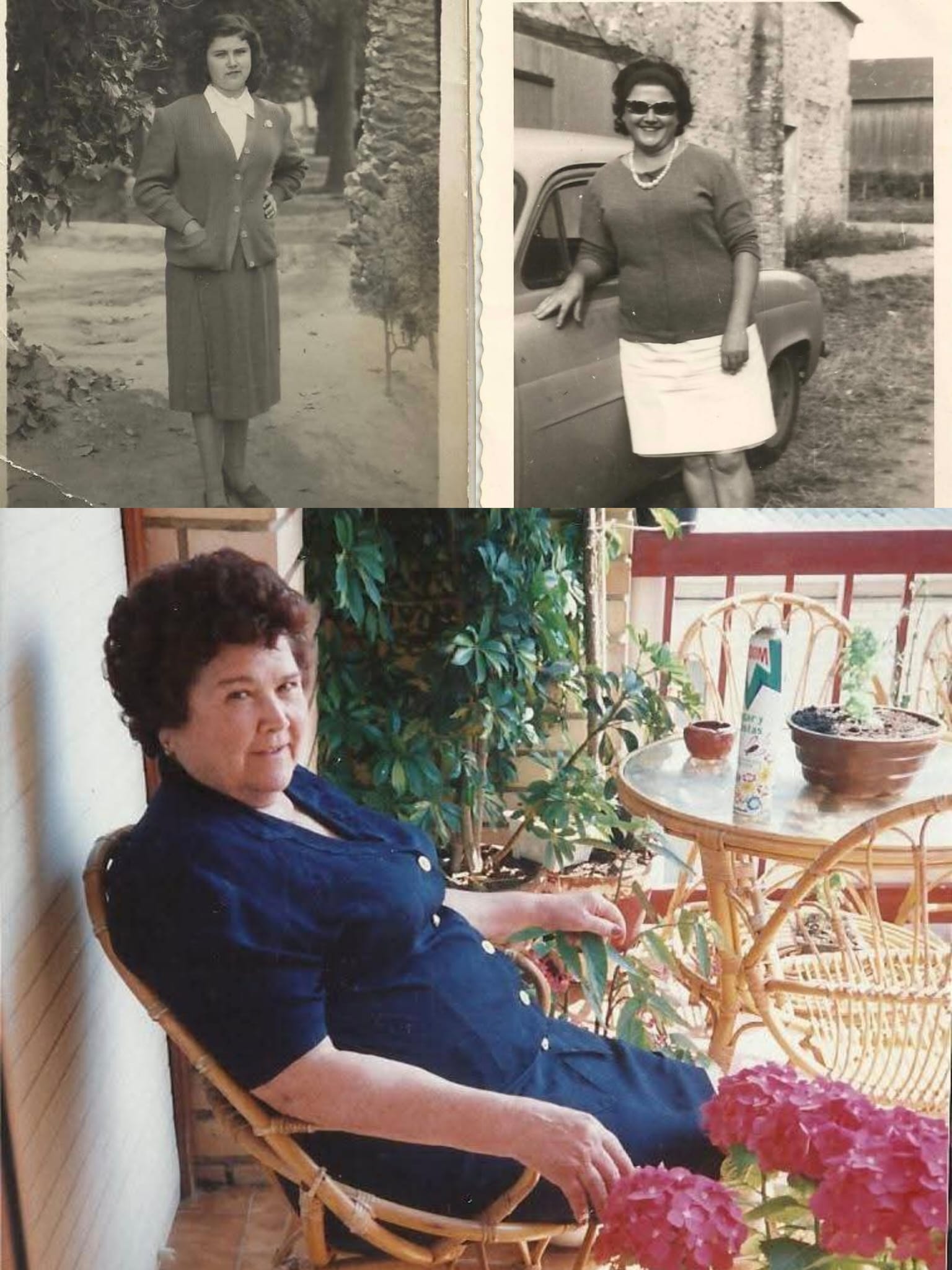
Prelude
Àngels Sebastià Miravalls was born on 29th April 1932 in Roquetes, a little town in South Catalonia. She passed away on 20th March 2015 at the age of 83, in Campredó, a little village by the Ebro river. Her father was called Ramon Sebastià Cid and her mother Nieves Miravalls Fabregues. She had three sisters and a brother. She was happily married and was the mother of two children.
LIFE OF SURVIVAL AND EMIGRATION, by Jan Curto
She was born during the hopeful time of the II Republic, when most workers were dreaming about a totally different kind of society. Her parents were farmers, who owned several plots of land in different municipalities. She helped them from a very young age picking olives and carobs, the typical Catalan garrofa. Let’s say she grew up surrounded by her parents’ and siblings’ love and support.
After the Civil war, everything changed dramatically. Her family was involved in a terrible tragedy. Her father was arrested and imprisoned at Pilats gaol i Tarragona. He died on 13th March 1941 in the Sant Pau and Santa Tecla hospital as a war prisoner. He suffered from tuberculosis.
Her father’s death cast a long shadow over her early years. The tragedy was increased with the death of an uncle during the bloody battle of the Ebro, and the exile for 17 years of another of the father’s brothers.
These painful happenings shaped her childhood. She was forced to understand how difficult life was from a very early moment. Those hard years of the postwar period required courage and hard work. From a young age, she became involved in blackmarket activities, helping to trade rice, pasta and other essential foodstuffs. It was called the estraperlo, the way people could earn their living. Like many families facing repression, they relied on these informal networks to survive the terrible social conditions of the time.
In 1956, her life changed completely after a young farmer called Daniel Subirats. Shortly after their wedding, and thanks to the efforts of the local exiled Joaquim Roca, the couple emigrated to Soissy-sur-École in Île-de-France, near Paris. There, they worked in sugarbeet cultivation, joining many others who had left their homeland in search of stability and opportunity. Over time, a small community of more than fifty people from Campredó settled down in the French village, creating a strong network of mutual support among the emigrants.
Her life story mirrors significant historical importance. It shows the experiences shaped by the Spanish Civil War, the hardships of the post-war period, Francoist repression and the wave of emigration that followed. As a direct witness, she followed the strategies of survival that families adopted under extreme and uncertain conditions.
It is important to mention that her father’s story has been preserved in the novel Expedient 3295, written by her grandson Emigdi Subirats, ensuring that this family’s memory would never be forgotten.
Àngels was the daughter of a war victim. She saw how her mother had to struggle in the most horrendous of times. Later, she had to emigrate to earn her living. She was always surrounded by love, though. This is the most important in life.