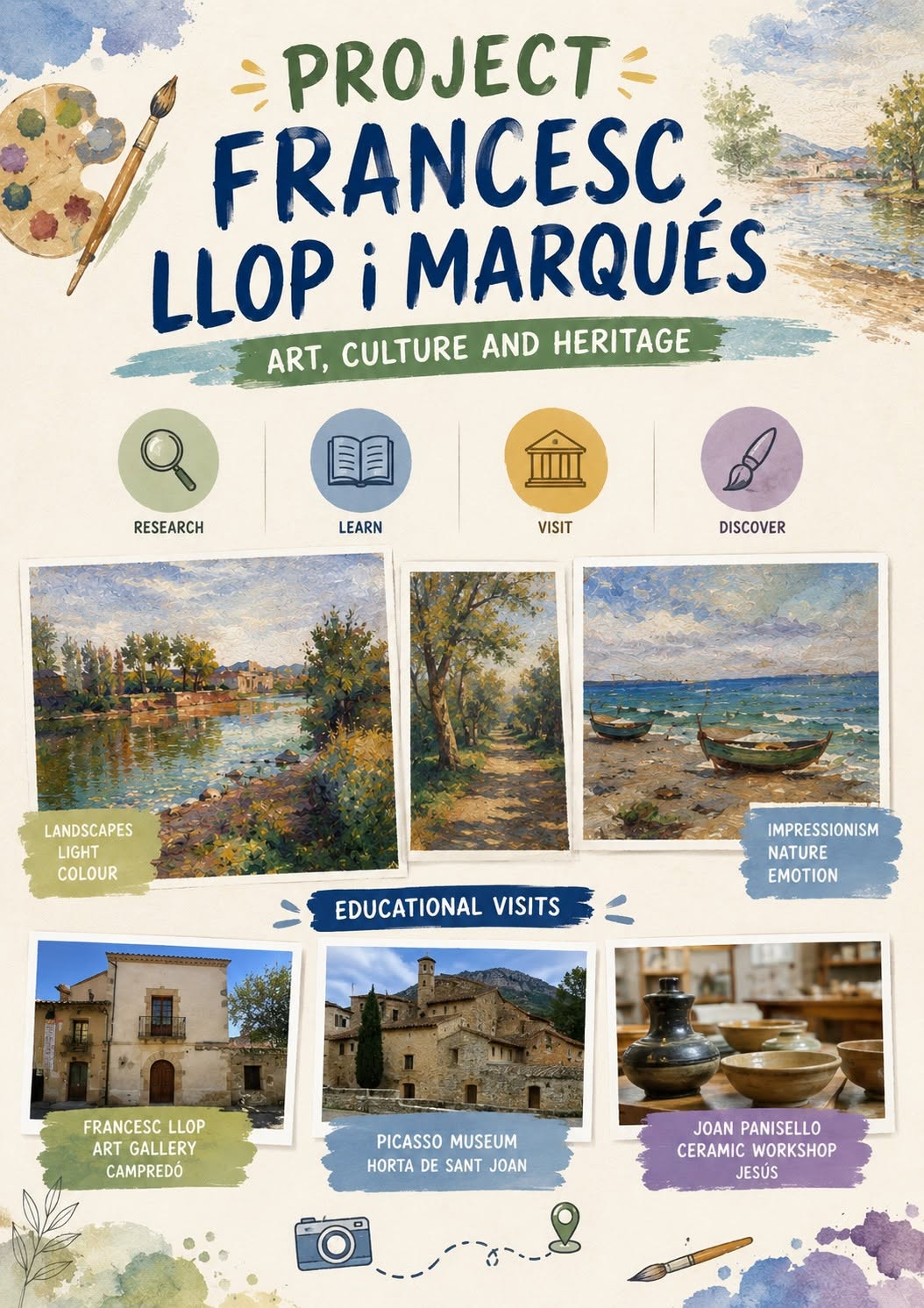


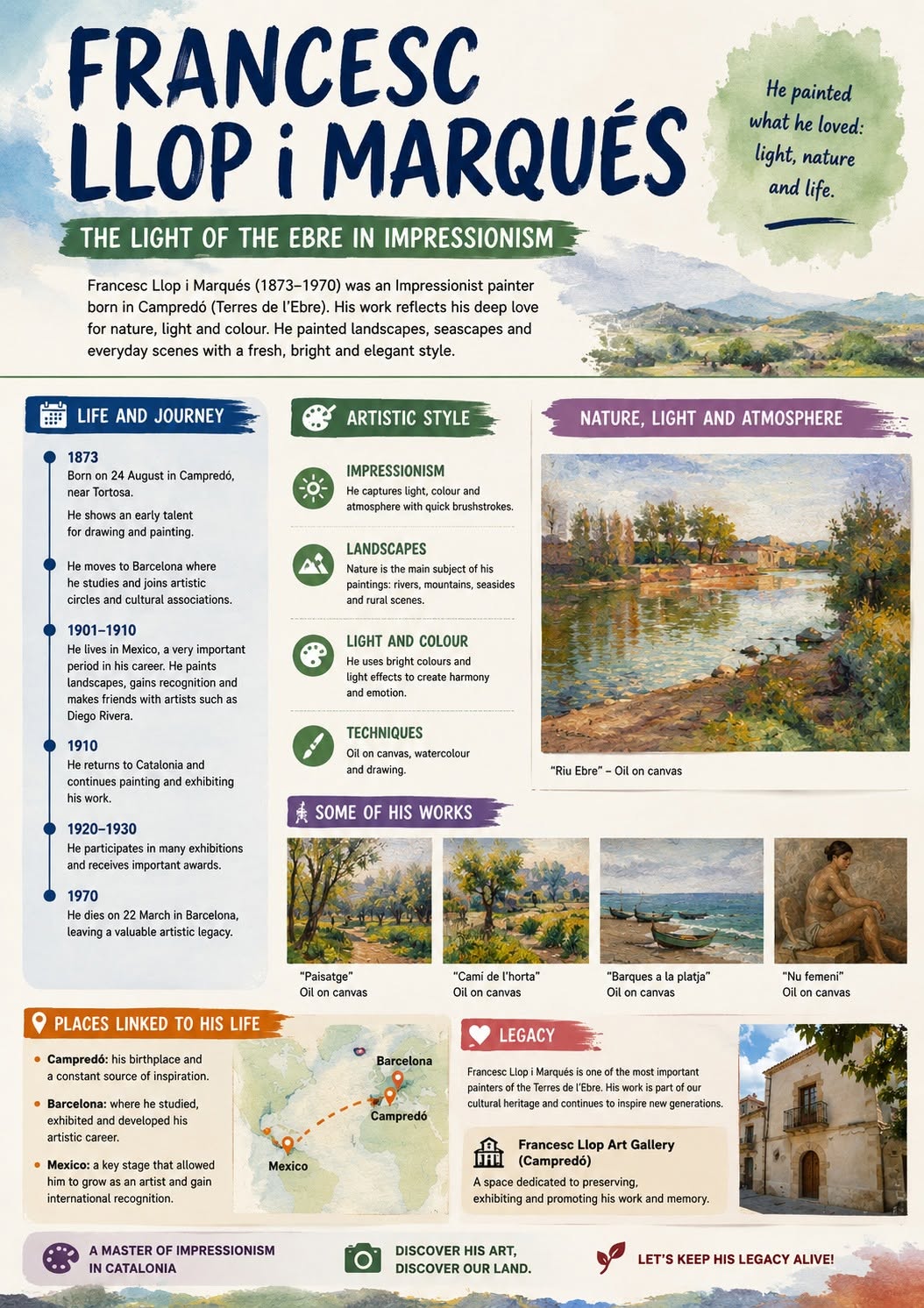
This learning situation was carried out by the students of 1st Year of artistic Baccalaureate ( group G) as an interdisciplinary project that combined English language learning, artistic education, and local cultural heritage. The project was designed to help students develop their linguistic, cultural, and creative competences through the study of the life and work of the Impressionist painter Francesc Llop i Marqués (Campredó, 1873-Barcelona, 1970).
Throughout the project, students conducted research on the artist’s biography, artistic career, and contribution to Catalan art. They explored the characteristics of Impressionism and analysed how light, colour, and landscape influenced Llop’s paintings. The research process was complemented by educational visits to the Francesc Llop Art Gallery in Campredó, the Picasso Museum in Horta de Sant Joan, and Joan Panisello’s Ceramic Workshop in Jesús, allowing students to discover different artistic disciplines and compare several forms of artistic expression.
One of the most valuable aspects of this learning situation was the production of high-quality artistic dissemination materials. Students designed informative and visually attractive posters about Francesc Llop i Marqués and the artistic heritage of the region. These posters transformed academic research into accessible cultural content and demonstrated how a learning situation can contribute to the promotion and dissemination of local culture. The final posters reflected a high standard of work and creativity, combining artistic sensitivity with effective communication in English.
As part of the project, students also produced a variety of written materials, including:
-
- Research notes and drafts.
- A detailed presentation script about Francesc Llop i Marqués.
- A Learning Journal in English, where students reflected on their progress, discoveries, difficulties, and achievements throughout the project.
- A final essay in English about Francesc Llop i Marqués, in which students analysed his life, artistic style, and cultural legacy using formal academic language.
- Personal reflections and observations from the educational visits.
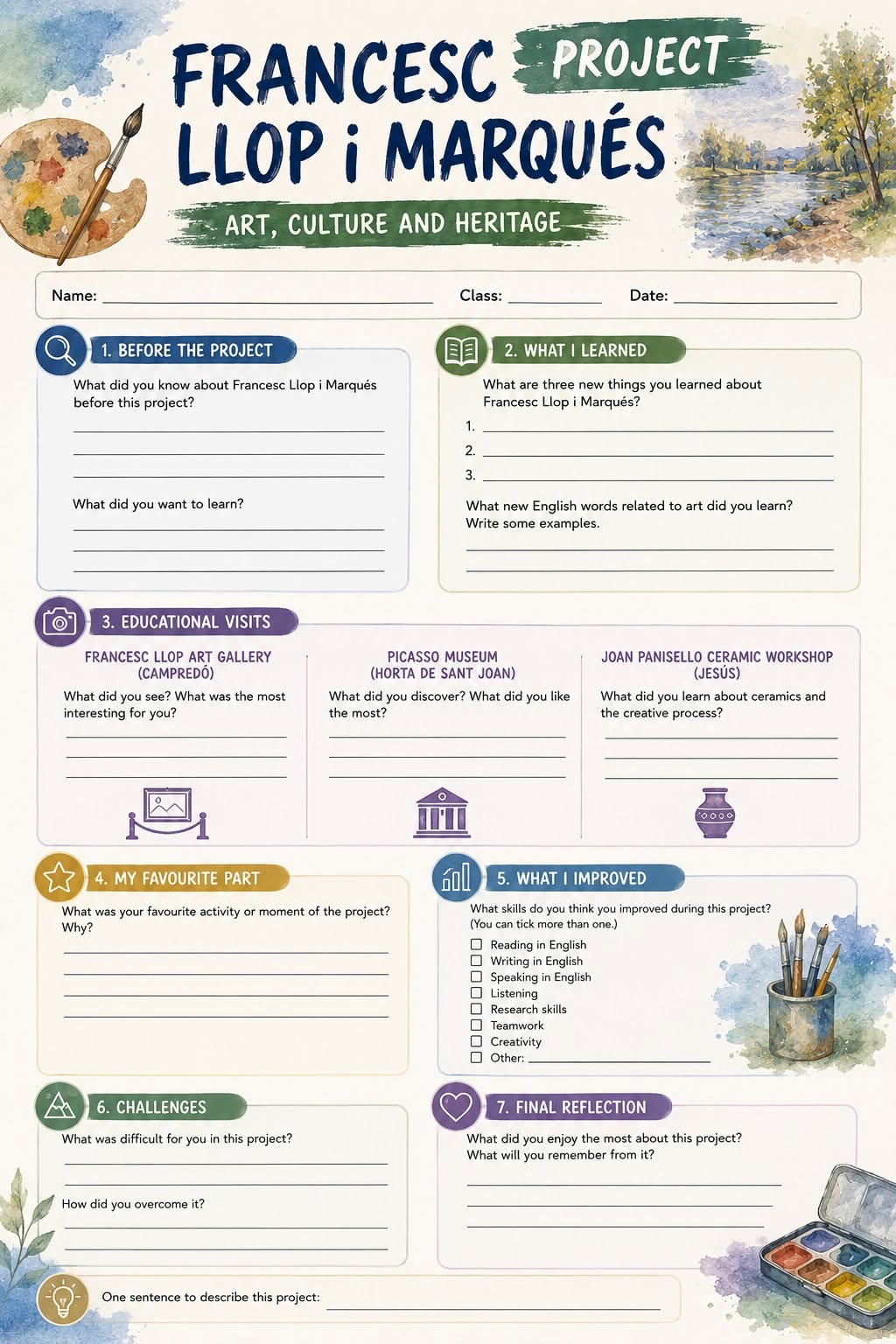
Assessment was carried out through a continuous formative approach. Different assessment rubrics were used to evaluate research skills, written production, oral communication, participation, creativity, and the quality of the final products. The use of rubrics helped students understand expectations and improve their work through regular feedback.
In addition, students completed a self-assessment questionnaire, reflecting on their learning process, participation, language development, and overall performance. The results showed high levels of engagement and motivation. Most students highlighted the educational visits, the creation of posters, and the opportunity to learn about local artists through English as the most meaningful aspects of the project.
This learning situation demonstrates how language learning can be connected to real cultural experiences and artistic education. The students of 1st Year of artistic Baccalaureate successfully transformed a classroom project into a meaningful cultural dissemination initiative, producing high-quality posters, reflective learning journals, and academic essays that promoted the artistic legacy of Francesc Llop i Marqués and the cultural heritage of the Terres de l’Ebre.