


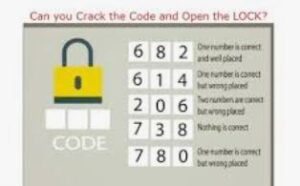

In the upper cycle English classes we are working on:
1. Spelling Bee: How many words can you make with 7 letters?
2. Wordle: Get 6 chances to guess a 5-letter word.
3. Crack the code: It is a series of mind-bending critical thinking puzzles that beckon young learners to unravel the mysteries hidden within 3-digit lock codes. Each three-digit number holds within it hints and clues that guide the solver toward deciphering its correct sequence. The thrill lies in the task of deciphering these codes using the provided hints.
4. Escape the North Pole, Escape the tower: The answers to each task will give a number for the code to escape.
IT IS WORTH SAYING THAT ALL THESE ACTIVITIES HAVE BEEN VERY SUCCESSFUL AMONG THE STUDENTS!!!
In today’s fast-paced world, fostering critical thinking and problem-solving skills in young minds has never been more crucial. The ability to analyze, strategize, and think outside the box is a valuable asset that goes beyond the classroom. And what better way to nurture these skills than with engaging puzzles.
THE COGNITIVE BENEFITS OF CODE-CRACKING PUZZLES
These puzzles are more than mere entertainment; they serve as pivotal tools for nurturing and enriching critical thinking abilities in children. As they engage with the code-cracking process, children embark on a journey of logical reasoning and creative exploration. Each solution refines their ability to tackle complex challenges methodically, breaking them down into manageable components.
1. LOGICAL REASONING:
The process of deciphering the code fosters the development of logical reasoning skills. Kids learn to analyze patterns, assess possibilities, and eliminate options logically until they arrive at the correct answer.
2. CREATIVE PROBLEM-SOLVING:
Code-cracking requires thinking outside the box. Young minds are encouraged to explore unconventional solutions and unique perspectives, cultivating their creativity and innovative thinking.
3. ATTENTION TO DETAIL:
Success in cracking the code hinges on meticulous observation. Kids learn to pay attention to subtle hints, aiding the development of their attention to detail and precision.
4. PATIENCE AND PERSEVERANCE:
Facing challenges and potential setbacks, kids learn the value of patience and perseverance. These qualities are crucial not only in problem-solving but also in various aspects of life.

