Avui hem dedicat el matí a conèixer la cultura de l’atelier de la mà de Marco Spaggiari.
L’atelier és un dels espais més originals dins l’escola, un espai que fomenta el coneixement i la creativitat, planteja preguntes i desperta inspiració, un espai on els infants exploren, experimenten, investiguen i s’expressen a través de diferents llenguatges de la mà de l’atelierista. L’objectiu és donar visibilitat a la intel·ligència no verbal dels infants, és a dir, es potencien tots els llenguatges que permetin als infants expressar-se i construir coneixement.
Hem pogut participar en tres ateliers per entendre el seu funcionament: “El llenguatge dels engranatges”, “Dibuixar amb la llum” i “El mosaic de dibuixos, paraules i matèria”. Tres propostes ben diferenciades que ens han aportat llum, inspiració i idees per aplicar a les nostres escoles.
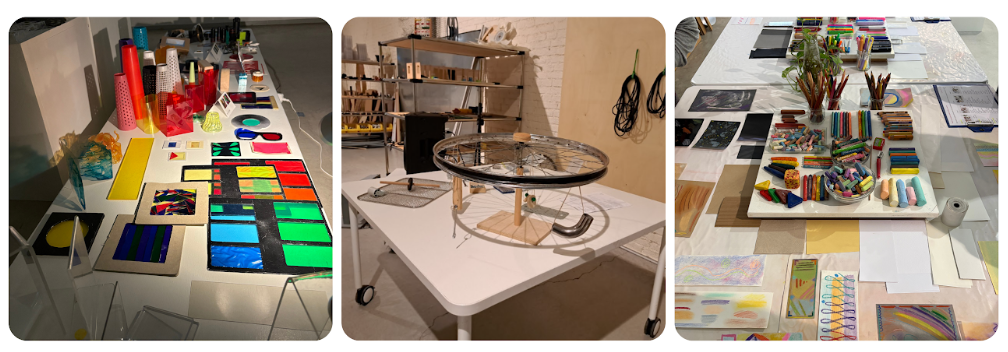
El primer atelier “El llenguatge dels engranatges” se centra en la mecànica i el moviment dels cossos, així com dels principis físics. El següent “Dibuixar amb la llum” utilitza el llenguatge fotogràfic per explorar i descobrir aspectes del nostre entorn. Finalment, la tercera proposta “El mosaic de dibuixos, paraules i matèria” ofereix l’oportunitat d’explorar activament el gest gràfic utilitzant una varietat d’eines i superfícies de diversos materials, textures i formats.
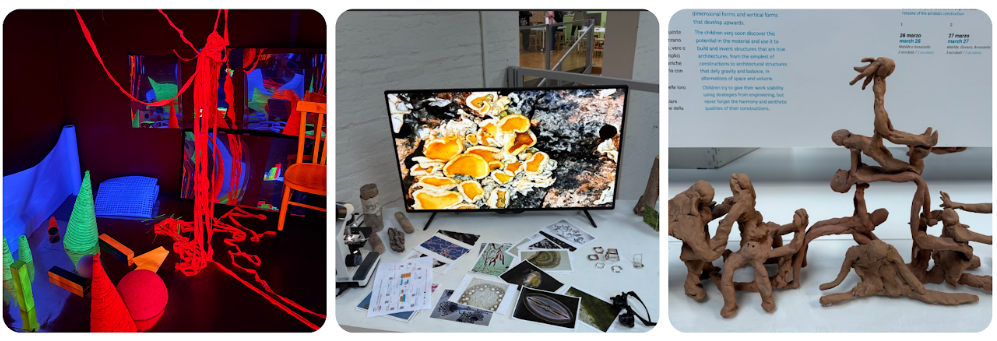
Després dels tallers als quatre diferents ateliers, hem fet una visita guiada per l’espai del Centro Internazionale Loris Malaguzzi. Allà s’exposen una gran varietat de materials i documentacions del procés que segueixen els infants de les escoles de Reggio Emilia.
Tot seguit hem pogut visitar l’escola nacional Loris Malaguzzi. És una escola que va dels 3 als 10 anys i té la peculiaritat que la part infantil és gestionada per l’ajuntament a nivell local i la part de primària és estatal. Totes dues escoles tenen un projecte educatiu compartit i formen part d’un sistema públic integrat.
Durant l’estada hem pogut visitar els diferents espais i veure també els diversos materials i els tipus de propostes amb què aprenen els infants. Hem pogut comprovar, doncs, que tal com ens explicaven a les conferències sobre la teoria de Reggio Emilia, els espais estan molt pensats i molt orientats a fer que els alumnes facin investigacions i aprenguin per ells mateixos. La visita ha estat molt inspiradora i enriquidora, ja que hem pogut resoldre dubtes i compartir maneres de fer amb les mestres que treballen dia a dia a l’escola.
El que destaquem i ens emportem per repensar els nostres espais educatius i les nostres intervencions amb els alumnes és aquesta pedagogia de la lentitud, de respectar els ritmes d’aprenentatge i gaudir del procés.
També ens ha semblat especialment interessant com és d’important l’arquitectura, i com es posa al servei de la pedagogia, fent que els espais estiguin connectats, que permetin una visió àmplia de l’escola i que els infants tinguin més facilitat per interactuar els uns amb els altres.
Per últim, hem sortit amb una sensació d’haver vist en primera persona com mestres, atelieristes, pedagogs, cuiners, i famílies treballen conjuntament i formen part de la comunitat educativa, aportant la seva visió i intercanviant mirades.
THE POWER OF LANGUAGES
Today we spent the morning learning about the culture of the atelier with Marco Spaggiari.
The atelier is one of the most original spaces in the school, a space that fosters knowledge and creativity, raises questions and awakens inspiration, a space where children explore, experiment, research and express themselves through different languages with the help of the atelier. The aim is to give visibility to the non-verbal intelligence of children, that is, all the languages that allow children to express themselves and build knowledge are promoted.
We were able to participate in three ateliers to understand how they work: “The language of gears”, “Drawing with light” and “The mosaic of drawings, words and matter”. Three very different proposals that have given us light, inspiration and ideas to apply in our schools.
The first workshop “The Language of Gears” focuses on the mechanics and movement of bodies, as well as physical principles. The next one “Drawing with Light” uses photographic language to explore and discover aspects of our environment. Finally, the third proposal “The Mosaic of Drawings, Words and Matter” offers the opportunity to actively explore the graphic gesture using a variety of tools and surfaces of different materials, textures and formats.
After the workshops in the four different workshops, we took a guided tour of the Centro Internazionale Loris Malaguzzi space. There, a wide variety of materials and documentation of the process followed by children from Reggio Emilia schools are exhibited.
We then visited the Loris Malaguzzi National School. It is a school that goes from 3 to 10 years old and has the peculiarity that the children’s part is managed by the city council at the local level and the primary part is state-run. Both schools have a shared educational project and are part of an integrated public system.
During our stay we were able to visit the different spaces and also see the different materials and types of proposals with which the children learn. We were able to verify, therefore, that as they explained to us in the conferences on the Reggio Emilia theory, the spaces are very well thought out and very oriented to make the students do research and learn for themselves. The visit has been very inspiring and enriching, since we have been able to resolve doubts and share ways of doing things with the teachers who work day in and day out at the school.
What we highlight and take away to rethink our educational spaces and our interventions with the students is this pedagogy of slowness, of respecting the rhythms of learning and enjoying the process.
We also found it particularly interesting how important architecture is, and how it is put at the service of pedagogy, making the spaces connected, allowing a broad vision of the school and making it easier for the children to interact with each other.
Finally, we left with a feeling of having seen firsthand how teachers, ateliers, educators, cooks, and families work together and form part of the educational community, contributing their vision and exchanging views.