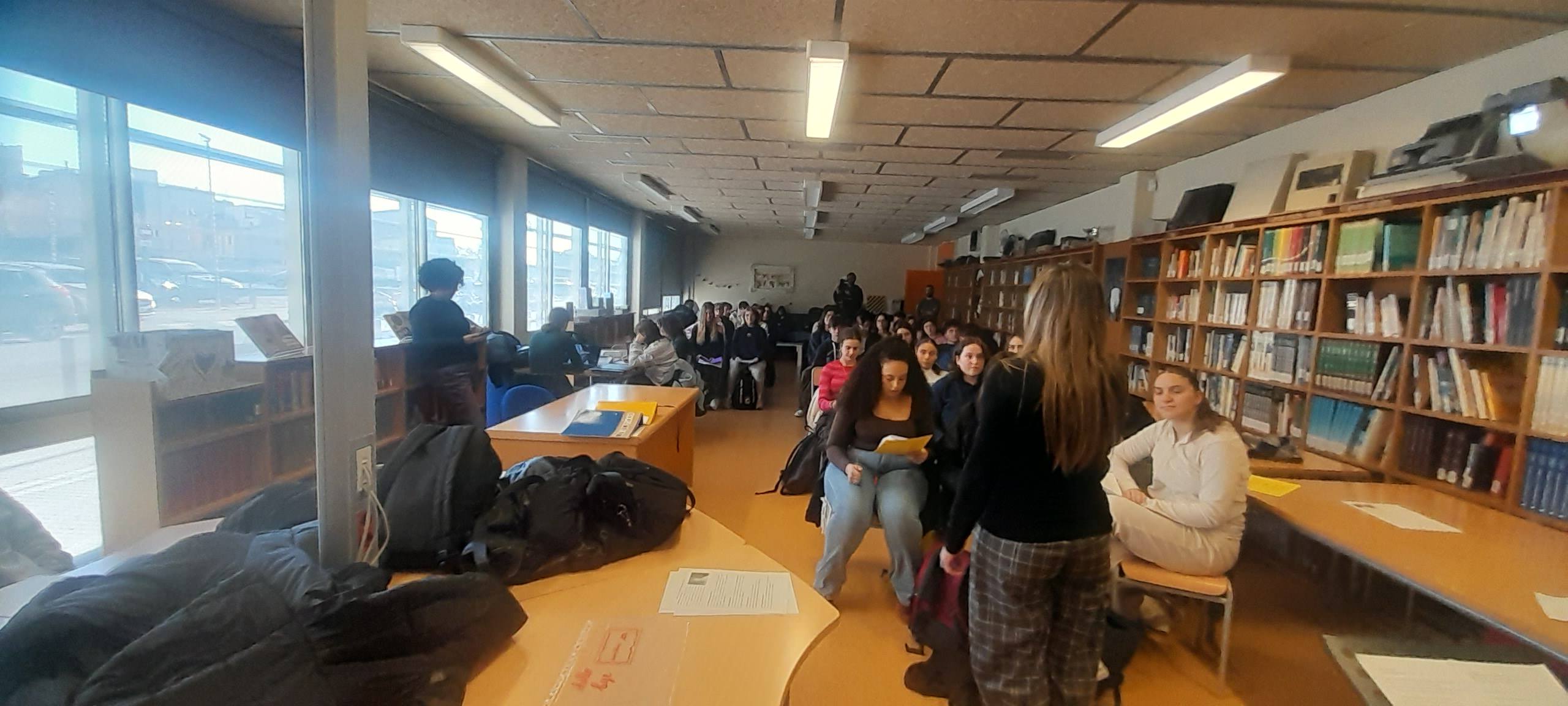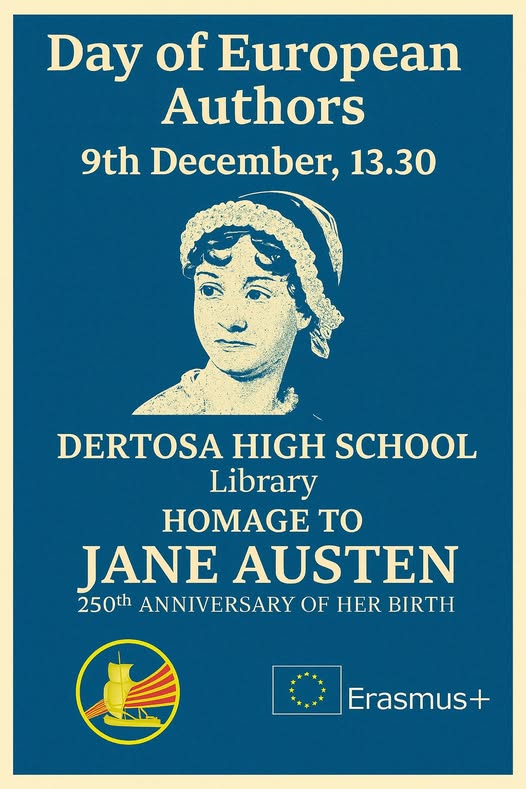



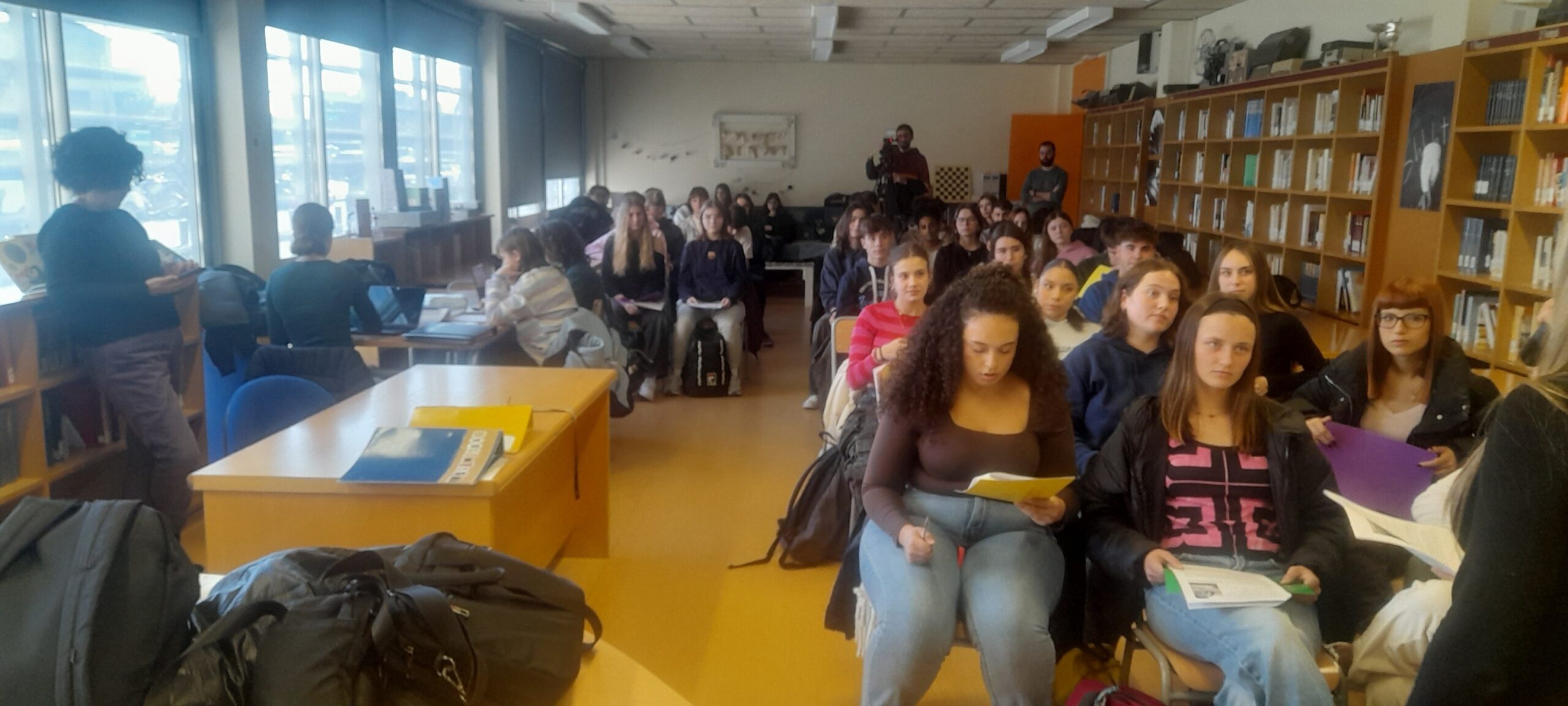
Dimarts 9 de desembre, la biblioteca de l’Institut Dertosa va acollir la celebració del Dia Internacional dels Autors Europeus, en un acte organitzat per la Comissió Erasmus+. L’edició d’enguany va estar dedicada a dos escriptors cabdals de la literatura universal: Jane Austen, de qui es commemoren els 250 anys del naixement, i Thomas Mann, del qual se celebren els 150 anys, que va ser guardonat amb el Premi Nobel de Literatura de 1929.
L’activitat va començar amb una presentació biogràfica en català i anglès de tots dos autors. En el cas d’Austen, es va remarcar que, a causa de les limitacions imposades a les dones del segle XIX, es veia obligada a signar les seues obres amb la fórmula “By a lady”. Pel que fa a Mann, es va destacar la seva trajectòria com a escriptor de l’exili alemany, perseguit pel govern nazi a partir de 1933.
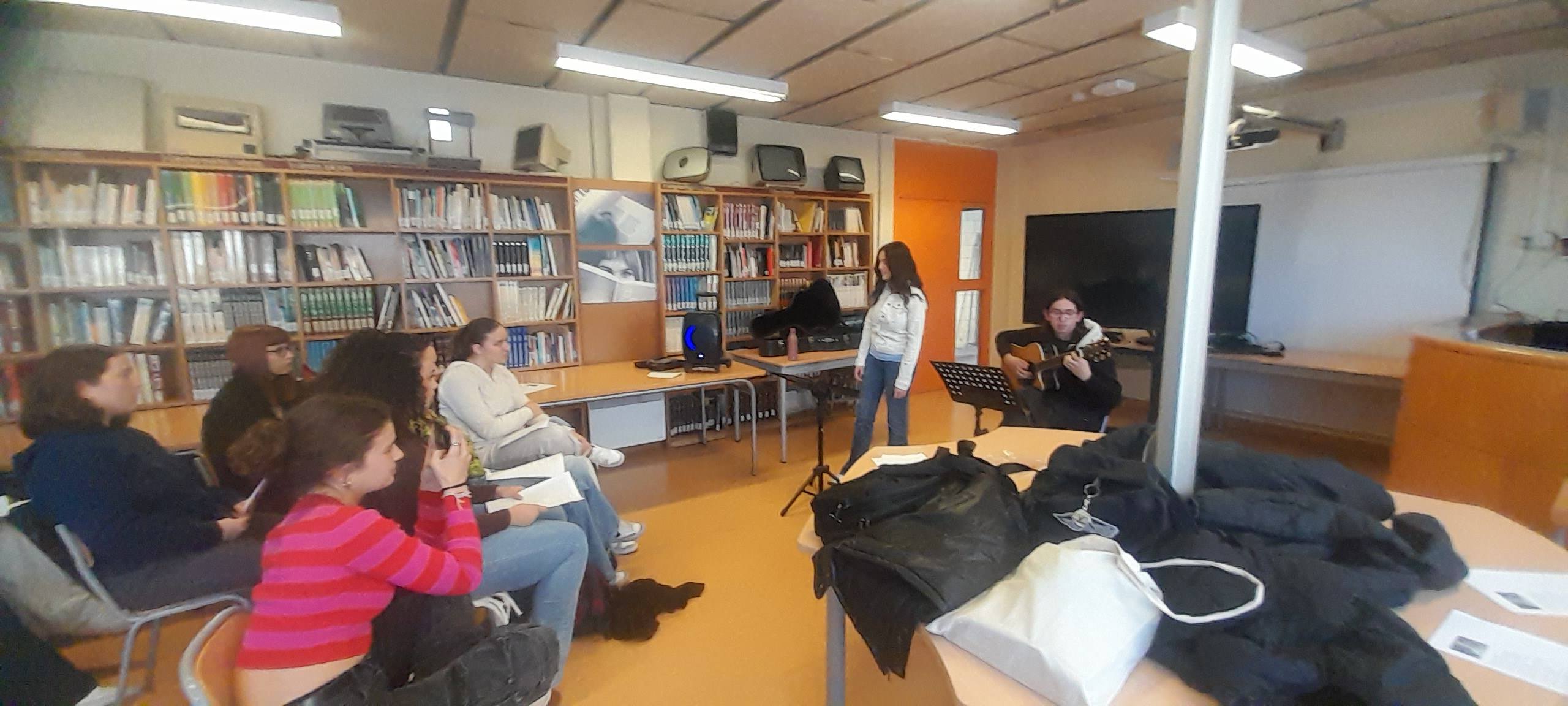
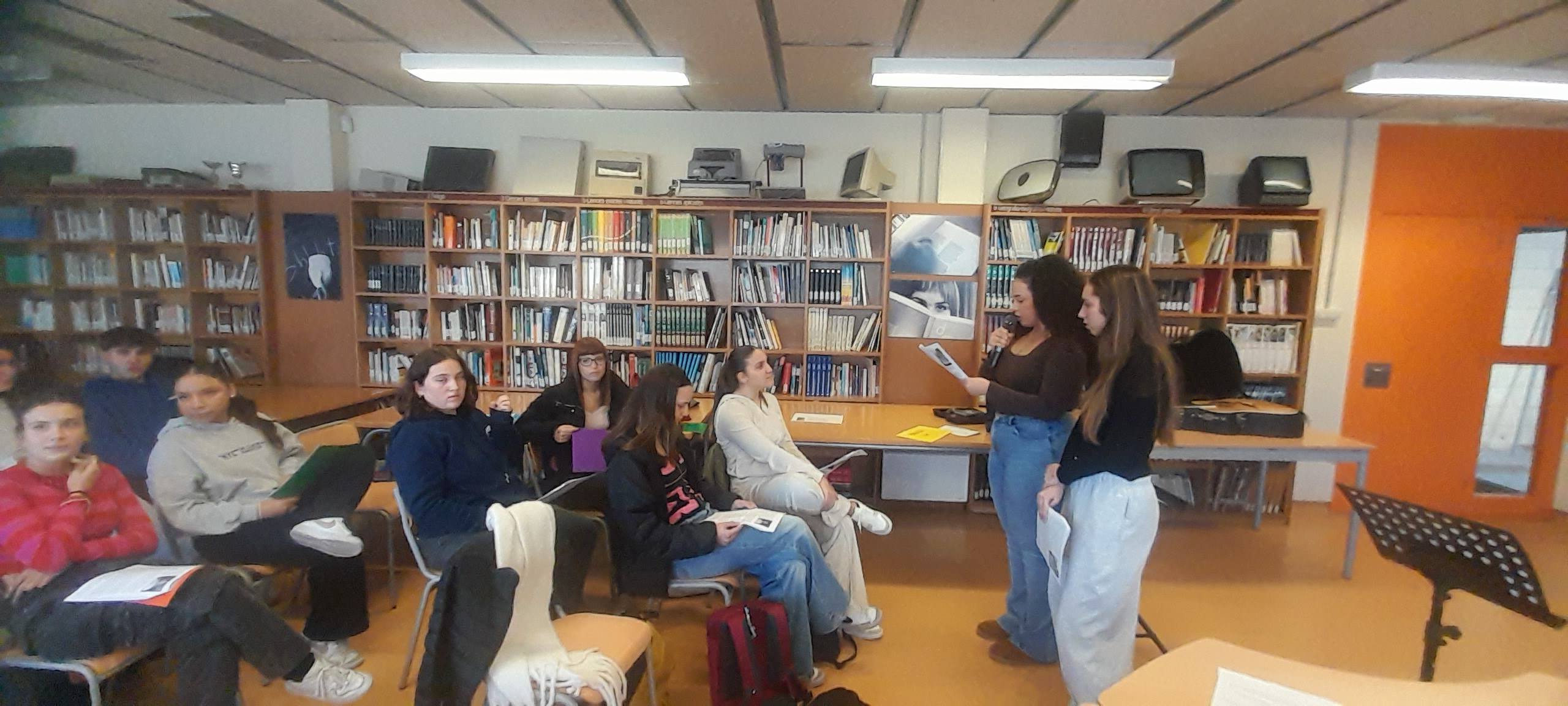
Tot seguit, es va procedir a la lectura de dos paràgrafs de les obres Orgull i prejudici i Sentit i sensibilitat. L’acte va continuar amb la recitació d’un poema dedicat a Jane Austen i amb una interpretació musical memorable de la cançó Jane Austen, de la cantautora neozelandesa Holly Cristina, a càrrec de l’alumna Júlia Redó, amb l’acompanyament a la guitarra de Beniamin Hromei.
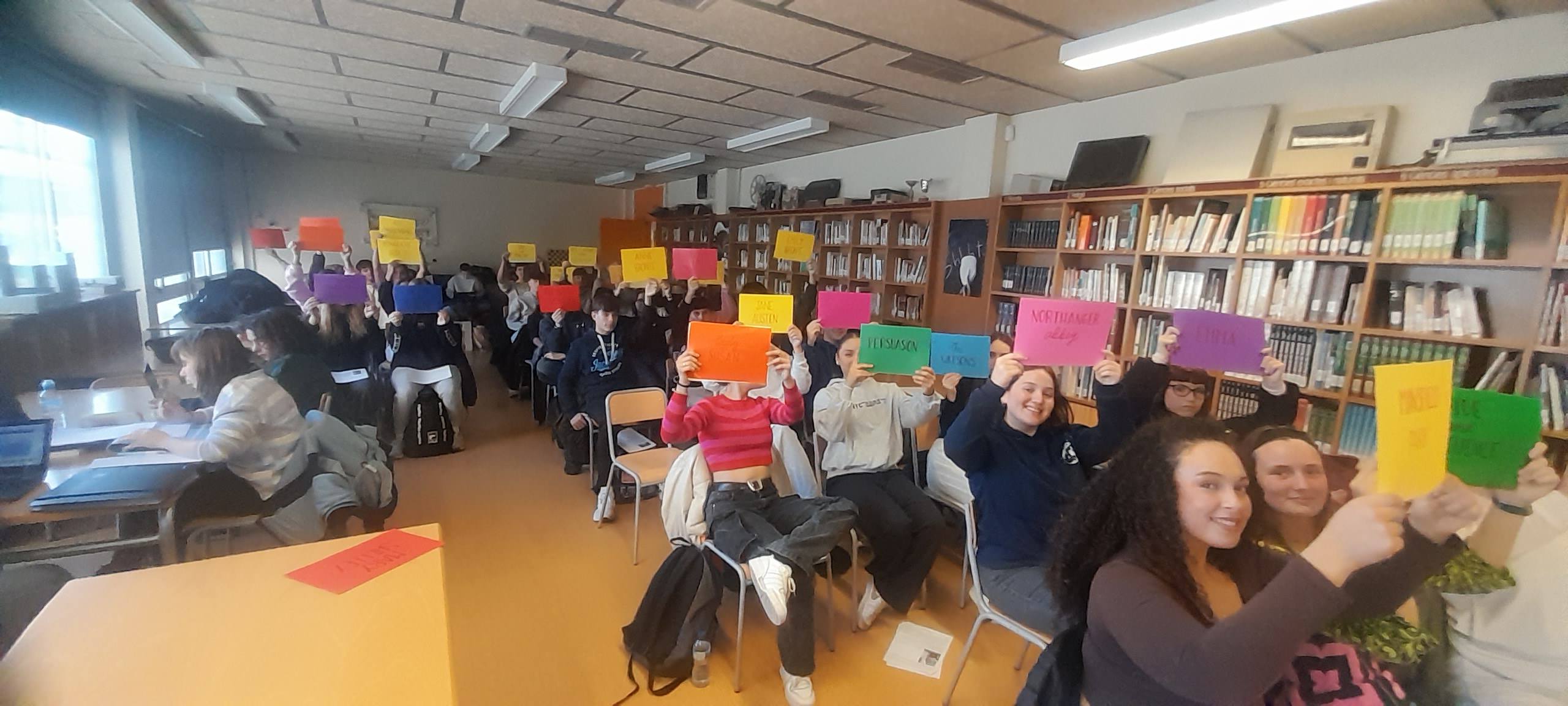
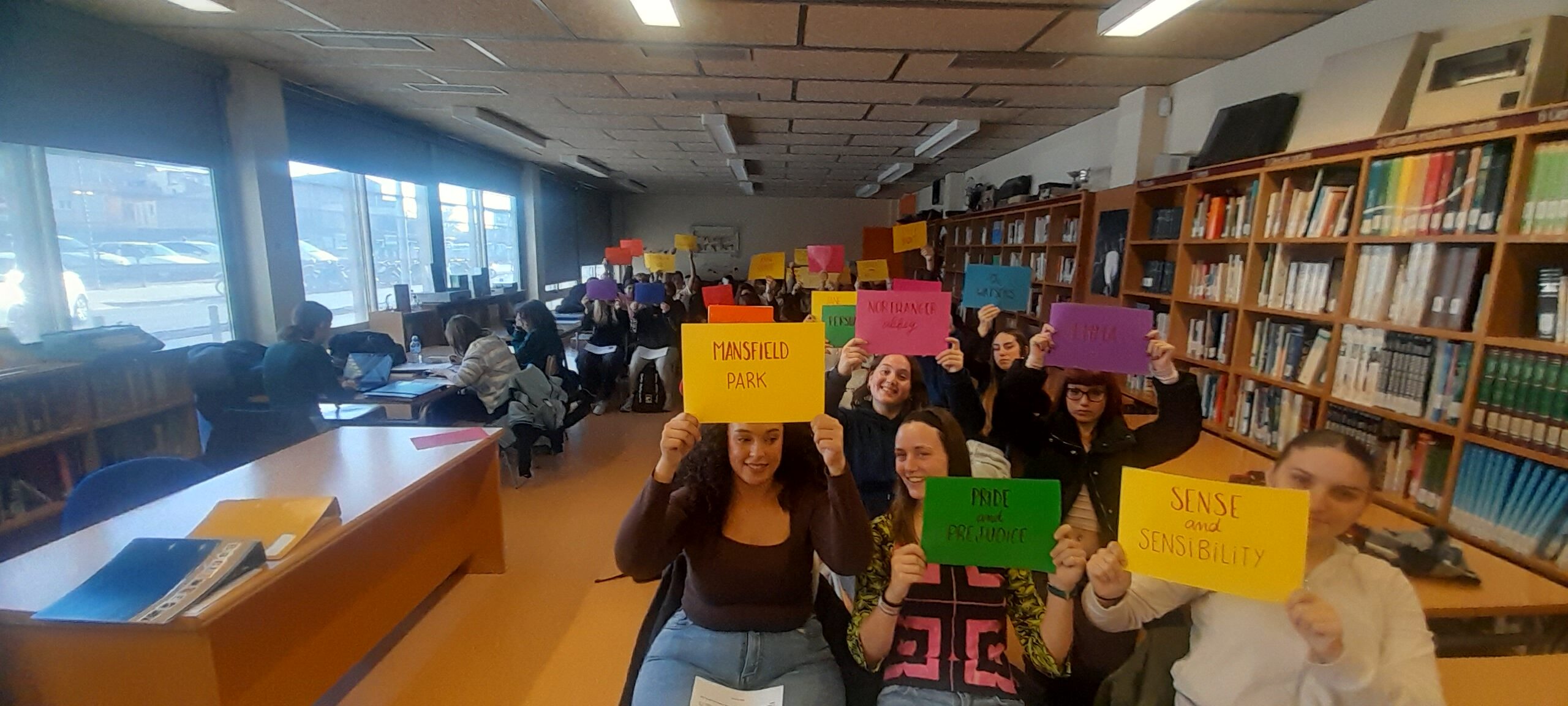
Com a gest simbòlic i reivindicatiu, l’alumnat va realitzar una aixecada de cartolines amb els títols de les obres dels dos autors homenatjats, recordant la vigència i la rellevància de les seues veus literàries.
On Tuesday, December 9, the library of Institut Dertosa hosted the celebration of European Authors’ Day, organised by the Erasmus+ Committee. This year’s edition honoured two major figures of European literature: Jane Austen, commemorating the 250th anniversary of her birth, and Thomas Mann, marking 150 years since his birth, who was awarded the 1929 Nobel Prize in Literature.
The event opened with a biographical presentation in Catalan and English about both authors. It was highlighted that Austen, due to the constraints placed on women in the 19th century, was forced to publish her works under the signature “By a lady”. In contrast, Mann’s life and work were shaped by his condition as a German exiled writer, persecuted by the Nazi government from 1933 onwards.
The programme continued with the reading of two passages from Pride and Prejudice and Sense and Sensibility. This was followed by the recitation of a poem dedicated to Jane Austen and a remarkable musical performance of the song Jane Austen by New Zealand singer-songwriter Holly Cristina, performed by student Júlia Redó, accompanied on guitar by Beniamin Hromei.
As a symbolic and reivindicative gesture, students raised cards displaying the titles of the honoured authors’ works, emphasising the enduring relevance of their literary legacy.
Am Dienstag, den 9. Dezember, fand in der Bibliothek des Instituts Dertosa die Feier zum Internationalen Tag der Europäischen Autoren statt, organisiert vom Erasmus+-Komitee. Die diesjährige Ausgabe würdigte zwei herausragende Persönlichkeiten der europäischen Literatur: Jane Austen, deren 250. Geburtstag gefeiert wird, und Thomas Mann, dessen 150. Geburtstag begangen wird und der 1929 den Literaturnobelpreis erhielt.
Die Veranstaltung begann mit einer biografischen Vorstellung auf Katalanisch und Englisch. Dabei wurde betont, dass Austen aufgrund der gesellschaftlichen Einschränkungen für Frauen im 19. Jahrhundert gezwungen war, ihre Bücher mit der Angabe „By a lady“ zu veröffentlichen. Thomas Mann hingegen wurde als deutscher Exilschriftsteller hervorgehoben, der ab 1933 vom nationalsozialistischen Regime verfolgt wurde.
Anschließend folgte die Lesung zweier Auszüge aus Stolz und Vorurteil und Verstand und Gefühl. Danach wurden ein Gedicht zu Ehren Jane Austens vorgetragen und eine beeindruckende musikalische Interpretation des Liedes Jane Austen der neuseeländischen Singer-Songwriterin Holly Cristina dargeboten, interpretiert von der Schülerin Júlia Redó, begleitet auf der Gitarre von Beniamin Hromei.
Als symbolische und kritische Geste hob die Schülerschaft Karten mit den Titeln der Werke der geehrten Autoren in die Höhe und erinnerte damit an die bleibende Bedeutung ihres literarischen Schaffens.