
Immersió en el disseny STEAM
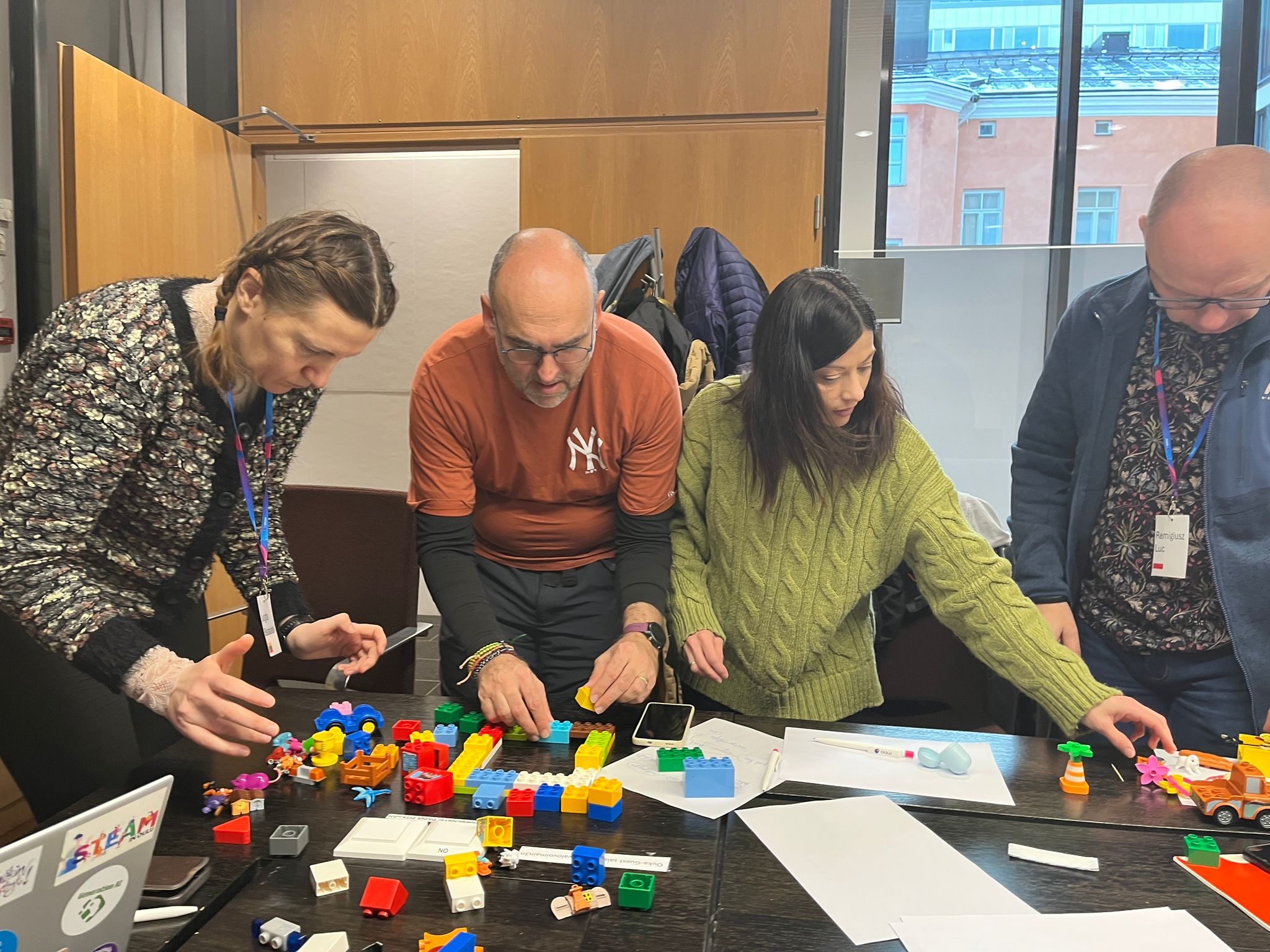
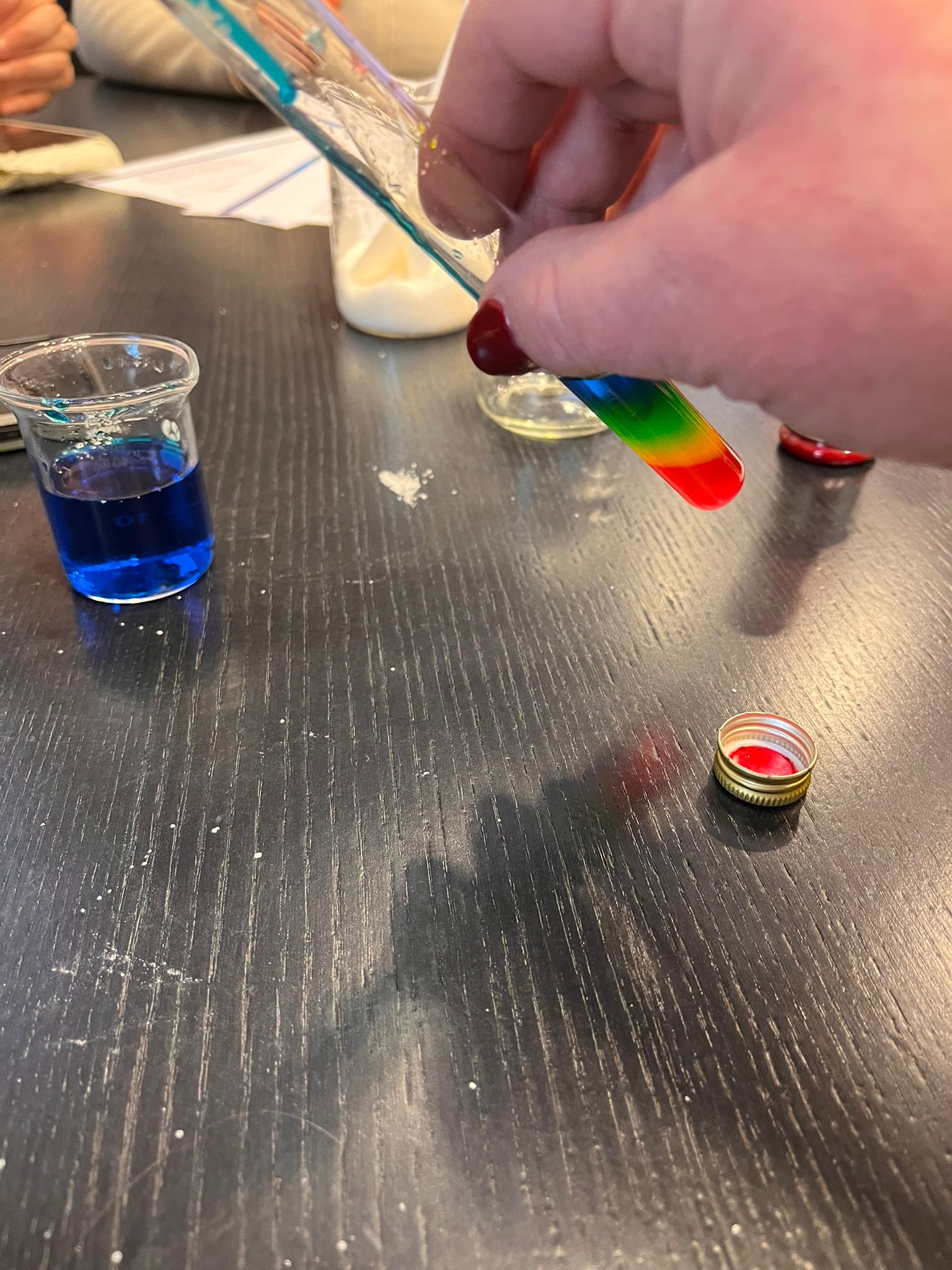
Durant la segona tornada l’equip del consorci ha tingut l’oportunitat d’experimentar i executar, d’una manera pragmàtica, què implica fer un projecte STEAM. Durant la jornada del matí fent un tastet modelant un petit projecte relacionat amb un dels ODS i, a la tarda, experimentant des del museu d’art d’Oulu un projecte de ciència itinerant.
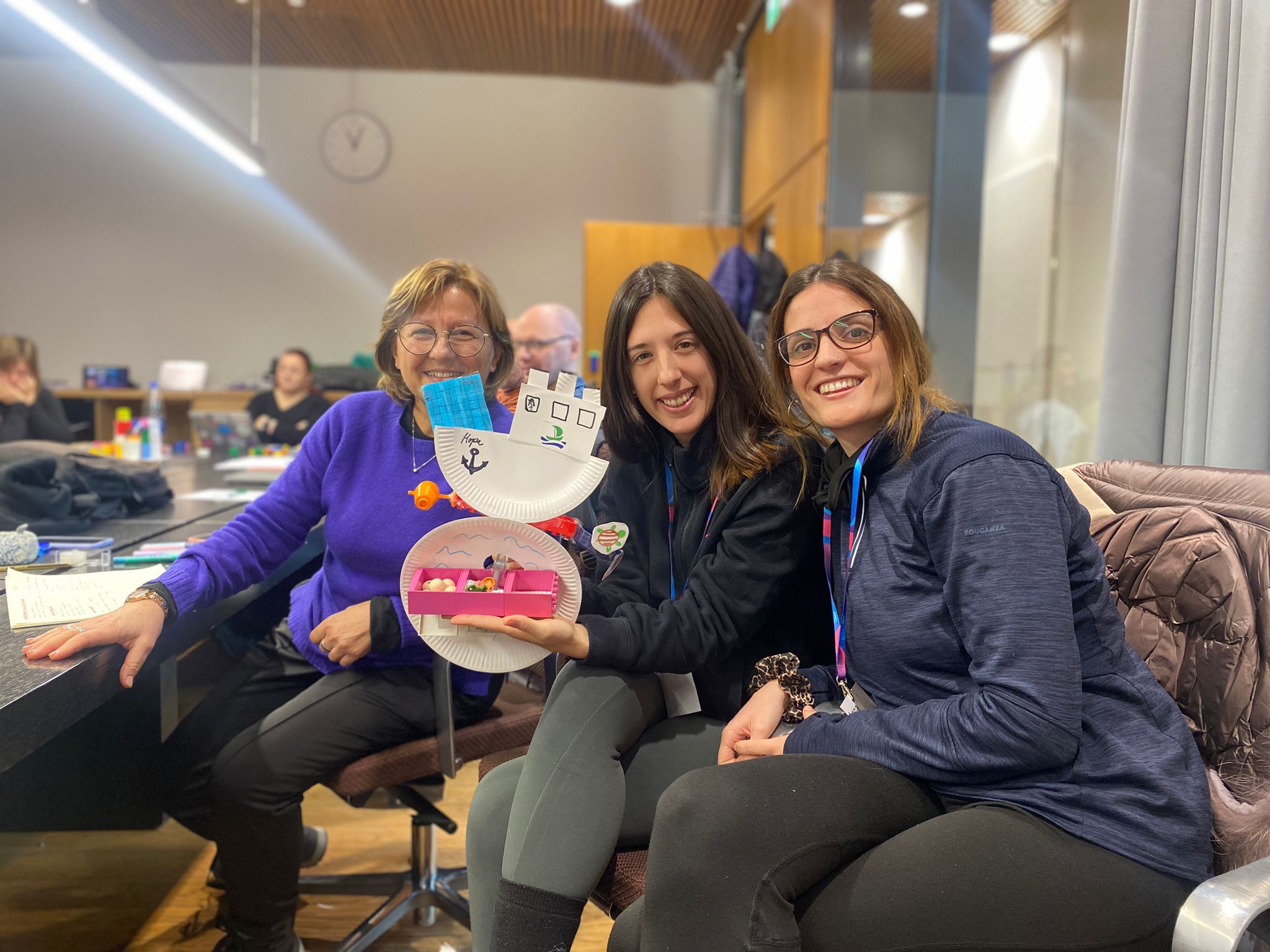
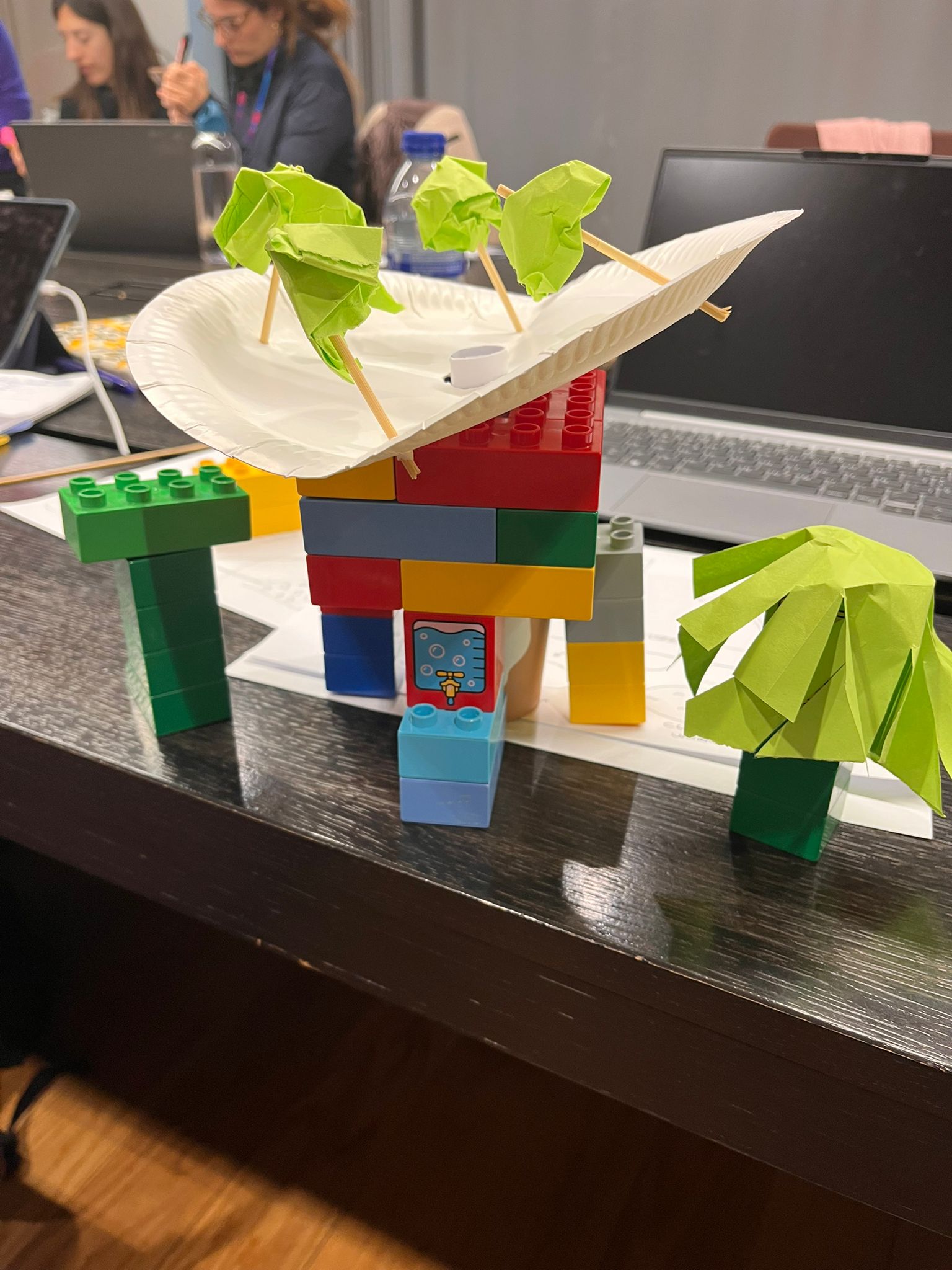
La primera activitat va consistir a dissenyar una petita maqueta amb materials reciclats que donés resposta a un problema social rellevant relacionat amb un dels disset ODS. Així com hi havia llibertat per escollir la temàtica a resoldre, el temps era acotat. Es van anar seguint les diferents fases que implica la creació d’un projecte STEAM, individualment i en grup. L’objectiu final era poder mostrar i compartir amb els i les companyes del grup el model creat, amb el posterior feedback.
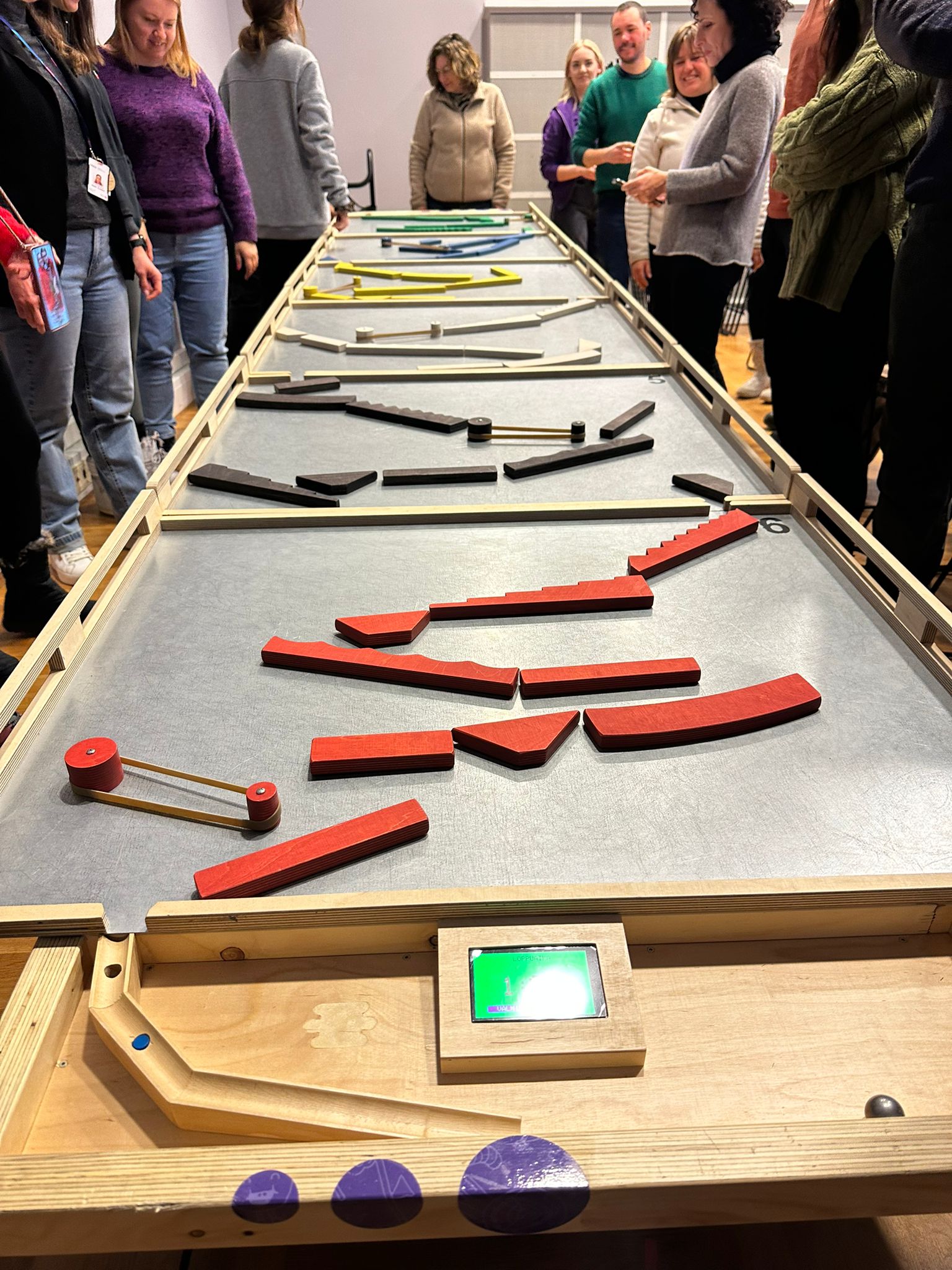
Un cop dinats, l’equip docent del consorci es va desplaçar fins al Museu d’Art d’Oulu. Allà van poder conèixer el funcionament d’aquest, especialment pel que fa al seu vessant educatiu molt relacionat amb STEAM. L’entitat organitza sortides i campaments d’estiu per a l’alumnat d’escoles, com també activitats sistematitzades amb aquestes. Seguidament, es va viure una experiència molt enriquidora provant un artefacte magnètic creat per una empresa STEAM itinerant, anomenada Tietomaa on the road. El servei que ofereix és, a grans trets, una proposta STEAM per estacions a l’alumnat, a tall de repte on a cada estació han d’aconseguir un codi per obtenir un obsequi final. Van mostrar una de les seves propostes més exitoses, un circuit magnètic on una bola metàl·lica ha de transcórrer salvant un seguit d’obstacles que els membres del curs proposàvem. L’objectiu, que la bola completés tot el recorregut en el màxim temps possible. Vam aconseguir un temps d’1’ 20’’, tota una fita. Un bon exemple de creativitat, treball en equip i planificació.
Per acabar, es va tenir opció de visitar tot el museu. Una jornada ben enriquidora.
Explorant la fusió de les arts i la ciència en l’educació STEAM
La tercera jornada de la mobilitat a Oulu, els i les docents del consorci Erasmus+ ALASVO han visitat l’Oulun Suomalaisen Yhteiskoulun lukio per conèixer el seu reconegut projecte d’STEAM i arts.
L’Oulun Suomalaisen Yhteiskoulun lukio (OSYK) és un institut de secundària finlandès situat al centre d’Oulu, al barri de Kuusiluoto. Fundat l’any 1902, va ser el primer institut mixt de la ciutat. Actualment, compta amb uns 40 professors i aproximadament 620 estudiants. Destaca per la seva orientació cap a les arts i la cultura, oferint una àmplia educació artística amb èmfasi en disciplines com el teatre i les arts visuals. Aquest enfocament està integrat en les pràctiques quotidianes de l’escola. A més, l’institut forma part de la xarxa d’Escoles Associades de la UNESCO, compartint objectius globals comuns.
L’OSYK ofereix una àmplia varietat de “cursos” que permeten als estudiants seguir itineraris d’aprenentatge individuals, ja sigui centrats en ciències naturals, idiomes, humanitats o disciplines artístiques. Els resultats dels exàmens de matriculació anuals a l’OSYK són excepcionals. A més, l’escola és reconeguda per la seva diversa selecció d’estudis d’idiomes, incloent-hi suec, anglès, alemany, rus i espanyol. Els valors de l’escola es basen en la cultura i tradicions finlandeses, respectant les llengües maternes i els valors humanístics, com l’honestedat, el coratge moral, la cura recíproca i la responsabilitat.
En la visita a OSIK hem pogut conèixer de la mà de diferents alumnes alguns projectes que han dut a terme en els seus “cursos”. Hem pogut visitar els seus espais plens de propostes artístiques i hem gaudit coneixent diferents docents del centre, que ens han explicat més sobre la seva tasca i el funcionament de l’equip de mestres a Finlàndia.
La creativitat com a motor de la innovació en STEAM
La integració de les arts en l’enfocament STEAM és fonamental per fomentar un aprenentatge més creatiu, interdisciplinari i significatiu. Les arts aporten una dimensió humanística que potencia la innovació, la resolució de problemes i el pensament crític, habilitats essencials en camps científics i tecnològics. A més, permeten explorar idees des d’una perspectiva més visual, emocional i narrativa, facilitant la comunicació de conceptes complexos i fent que l’aprenentatge sigui més accessible i inspirador. En combinar ciència i tecnologia amb l’expressió artística, el model STEAM prepara millor l’alumnat per afrontar els reptes del futur amb solucions més creatives, sostenibles i centrades en les persones.
Immersion in STEAM Design
During the second round, the consortium team had the opportunity to experiment and execute, in a pragmatic way, what it means to carry out a STEAM project. In the morning session, they had a taste of modeling a small project related to one of the Sustainable Development Goals (SDGs), and in the afternoon, they experimented with a traveling science project from the Oulu Art Museum.
The first activity consisted of designing a small model with recycled materials that addressed a relevant social problem related to one of the seventeen SDGs. While there was freedom to choose the theme to solve, the time was limited. They followed the different phases involved in creating a STEAM project, both individually and in groups. The final objective was to be able to show and share the created model with their group peers, followed by feedback.
After lunch, the teaching team of the consortium traveled to the Oulu Art Museum. There, they learned about its operation, especially regarding its educational aspect closely related to STEAM. The entity organizes outings and summer camps for school students, as well as systematized activities with them. Subsequently, they experienced a very enriching activity by trying out a magnetic device created by a traveling STEAM company called Tietomaa on the road. The service it offers is, broadly speaking, a STEAM proposal for stations for students, in the form of a challenge where at each station they must obtain a code to receive a final gift. They showcased one of their most successful proposals, a magnetic circuit where a metal ball must navigate through a series of obstacles proposed by the course members. The goal was for the ball to complete the entire course in the maximum time possible. We achieved a time of 1 minute and 20 seconds, quite an achievement. A good example of creativity, teamwork, and planning.
To conclude, there was an option to visit the entire museum. It was a very enriching day.
Exploring the Fusion of Arts and Science in STEAM Education
On the third day of the mobility in Oulu, the teachers of the Erasmus+ ALASVO consortium visited the Oulun Suomalaisen Yhteiskoulun lukio to learn about its recognized STEAM and arts project.
The Oulun Suomalaisen Yhteiskoulun lukio (OSYK) is a Finnish secondary school located in the center of Oulu, in the Kuusiluoto district. Founded in 1902, it was the first co-educational institute in the city. Currently, it has about 40 teachers and approximately 620 students. It stands out for its orientation towards the arts and culture, offering a broad artistic education with an emphasis on disciplines such as theater and visual arts. This approach is integrated into the daily practices of the school. Additionally, the institute is part of the UNESCO Associated Schools Network, sharing common global objectives.
OSYK offers a wide variety of “courses” that allow students to follow individual learning pathways, whether focused on natural sciences, languages, humanities, or artistic disciplines. The results of the annual matriculation exams at OSYK are exceptional. Furthermore, the school is recognized for its diverse selection of language studies, including Swedish, English, German, Russian, and Spanish. The school’s values are based on Finnish culture and traditions, respecting mother tongues and humanistic values such as honesty, moral courage, mutual care, and responsibility.
During the visit to OSYK, we were able to learn from different students about some projects they have carried out in their “courses.” We visited their spaces filled with artistic proposals and enjoyed getting to know various teachers from the center, who explained more about their work and the functioning of the teaching team in Finland.
Creativity as a Driver of Innovation in STEAM
The integration of the arts into the STEAM approach is fundamental to fostering a more creative, interdisciplinary, and meaningful learning experience. The arts provide a humanistic dimension that enhances innovation, problem-solving, and critical thinking—skills that are crucial in scientific and technological fields. Moreover, they allow for exploring ideas from a more visual, emotional, and narrative perspective, making it easier to communicate complex concepts and making learning more accessible and inspiring. By combining science and technology with artistic expression, the STEAM model better prepares students to face future challenges with more creative, sustainable, and people-centered solutions.