After the Christmas break, we have resumed the activity of the Erasmus + project “Progression from school to adulthood in SEN” by holding another virtual meeting with our British partners. On Wednesday, February 26th, we met again via video conference with Google Meet in order to complete the second mobility of the project.
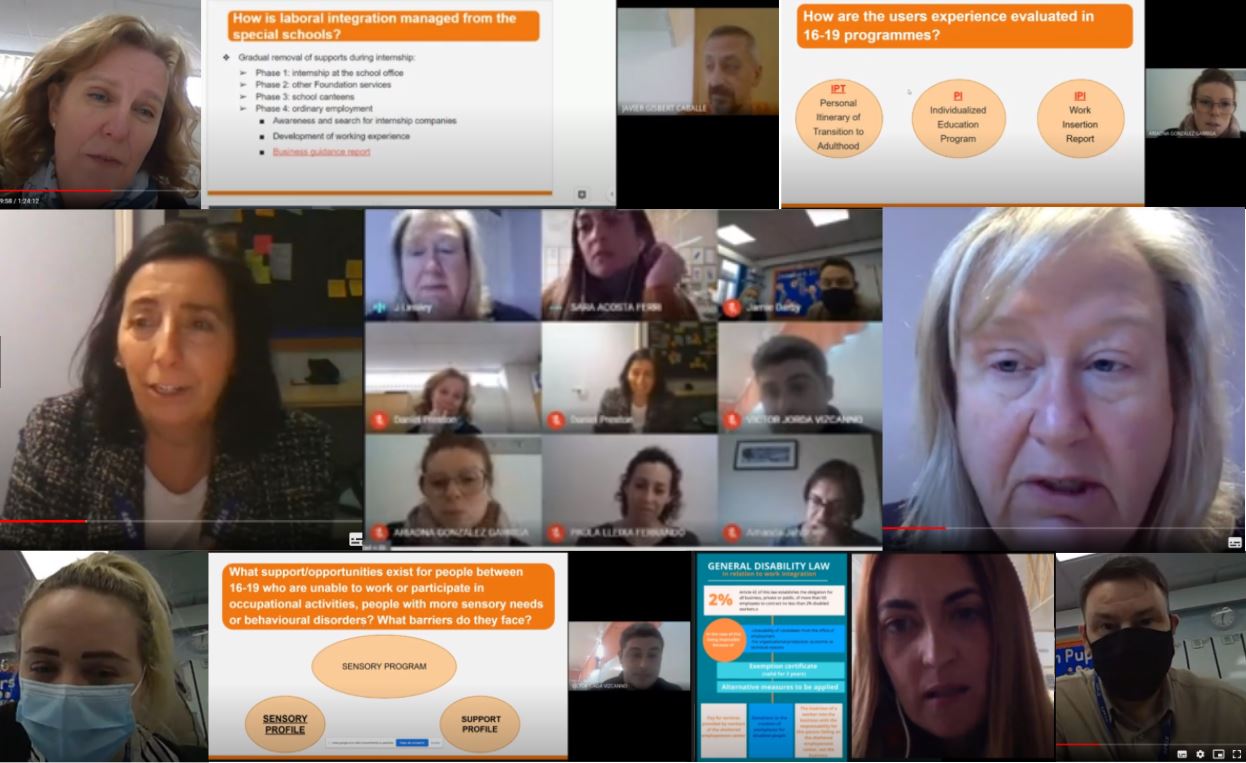
As hosts of this second mobility we organized the meeting focusing on the case study. We decided to raise a list of questions and tried to answer each of them based on our reality. The idea is that our British partners can also try to answer these same questions in order to be able to compare both realities.
As indicated in the presentation, there are four sections that we analyzed during the session last Wednesday: the stage of 16 to 19 years, the stage of more than 19 years, adulthood, and finally, we have considered how to continue with the project in order to achieve results that become evident and contribute to improving the transition to adult life of people with disabilities.
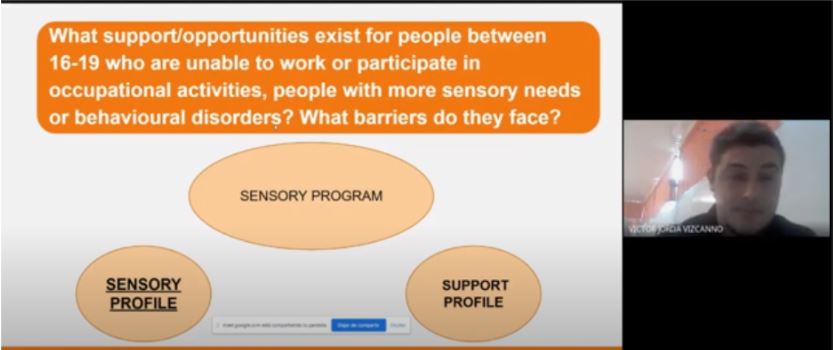
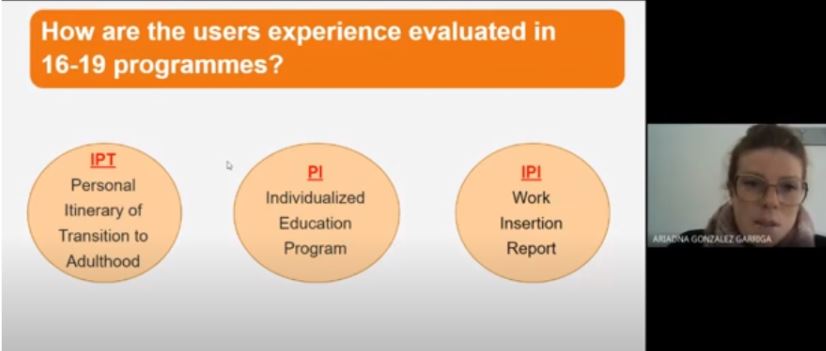
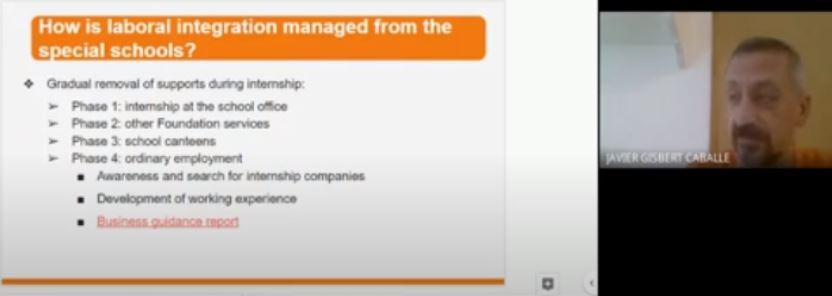 Xavi Gisbert began the analysis of the 16-19 age group by explaining how job placement works from the school, focusing on the PFI programme. Secondly, Paula Lleixà and Víctor Jordà explained the work developed in the Sensory programme of Quality of Life. Next, Ariadna Gonzàlez explained the work carried out in the programme of transition to adult life.
 |
 |
The study of the post-19 stage showed the difference in the establishment of stages between Catalonia (Spain) and Leeds (United Kingdom). Sara Acosta has been in charge of describing the different job placement guidance services that currently exist inside and outside the Mercè Pla Foundation.
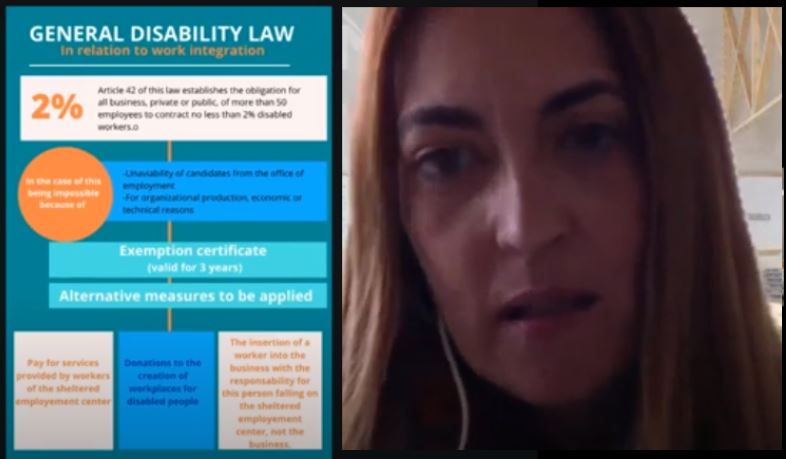 As for the adult stage, it was also Sara Acosta who addressed the analysis of the rights of people with disabilities, specifying them in the situation of labor rights of people with disabilities.
Finally, Xavi Gisbert reviewed the actions proposed in the drafting of the project to identify different ways to develop each of these topics taking into account the current moment and the experiences lived in the two mobilities developed so far. The British partners have reiterated their desire to make some face-to-face mobility possible before the end of the project.
In this way we have closed the second mobility and we are committed to continue working to conclude the present project during 2021, wishing that the improvement of the current situation of pandemic by coronavirus allows us to close the project with better conditions than those that have starred in the last year.